

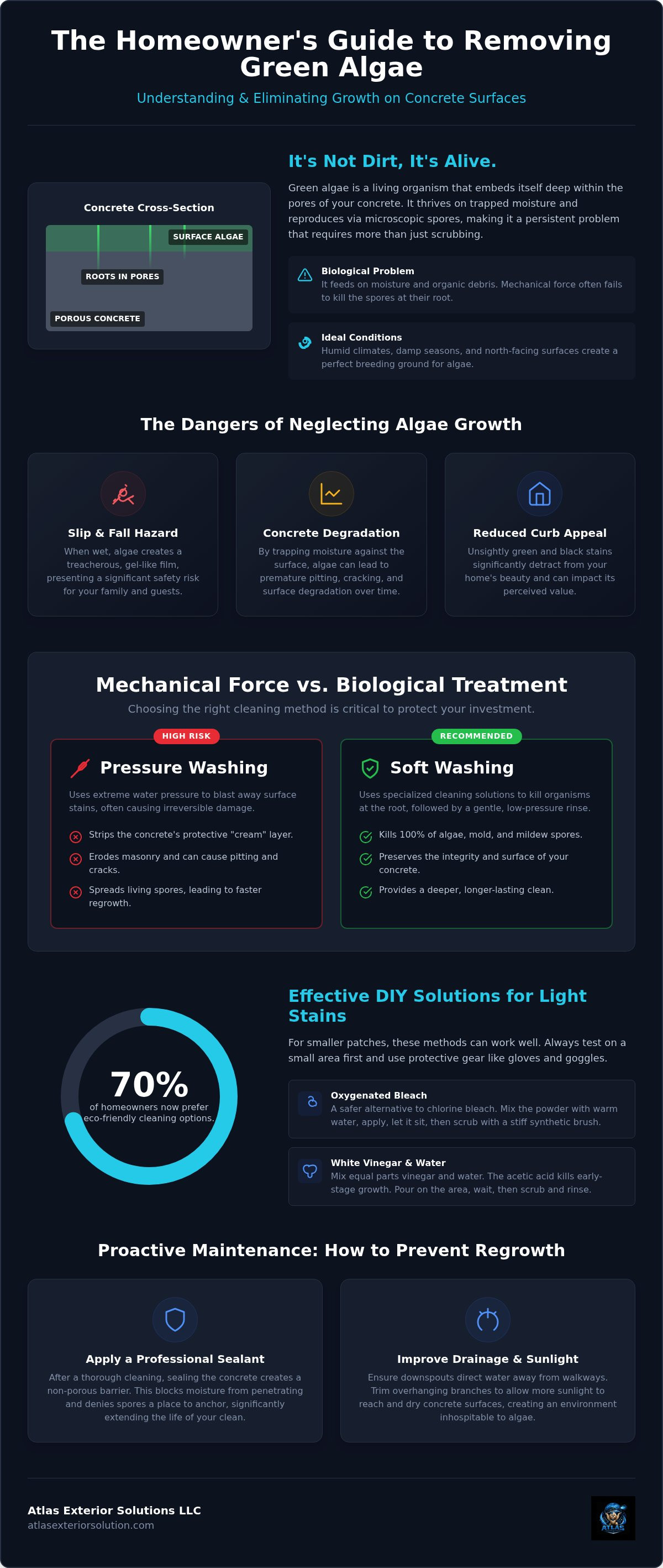
Blasting your walkway with a high-pressure nozzle might feel like the right solution, but it's often the quickest way to erode your masonry while leaving microscopic spores behind. You aren't just dealing with a stain; you're fighting a living organism that thrives in the damp crevices of your home's exterior. If you've noticed your driveway becoming a slippery hazard or losing its original luster to unsightly green patches, you're not alone. Learning how to remove green algae from concrete requires a shift from mechanical force to biological treatment to ensure the surface remains both safe and beautiful.
We understand that your home is your most significant investment, and maintaining its curb appeal is a point of pride. In this 2026 guide, we'll share the most effective DIY techniques and professional-grade soft washing secrets to eliminate growth without risking surface damage. You'll discover why 70% of homeowners now prefer eco-friendly cleaning options and how to choose products that meet modern safety standards. We'll walk through the specific tools you need, the best preventative measures to stop regrowth, and the exact steps to restore your concrete to its pristine, original condition.
Key Takeaways
- Recognize that green algae is a living organism that feeds on moisture within your concrete's pores. Effective removal requires killing the spores at the root rather than just moving them around.
- Master the essential steps for how to remove green algae from concrete using eco-friendly DIY methods that prioritize the safety of your surrounding landscape and pets.
- Evaluate the critical differences between mechanical pressure washing and professional soft washing to avoid stripping the protective cream coat from your hardscapes.
- Implement a proactive maintenance plan involving professional sealing and proper drainage to ensure your outdoor surfaces remain bright and slip-resistant throughout the year.
Understanding Green Algae Growth on Concrete Surfaces
Many homeowners mistake those bright green patches for simple dirt or grass stains. However, green algae is a complex living organism that relies on a steady diet of moisture and sunlight to colonize your hardscapes. Unlike a standard spill, this growth is biological. It reproduces through microscopic spores that travel through the air and settle into the surface of your driveway or patio. Because these organisms are photosynthetic, they don't need soil to survive, making your bare concrete the perfect canvas for a new colony.
Concrete may appear impenetrable, but it's actually a highly porous material filled with tiny voids. These microscopic pockets act like a sponge, trapping water and organic debris that provide the perfect nourishment for spores. When you're researching what is green algae?, it's helpful to view it as a persistent tenant that has moved into the very structure of your masonry. Once the spores find a damp environment, they anchor themselves deep within these pores, making them difficult to dislodge with a simple garden hose.
Proper treatment starts with accurate identification. Green algae is typically flat and slimy, whereas moss has a raised, carpet-like texture. Black mold, often confused with algae, appears as dark, soot-like stains and thrives in even deeper shade. Identifying the specific growth is the first step in learning how to remove green algae from concrete effectively. Each of these organic invaders requires a slightly different approach to ensure you're killing the root cause rather than just cleaning the surface.
Why Green Algae Thrives in Pennsylvania Climates
Our local environment in Bucks County creates a perfect storm for organic growth. The humid summers and damp springs common in Yardley and Newtown provide the consistent moisture algae needs to flourish. North-facing concrete surfaces are particularly at risk because they rarely receive enough direct sunlight to dry out completely after a rainstorm. You'll often notice a bloom cycle in late spring when temperatures rise into the 60s and 70s, causing dormant spores to rapidly multiply across your walkways.
The Risks of Leaving Algae Untreated
Ignoring these stains can lead to more than just an eyesore. When algae becomes wet, it creates a treacherous, gel-like film that presents a significant slip-and-fall hazard for your family and guests. Because this growth acts as a lubricant, understanding how to remove green algae from concrete is a vital safety measure for any homeowner. Beyond safety, the organic matter traps moisture against the concrete, which can lead to premature pitting and surface degradation over time. Maintaining a clean exterior isn't just about curb appeal; it's about protecting your property's value. If the growth has become too stubborn for basic rinsing, professional driveway cleaning in Bucks County is the most reliable way to stop the cycle of damage and ensure the longevity of your hardscape.
Top DIY Methods to Remove Algae Safely
Before reaching for heavy equipment, many homeowners find success with basic household supplies when learning how to remove green algae from concrete. Approaching this task with the right tools ensures that you protect both your masonry and your personal safety. To begin, you'll need a stiff-bristled synthetic brush, a garden hose equipped with a high-pressure nozzle, safety goggles, and rubber gloves. Avoid using wire brushes, as metal bristles can snap off and leave behind rust stains that are even more difficult to treat than the original algae.
If the growth is relatively new, oxygenated bleach, also known as sodium percarbonate, is a highly effective and safer alternative to traditional chlorine. This powder is mixed with warm water and releases oxygen to break apart the organic bonds of the algae. It's particularly useful for homeowners who are concerned about the health of their lawn or nearby flower beds. For severe infestations where DIY efforts don't yield the desired results, a professional soft washing service provides a deeper, more lasting clean without the risks of high-pressure damage.
Using Vinegar and Baking Soda for Light Stains
White vinegar is a reliable, eco-friendly option for treating early-stage growth on walkways and patios. The acetic acid in the vinegar penetrates the cell walls of the organism to stop it from spreading. For the best results, mix a solution of equal parts water and white vinegar in a plastic bucket. Pour the mixture directly onto the green patches and allow a "dwell time" of at least 15 to 20 minutes. This period is essential because it gives the acid time to weaken the biological anchor the algae has established in the concrete pores. When you're ready to clean, use firm, circular motions with your synthetic brush. This technique lifts the organic material effectively without causing surface abrasion to the concrete.
Commercial Cleaners vs. Household Bleach
When you evaluate the best concrete cleaners, you'll typically choose between slow-acting biocides and fast-acting oxidizers. Products like Wet & Forget are designed to kill the growth over several weeks, relying on subsequent rainfall to wash away the debris. In contrast, household bleach provides nearly instant results but requires meticulous handling. Sodium hypochlorite is the active ingredient found in most professional cleaners and household bleaches. It's important to remember that bleach has a very high pH level. If it isn't diluted properly, it can chemically burn your grass and ornamental plants. Always pre-wet any surrounding vegetation with plain water before applying bleach solutions to create a protective barrier for your landscape.
Pressure Washing vs. Soft Washing: Which is Better?
Deciding on the right equipment often feels like a choice between speed and safety. Standard pressure washing uses high-velocity water to physically tear debris away from the surface. While this provides a satisfying "before and after" moment, it often fails to address the microscopic reality of the problem. Soft washing, on the other hand, utilizes a low-pressure application of specialized cleaning agents to neutralize organic growth. This distinction is vital when determining how to remove green algae from concrete without causing permanent structural damage to your property.
The smooth, protective top layer of your concrete is known as the cream coat. Using a high-PSI machine too close to the surface can strip this layer away, exposing the rough aggregate beneath. This process, often called etching, is irreversible and actually increases the surface area for future algae colonies to inhabit. Soft washing avoids this mechanical trauma by achieving a total biological kill. By neutralizing the spores rather than just moving them, you ensure a much longer window of cleanliness before the next bloom cycle begins.
The Hidden Dangers of High-Pressure DIY
Homeowners who attempt to blast away stains often encounter the dreaded phenomenon of "tiger striping." These are permanent, visible streaks caused by the uneven application of high-pressure water. Beyond the visual flaws, excessive force can easily dislodge the stabilizing sand in your expansion joints or blow out brittle sealant. To avoid these costly mistakes, professional intervention from Atlas Exterior Solutions LLC provides a safer path. Our team uses calibrated equipment to ensure that the pressure never exceeds what your specific masonry can safely handle, preserving both the look and the life of your driveway.
Why Soft Washing is the Professional Gold Standard
The true power of a professional clean comes from the chemistry, not the pump. Specialized surfactants are mixed into the solution to break the surface tension, allowing the cleaners to reach the bottom of the concrete's pores. Once the algae is neutralized, a gentle, high-volume rinse carries the organic matter away safely. This process is the most effective answer for how to remove green algae from concrete because it treats the infestation as a biological issue rather than a simple stain. Choosing a professional soft washing treatment ensures that your hardscapes stay bright and slip-resistant for much longer than a standard DIY pressure wash could ever achieve.
Step-by-Step Guide: How to Remove Green Algae from Concrete
Execution is the most critical phase of any exterior maintenance project. While we've discussed the science behind organic growth, following a methodical process ensures you achieve professional-grade results without damaging your property. This sequence is designed to maximize the effectiveness of your cleaning agents while protecting your time and effort. If you're ready to learn the exact process for how to remove green algae from concrete, follow these five essential steps.
- Step 1: Clear the Workspace. Remove all patio furniture, potted plants, toys, and loose debris. A clean surface allows for even application and prevents staining from objects reacting with the cleaning solution.
- Step 2: Pre-Wet Surrounding Vegetation. This is a vital safety step. Thoroughly soak your grass, shrubs, and flower beds with fresh water. Saturated plants are less likely to absorb any accidental overspray from your cleaning solution.
- Step 3: Apply the Solution to Dry Concrete. Contrary to popular belief, you should apply your cleaner to dry concrete. This allows the solution to be pulled deep into the pores rather than sitting on top of a layer of water. Using this method is the most efficient way to learn how to remove green algae from concrete at the root level.
- Step 4: Monitor the Dwell Time. Let the solution work for 10 to 15 minutes. It's essential to keep the surface wet during this time; if it begins to dry, mist it lightly with more solution or a tiny bit of water.
- Step 5: Agitate and Rinse. Use a stiff-bristled synthetic brush to scrub the most stubborn patches. Finally, rinse the entire area thoroughly with a garden hose until the water runs clear and no suds remain.
Request a professional driveway cleaning estimate today
Protecting Your Landscaping and Pets
Safety extends beyond the concrete surface. For homeowners with delicate ornamental plants, covering them with plastic sheeting or lightweight tarps provides an extra layer of defense. Once you've finished rinsing the concrete, spend an additional five minutes diluting the runoff in your lawn with plenty of fresh water. This ensures the chemical concentration remains too low to harm your grass. Always keep pets and children inside during the process and wait until the surface is completely dry before allowing them back onto the treated area.
Cleaning Different Concrete Surfaces
Not every hardscape is identical, and your approach should vary based on the material. If you're dealing with interlocking stones, you'll find specific nuances in our guide on cleaning dirty pavers. For vertical surfaces like retaining walls, start your application at the bottom and work your way up to prevent permanent streak marks. If your concrete is stamped or colored, test a small, inconspicuous area first. Some harsh chemicals can cause fading or "chalking" on decorative finishes, so a gentle touch is required to preserve the aesthetic integrity of these premium surfaces.
How to Prevent Algae Regrowth and Maintain Your Hardscape
The battle doesn't end once the surface is bright. To maintain the results of your hard work, you must address the environmental triggers that invited the growth in the first place. Moisture management is the cornerstone of any long-term prevention strategy. Since concrete is naturally porous, applying a high-quality sealant acts as a vital barrier. This protective layer prevents water from settling into the microscopic voids where spores thrive. Establishing a regular maintenance schedule every 12 to 24 months ensures that these preventative measures don't wear thin over time.
Trimming back overhanging trees and thinning out dense foundation shrubs increases the amount of direct sunlight and airflow your hardscape receives. These natural elements are the most cost-effective way to keep the surface dry. When you integrate these habits into your home care routine, the question of how to remove green algae from concrete becomes a rare concern rather than an annual chore. Consistent maintenance preserves the structural integrity of your masonry while ensuring your walkways remain safe and slip-resistant throughout the changing seasons.
Improving Drainage and Airflow
Look for low spots on your driveway where water pools after a heavy rain. These puddles are breeding grounds for new colonies. Keeping your gutters clear prevents overflow from cascading onto your walkways, which often creates permanent damp zones. Dense plantings near the house can create stagnant micro-climates that trap humidity against the concrete. Pruning these back allows the wind to circulate and dry the surface faster, significantly reducing the risk of a new bloom taking hold in the shade.
The Value of Professional Maintenance
Investing in professional driveway cleaning is a proactive choice that saves both time and money. Atlas Exterior Solutions LLC utilizes commercial-grade inhibitors that provide a residual defense against organic spores, lasting far longer than standard consumer products. If your property features aging masonry that requires more than a simple wash, you might benefit from our guide on how to restore old pavers in Bucks County. Our expert team understands the unique environmental challenges of the local area and takes pride in providing a level of protection that preserves your home's value for years to come.
Restore the Beauty and Safety of Your Home's Exterior
Taking the time to address organic growth is an essential part of responsible home ownership. You now understand that mastering how to remove green algae from concrete is less about using high-pressure force and more about employing the right biological treatments to protect the masonry's delicate cream coat. By combining the DIY techniques we've discussed with a proactive approach to drainage and sealing, you can ensure your outdoor living spaces remain both inviting and secure for your family and guests.
When the scope of the project requires an expert touch, Atlas Exterior Solutions LLC is here to help. As a locally owned and fully insured provider, we specialize in 5-star exterior restoration across Bucks County. We utilize specialized soft wash equipment designed to eliminate stubborn infestations while preserving the long-term integrity of your surfaces. Our team takes pride in being a meticulous guardian of your property, providing the peace of mind that comes with professional results and local reliability.
Get a Free Estimate from Atlas Exterior Solutions LLC today!
Invest in the longevity of your home's hardscapes today. With the right care and a commitment to regular maintenance, your concrete will continue to enhance your property's value and curb appeal for many years to come.
Frequently Asked Questions
Is green algae on concrete dangerous or just an eyesore?
It is both. While the vibrant green color ruins your home's curb appeal, the primary danger is a significant safety risk. When algae becomes wet, it creates a slick, gel-like surface that acts as a lubricant, greatly increasing the likelihood of slip-and-fall accidents. Additionally, the organic growth can trap moisture against the concrete, which may lead to surface pitting and structural degradation over several seasons.
Can I use pool shock to clean my concrete driveway?
You can use pool shock, but it requires extreme caution due to its high concentration of sodium hypochlorite. This chemical is much stronger than standard household bleach and can easily damage surrounding landscaping or bleach your clothing if handled improperly. For most residential projects, a more diluted professional-grade solution is safer and just as effective for removing organic stains without the risks of using high-strength industrial chemicals.
Will vinegar damage my concrete if I leave it on too long?
Vinegar is an acid that can etch the smooth surface of your concrete if it is not rinsed off promptly. While it's a popular DIY choice for how to remove green algae from concrete, you should never let it dry on the masonry. Limit the dwell time to 20 minutes and rinse the area thoroughly with fresh water to neutralize the acidity and protect the integrity of the finish.
How long does it take for green algae to grow back after cleaning?
Regrowth typically occurs within 6 to 12 months if the environmental conditions remain unchanged. Factors like seasonal shade, high humidity in Bucks County, and poor drainage will accelerate the return of spores. Applying a professional sealant or improving airflow can extend your results to 24 months or longer by making the surface less hospitable to new colonies that thrive in damp, dark environments.
Does power washing concrete remove algae permanently?
No, power washing is a mechanical solution that rarely removes algae permanently. High-pressure water often leaves microscopic spores deep within the concrete's pores, which leads to rapid regrowth once the surface becomes damp again. A biological treatment, such as soft washing, is required to kill the organism at the root level. This ensures the surface stays clean for a significantly longer period than mechanical scrubbing alone can provide.
What is the best temperature to clean green algae off concrete?
The ideal temperature range for cleaning is between 50 and 80 degrees Fahrenheit. If it's too cold, the chemical reactions in the cleaning solutions slow down, making them less effective at breaking down organic matter. If it's too hot, the solutions may dry too quickly on the concrete. This can lead to uneven cleaning or chemical streaks that are difficult to remove without professional-grade equipment and techniques.
Will bleach kill the grass next to my concrete patio?
Concentrated bleach will definitely harm or kill your grass and ornamental plants. To prevent this, you must saturate the surrounding soil and vegetation with fresh water before and after the cleaning process. This creates a protective barrier and dilutes any runoff to a safe level. Taking these precautions ensures your landscaping remains healthy while you're learning how to remove green algae from concrete without damaging your yard.
How do I know if I need soft washing or pressure washing?
Use soft washing for organic infestations like algae, mold, and mildew where a chemical kill is necessary to stop regrowth. This method is much gentler on the concrete's surface. Pressure washing is better suited for removing non-living contaminants like heavy mud, dried paint, or deeply embedded oil stains. A professional assessment can help determine the right balance of pressure and chemistry to achieve the best results for your specific property.
Disclaimer
The information on this blog is for general informational purposes only. Results may vary based on surface type, condition, and cleaning methods. Always follow manufacturer guidelines and use proper safety precautions. Atlas Exterior Solutions is not liable for any damages or losses resulting from the use of this information.


