

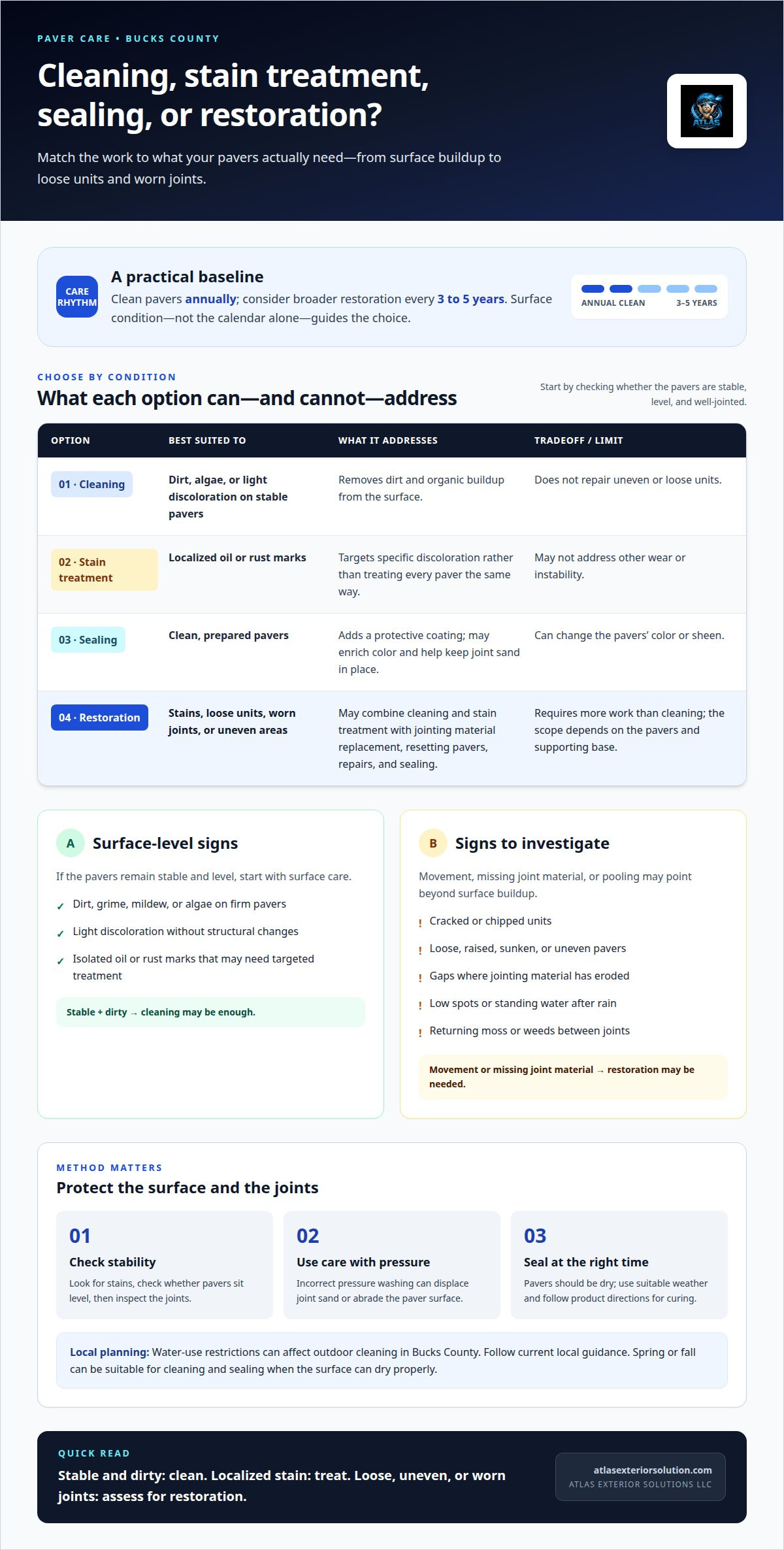
Clean-looking pavers don't always need a full restoration, but visible wear can be a sign that routine washing is no longer enough. A practical baseline for when you should get your pavers cleaned or restored is annual cleaning and restoration every 3 to 5 years, with the condition of the surface guiding the decision.
Dirt, algae, or light discoloration on stable pavers usually calls for cleaning. Loose or uneven pavers, missing jointing material, persistent stains, or pooling water may point to a deeper issue. The right approach depends on whether the problem is on the surface or beneath it.
This guide explains when cleaning, stain treatment, or professional restoration makes sense, and why the method matters for pavers in Bucks County. Learn what restoration can address, which warning signs to watch for, and when DIY care may not be enough to protect the surface and its stability.
Key Takeaways
- Learn how to distinguish surface dirt and discoloration from signs that pavers may need repair or restoration.
- Recognize when oil, rust, or organic stains call for targeted treatment instead of routine cleaning.
- Understand how moss, weeds, missing jointing material, and pooling water can affect paver stability and safety.
- See how cleaning methods and surface-specific care help protect pavers from avoidable wear.
- Find out what professional cleaning and restoration can address when DIY care won’t resolve the problem.
What is Paver Restoration?
Paver restoration renews the surface and addresses issues routine washing cannot solve. It may combine cleaning, stain treatment, replacement of jointing material, resetting uneven pavers, and sealing. Cleaning removes dirt and organic buildup; sealing adds a protective coating; restoration may include both, along with repairs.
Cleaning pavers annually helps remove dirt before it builds up. A broader restoration is commonly recommended every 3 to 5 years, depending on wear. For example, a patio with sound, even units may need cleaning alone, while loose pavers and eroded joints call for more involved work.
Restoration can improve appearance, help protect pavers from stains, and make maintenance easier. Replacing eroded jointing material can support alignment, while resetting sunken pavers addresses unevenness. Sealing may enrich color and help keep joint sand in place. Restoration takes more work than cleaning, and sealer can change the pavers’ appearance.
| Option | Best suited to | Benefit | Tradeoff |
|---|---|---|---|
| Cleaning | Dirt on stable pavers | Removes surface buildup | Does not repair uneven units |
| Stain treatment | Localized oil or rust marks | Targets specific discoloration | May not address other wear |
| Sealing | Clean, prepared pavers | Helps protect the surface | Can alter color or sheen |
| Restoration | Stains, loose units, or worn joints | Combines surface care and repairs | Requires more work than cleaning |
Choose based on the condition: stable but dirty pavers need cleaning, while movement or missing joint sand may call for restoration.
In Bucks County, local water-use restrictions can affect when outdoor cleaning is practical. Follow current local guidance and plan around any limits on water use. Spring or fall can be suitable seasons for cleaning and sealing, provided the surface can dry properly.
For sealing, dry weather and temperatures within the sealer’s application range help it cure as intended. Don’t apply sealer to wet pavers or when rain may interrupt curing. After installation, wait until the pavers and joints have settled and are ready for sealing under the product directions.
Sealer life varies with foot traffic, weather exposure, surface preparation, and product type. Reapply when wear or reduced water resistance suggests the coating has weakened, following the product directions. Incorrect pressure washing can displace joint sand or abrade the surface; poor sealing can leave an uneven sheen or trap moisture.
Paver restoration coordinates surface cleaning, repairs to damaged or unstable areas, and sealing to renew appearance and stability. Repairs can go beyond replacing joint material or treating the surface. They may involve lifting and resetting sunken or uneven pavers, as well as replacing cracked or broken units. These steps distinguish restoration from surface-only cleaning or sealing.
The work may also include inspecting and re-leveling the base when drainage problems or settlement need attention. This can address conditions beneath the visible paving. The U.S. Environmental Protection Agency banned methylene chloride, which had been a main ingredient in many paver strippers. Surface cleaning, repairs to individual units, and attention to the base are all possible parts of restoration; the scope depends on the pavers and their supporting base.
Signs pavers need restoration
Inspect the surface, the joints, and how water moves across the paved area. Dirt or algae on level, stable pavers usually signals a need for cleaning. Cracks, chips, movement, or persistent pooling suggest the issue may extend beyond surface buildup. A visual check helps distinguish routine cleaning from signs that call for restoration.
Cleaning is usually the first step when grime, mildew, or discoloration appears without structural changes. An even patio with a film of dirt may need cleaning, while a walkway with loose pavers needs closer attention. Check whether discoloration covers the whole area or appears as specific oil, rust, or organic marks. If you’re deciding when to get your pavers restored or cleaned, start by checking whether the pavers remain stable.
Restoration may be appropriate when you see:
- Cracks or chips: Damaged edges can indicate wear or impact, especially when several units show similar damage.
- Uneven or loose pavers: A raised edge or sunken section can affect footing and signal movement below the surface.
- Eroded joints: Missing jointing material leaves visible gaps between units and can allow pavers to shift.
- Low spots with standing water: Pooling after rain may point to settlement or drainage concerns, not just a dirty surface.
Moss and weeds also deserve a closer look. Growth between joints may accompany missing sand or persistent dampness. If moss returns after surface debris is removed, the joints may need attention. On steps or frequently used walkways, slippery growth can also be a safety concern.
A worn sealer has different signs: water may no longer bead on a previously sealed area, or the finish may look worn along busy paths. That alone doesn’t mean pavers need structural repairs. First distinguish a worn coating from cracked pavers, open joints, or uneven areas; those conditions change the scope of work.
Use a simple inspection sequence: scan for stains, check whether the pavers sit level, then look closely at the joints. Compare stained but firm sections with any visibly sunken or loose areas. If the pavers remain stable, cleaning or targeted stain treatment may be enough; movement and missing joint material suggest restoration. This helps determine when to get pavers cleaned or restored.
For pavers that need more than surface cleaning, consider professional restoration. Clear photos of the affected areas can help show whether the concern is discoloration, damaged pavers, or both.
Deep cleaning and stain treatment
Deep cleaning suits pavers with dirt, algae, mildew, or discoloration that remain structurally sound. Stain treatment is more focused: it targets a visible mark, such as an oil spot near a driveway or rust beneath a metal planter. Identifying the stain and paving material helps determine the appropriate cleaning method.
A professional assessment distinguishes loose surface grime from stains absorbed into the paver. Organic debris, including leaves, can leave dark marks known as leaf tannins. Oil may leave a concentrated spot, while rust often appears as localized orange or brown patches. Each pattern calls for a different treatment, rather than applying one cleaner across the whole surface.
- General dirt and algae: Surface cleaners can remove broad buildup across otherwise stable pavers.
- Oil marks: A targeted spot treatment can focus on the affected area instead of treating every paver equally.
- Rust marks: Specialized treatment can address discoloration around metal furniture or fixtures.
- Leaf tannins: Organic staining may need focused attention where leaves have remained on the surface.
The cleaning method should suit the paver’s material and condition. Natural stone, for example, may respond differently from manufactured concrete pavers. A suitable process considers the material, stain type, and condition of the jointing material. Excessive pressure or an unsuitable cleaning agent can affect the surface, so treatment should match the specific problem.
For widespread buildup, professional cleaning can use surface cleaners across the paved area. This addresses dirt, algae, and mildew without relying only on narrow spray patterns. A stain that remains after general cleaning can then receive separate spot treatment. Treating the whole patio for one small oil mark may expose unaffected sections to unnecessary cleaning.
After cleaning, let the pavers dry before considering sealing. Sealing a stained or damp surface can leave marks visible beneath the finish or create an uneven appearance. The surface condition matters too: deep discoloration, faded color, or damaged individual pavers may require restoration rather than cleaning alone.
In practice, choose deep cleaning for widespread grime on sound pavers and targeted treatment for isolated oil, rust, or organic stains. If discoloration remains alongside loose or damaged pavers, cleaning alone won’t address every concern. A surface-specific assessment helps match the work to the stain while protecting the pavers and their joints.
If cleaning leaves the surface faded or dull, or stains remain, consider restoration as a separate step. Paver restoration can address oil, rust, or organic staining, sun fading, and dull color. The right next step depends on what remains after cleaning and on the pavers’ condition. A broad change in appearance differs from one localized mark, and addressing the underlying concern may be more suitable than repeating general cleaning. If the pavers are otherwise sound, restoration can target appearance issues that cleaning has not resolved. Focus on the remaining stains, fading, or dullness rather than treating every concern as ordinary dirt.
Moss, weeds, and joint sand erosion
Moss and weeds between pavers can signal that the joints need attention, not just surface cleaning. Growth often coincides with damp, debris-filled gaps or missing jointing material. Check the whole area: isolated growth differs from weeds appearing repeatedly along open seams. Cleaning removes buildup and can help limit moss regrowth, but eroded joints may need refilling.
Joint sand helps support pavers and reduce shifting. When it washes or erodes from the gaps, joints look recessed or empty, and pavers may become loose. A professional assessment considers both the visible gaps and movement in nearby pavers. Filling joints without addressing uneven or settled pavers won’t correct the underlying problem.
Several signs together can help distinguish routine cleaning from restoration:
- Moss on the surface: Growth across a walkway may create a slippery area and call for cleaning.
- Weeds in open joints: Repeated growth alongside missing sand points to joint deterioration.
- Recessed or bare gaps: Eroded jointing material leaves less support between paving units.
- Loose pavers or pooling water: Movement or standing water in low spots suggests the issue may extend beyond the joints.
Cleaning and joint refilling serve different purposes. Cleaning removes moss, weeds, dirt, and other contaminants from the surface. Refilling joints adds sand to support the pavers and discourage further weed growth. Kiln-dried silica sand may be used after cleaning, while restoration may replace eroded joint sand with polymeric sand, which hardens and helps lock pavers in place.
The choice depends on the condition of the joints and surface stability. If pavers sit evenly and joint gaps are limited, cleaning followed by refilling may meet the maintenance need. If several pavers shift, sit unevenly, or border low spots where water collects, restoration may also need to address the settled area. Pooling water shows where the surface isn’t draining evenly.
For moss-covered pavers, cleaning can improve traction by removing slippery growth. It also makes the joints easier to assess. After cleaning, sound joints may need only routine care, while substantial sand loss points to refilling or restoration. This distinction helps avoid treating a structural concern as a surface-only problem.
Look at how moss, weeds, and joint gaps appear together. A single weed may be isolated, but recurring growth beside eroded joints and loose pavers is a stronger sign that the area needs more than cleaning. Addressing the surface and joints together supports a cleaner, more stable paved area.
DIY cleaning and professional restoration
DIY cleaning may address surface dirt, while sunken pavers or eroded joints may need repair. Professional work is useful when grime persists, stains remain, or the paving shows movement. Cleaning addresses surface contaminants; restoration can also include joint repairs, resetting pavers, and correcting settlement.
Professional restoration begins with an assessment of the paving, joints, stains, and low spots. The method depends on the surface: soft washing uses specialized solutions with low pressure, while pressure washing uses high pressure on durable surfaces. With pavers, the approach must account for the material and joints to avoid dislodging sand or damaging the surface.
- Assess the surface: Identify buildup, stains, loose units, and areas that may need repair.
- Select the cleaning method: Match soft washing or carefully controlled pressure washing to the paver material and condition.
- Clean the pavers: Use suitable equipment, including surface cleaners for broad areas of buildup.
- Treat persistent stains: Apply targeted treatment to marks such as oil or rust, as appropriate for the material.
- Address damaged areas: Reset sunken units, replace cracked pavers, or re-level the base where needed.
- Renew the joints: Refill eroded gaps with suitable sand to support alignment and reduce shifting.
- Consider sealing: Apply sealer after cleaning and preparation, when the surface is ready.
Not every project needs every step. A stable patio with surface buildup may need cleaning, while a walkway with loose pavers and open joints calls for repairs. An assessment helps distinguish surface concerns from settlement beneath the pavers and define the work accordingly.
DIY cleaning can cause problems if the pressure or cleaning product doesn’t suit the pavers. Excessive pressure may displace joint sand or abrade the surface. A solution suitable for one material may affect another. This matters especially where an area combines different paver types or includes natural stone.
The order of work affects the finished result. Cleaning before joint refilling clears debris from the gaps. Repairing movement before sealing avoids coating pavers that still need adjustment. Pavers should dry before sealing to help reduce the risk of an uneven finish.
Consider professional restoration when the work involves shifting pavers, recurring pooling, widespread joint loss, or stains that resist routine cleaning. For stable pavers with light dirt, cleaning may be enough. Let the paving’s condition, rather than the desired sheen, guide the scope.
Atlas Exterior Solutions: Paver Restoration
Atlas Exterior Solutions LLC provides Paver Restoration for properties in Bucks County with stained surfaces, eroded joints, or uneven pavers. Choose professional restoration when cleaning alone won’t address shifting pavers, recurring water pooling, or damaged sections.
The work is matched to the paving’s condition, from cleaning and stain treatment to joint renewal and resetting affected pavers. This addresses both the visible surface and issues that can affect stability. If your pavers are sound and only lightly soiled, routine cleaning may be enough; restoration is a better fit when repairs are also needed.
For pavers that need more than surface cleaning, contact Atlas Exterior Solutions LLC today to discuss restoration.
Plan for pavers that stay ready for use
Set a clear maintenance plan based on how you use the paved area. A patio used for regular gatherings may need attention before stains and worn joints become harder to manage, while a lightly used walkway may need a different schedule. Note where water collects, where foot traffic is heaviest, and whether the surface needs appearance improvements or repairs. Those details help define the right scope.
If you’re deciding when your pavers should be cleaned or restored, focus on the condition you want addressed and the result you’re aiming for. Atlas Exterior Solutions offers Paver Restoration, along with Soft Washing and Commercial Pressure Washing for other exterior cleaning needs.
Once you understand the surface and its concerns, you can take the next step with confidence and care for your property.
Frequently Asked Questions
When should you hire a professional for paver restoration?
Bring in a professional when you can’t tell whether a visible problem comes from the pavers, the base, or water movement. To make an assessment more useful, share a wide view of the paved area and close photos of the affected spots. Note whether the issue changes after rain or appears along a particular traffic path. Those details help describe the problem before work is planned.
What is Paver Cleaning?
Paver cleaning maintains the paved surface without changing its layout. For a useful service plan, identify the paving material if you know it, mention any previous sealing, and point out where marks appear. A patio with a uniform finish may need a different approach from an entrance with isolated discoloration. This information helps clarify the cleaning scope.
How often should pavers be professionally cleaned and restored?
Plan maintenance around how the space is used and what collects on it. A shaded seating area beneath trees may need attention sooner than an open walkway with little debris. Review the surface as part of regular property upkeep, especially after periods of heavy use. Schedule restoration based on changes in the paving’s condition, rather than relying on the calendar alone.
Disclaimer
The information on this blog is for general informational purposes only. Results may vary based on surface type, condition, and cleaning methods. Always follow manufacturer guidelines and use proper safety precautions. Atlas Exterior Solutions is not liable for any damages or losses resulting from the use of this information.


