

Would you believe that your weathered, moss-covered patio might actually be in excellent structural shape despite its chalky appearance? Many homeowners across our region look at faded stones and assume a total replacement is the only path forward, but learning how to restore old pavers Bucks County style is often the smarter, more cost-effective choice. You shouldn't have to settle for an unsightly outdoor space or risk damaging your investment with a high-pressure rental washer that can easily scour the surface of your stone.
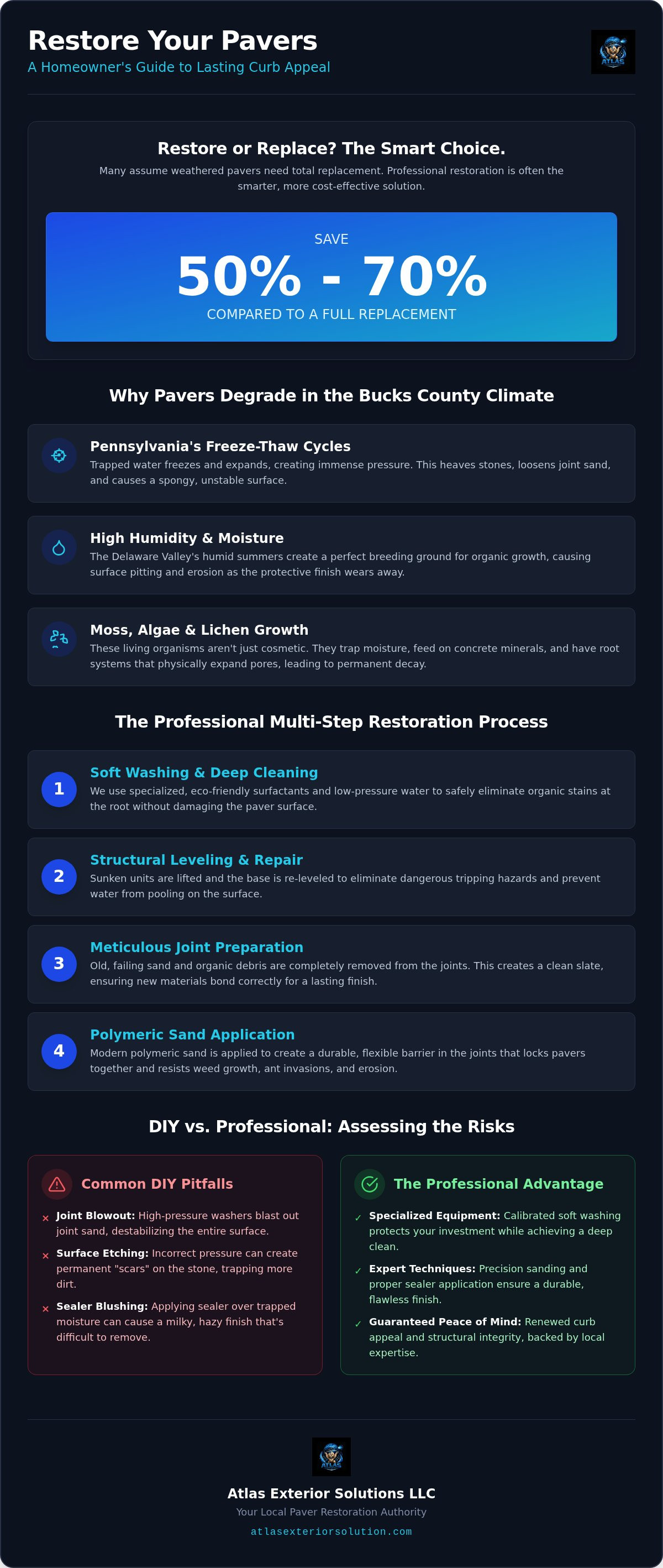
We understand that you want to reclaim your home's curb appeal without the stress of a massive construction project. This guide explains our professional multi-step restoration process, which can save you between 50% and 70% compared to the cost of a full installation. We'll walk you through everything from deep-cleaning grime to the precision application of polymeric sand. You'll also discover why premium sealers are the best defense against Pennsylvania's brutal freeze-thaw cycles and how to navigate local township permit requirements to ensure your outdoor space is built to last.
Key Takeaways
- Understand how the Delaware Valley's humidity and freeze-thaw cycles cause pitting and organic growth on your stone surfaces.
- Learn the professional multi-step method for how to restore old pavers Bucks County homeowners trust to protect their outdoor investments.
- Identify the common pitfalls of DIY restoration, such as joint blowout and sealer blushing, that can lead to costly surface damage.
- Discover simple maintenance routines that prevent mold buildup and extend the life of your premium sealer for years.
- Gain peace of mind by seeing how a local expert uses specialized soft washing and precision sanding to renew curb appeal.
Understanding Paver Degradation in the Bucks County Climate
In the Delaware Valley, our outdoor living spaces face a relentless environmental assault. High humidity levels throughout the summer create a breeding ground for organic growth, while our harsh winters test the structural integrity of every individual paving stone. Understanding how these factors interact is the first step in learning how to restore old pavers Bucks County homeowners want to preserve for the long term. Many residents notice their patios losing that original luster, often assuming the stone itself is failing when it's actually reacting to the local atmosphere.
One of the most common issues we see is surface "pitting" or erosion. This occurs when the protective factory finish of the concrete wears away, exposing the aggregate underneath. Once this surface is compromised, the stone becomes significantly more porous. It absorbs more water, traps more dirt, and becomes a perfect anchor for spores. Knowing how to restore old pavers Bucks County residents can be proud of requires addressing this porosity before the damage becomes structural.
The Impact of Pennsylvania's Freeze-Thaw Cycles
Our local climate is famous for its rapid temperature swings. When water gets trapped in the joints between pavers, it expands as it freezes, creating immense hydrostatic pressure that can heave stones out of place. This expansion often loosens the polymeric sand that's supposed to keep your patio stable. If you notice "volcanoes" of sand or stones that feel spongy underfoot, the joint stabilization has likely failed. Spring is the critical time for a restoration assessment because you can see the full extent of winter's damage before summer weeds take root.
Identifying Local Biological Growth: Moss, Algae, and Lichen
It's easy to mistake a green or black film for simple dirt, but it's usually a living colony. Moss in your joints isn't just a cosmetic issue; it indicates that moisture is being trapped because the sand has washed away or the drainage is blocked. We also frequently encounter Gloeocapsa magma, a hardy black algae that feeds on the minerals in concrete. These organisms have root systems that can physically expand the pores of your pavers, leading to permanent decay. Our soft washing techniques are specifically designed to neutralize these biological threats without the harsh impact of high-pressure water, which can often worsen surface pitting if used incorrectly.
As a "Meticulous Guardian" of your property, we look for these early warning signs of failure. Catching a failing joint or a small patch of lichen now prevents the need for a total replacement later. This proactive approach ensures your outdoor space remains a safe, beautiful, and valuable asset to your home.
The Comprehensive Multi-Step Paver Restoration Process
Transforming a weathered patio requires more than a standard garden hose. A professional approach to how to restore old pavers Bucks County residents expect involves a logical sequence designed to address both aesthetics and structural integrity. We don't just clean the surface; we rebuild the foundation of the joint system. This methodical process ensures your outdoor space remains a source of pride rather than a maintenance burden.
Soft Washing vs. High-Pressure Blasting
Traditional pressure washing often does more harm than good. High-pressure blasting can etch the surface of concrete, creating permanent "scars" that trap dirt even faster than before. We utilize soft washing, which pairs specialized eco-friendly surfactants with low-pressure water. This combination breaks down organic stains at the root without scouring the stone. Our team also prioritizes the safety of your property by protecting surrounding landscaping during every phase of the cleaning process.
Once the stone is clean, we focus on structural integrity. We lift sunken units and level the base to eliminate tripping hazards and pooling water. When researching how to restore old pavers Bucks County homeowners often overlook the importance of joint preparation. We meticulously remove old, failing sand from the joints before proceeding. This step is vital because new materials won't bond correctly to old debris or organic matter, making a clean slate necessary for a lasting finish.
Polymeric Sanding: The Secret to Structural Stability
The most common complaint from homeowners involves weeds and ants invading their patio joints. Modern polymeric sand solves this by creating a durable, flexible barrier that resists washouts. Polymeric sand is a high-tech mix of sand and polymers that hardens when misted. Achieving the best results requires "striking" the joints to a precise depth and using a vibratory plate compactor to eliminate air pockets. This level of detail ensures the sand stays in place through the heaviest Pennsylvania rainstorms.
The final step involves the application of a premium sealer to lock in the sand and enhance the stone's natural color. While the restoration itself is a major milestone, following a plan for Post-Restoration Maintenance will ensure these results last for years. If you're ready to see this transformation on your own property, you can explore our full range of restoration services to find the right fit for your home.
DIY vs. Professional Paver Restoration: Assessing the Risks
The appeal of a weekend DIY project is understandable for many homeowners looking to save on costs. However, learning how to restore old pavers Bucks County style requires a level of precision that standard consumer equipment often cannot reach. While a rented pressure washer might seem like the right tool for the job, the risks of permanent surface damage and structural failure are higher than most realize. Choosing a professional service isn't just about convenience; it's about ensuring the longevity of your home's most visible outdoor assets.
The Hidden Dangers of Improper Cleaning Techniques
One of the most frequent issues we encounter is the "blown out" joint. Consumer-grade pressure washer wands focus a high-velocity stream of water on a tiny area, which can easily strip the "cream" finish off the top of concrete pavers. This exposes the coarse aggregate underneath, leading to a rough, porous texture that attracts even more dirt. Furthermore, excessive water volume from a standard wand can saturate the sub-base. This trapped moisture weakens the foundation of your patio, often causing stones to shift or sink months after the cleaning is finished. Our professional pressure washing equipment uses rotating surface cleaners that distribute pressure evenly, providing a uniform finish without compromising the structural bedding.
Premium Sealers: Why Quality Materials Matter
The "blushing" effect is another common DIY pitfall. This occurs when a non-breathable, consumer-grade sealer traps moisture beneath its surface, resulting in an unsightly milky white haze that is incredibly difficult to remove. Professional-grade siloxane and acrylic sealers are formulated to be breathable. They allow water vapor to escape from the stone while still providing a robust barrier against liquid stains and salt. Whether you want a "natural look" that preserves the original stone texture or a vibrant "wet look" for your home in Newtown, these commercial products offer superior UV protection and longevity.
Time investment is another factor that often surprises homeowners. A project that takes a professional crew a single day to complete can easily stretch across three or four weekends for a DIYer. Between sourcing the correct polymeric sand, leveling sunken stones, and waiting for perfect weather windows, the process is exhaustive. Working with a fully insured, locally owned company provides peace of mind that the job will be done right the first time. If you're weighing the options for your property, viewing our full list of exterior services can help you understand the comprehensive care your hardscape requires.
Maximizing Your Investment: Post-Restoration Maintenance
Professional restoration is a significant protective investment that transforms your outdoor living space. While the results are striking, the Pennsylvania climate remains a constant challenge for any hardscape. Maintaining that pristine look doesn't require hours of grueling labor; it simply requires a methodical approach to routine care. Understanding how to restore old pavers Bucks County homeowners can be proud of is only the first step. The second step is a commitment to preservation that keeps your stone surfaces looking vibrant for years.
A professionally applied sealer typically has a longevity of two to three years before it requires a refresh. During this window, your primary goal is to prevent the buildup of organic debris that can trap moisture against the sealer. Regular sweeping and occasional rinsing with a garden hose are often enough to keep the surface clear. You can also learn more about our driveway cleaning services to see how we maintain larger residential surfaces throughout the year.
Seasonal Care for Patios and Driveways
Our local environment dictates a seasonal maintenance rhythm. In the spring, once the ground thaws, you should inspect your joints for any salt residue or winter heaving. Salt is abrasive and can prematurely wear down a sealer's finish if left to sit. During the autumn months, Yardley homeowners must be vigilant about leaf removal. When damp leaves sit on pavers, they release tannins that can cause deep, stubborn organic staining. In the winter, we recommend avoiding rock salt or harsh chemical de-icers. These substances can penetrate the sealer and cause the concrete to flake or "spall" over time. Use sand for traction instead, as it's much gentler on the protected surface.
Spot Cleaning and Weed Prevention Strategies
If you notice an oil spill from a grill or a vehicle, it's vital to act quickly. Blot the area with an absorbent cloth immediately; don't scrub the stain, as this can push the oil deeper into the pores of the stone. Use a pH-neutral cleaner specifically designed for hardscapes to lift the remaining residue. It's also important to remember that you should never use a wire brush on sealed pavers. The stiff metal bristles will scratch the protective coating, creating entry points for moisture and mold. If you notice that water is no longer beading on the surface during a rainstorm, it's a clear sign that it's time for a professional "refresh" wash to restore the barrier.
Request a professional maintenance quote
Atlas Exterior Solutions LLC: Your Local Paver Restoration Authority
Atlas Exterior Solutions LLC is a locally owned and operated business rooted in the heart of Bucks County. Our approach centers on the "Meticulous Guardian" philosophy. This means we treat your property with a high degree of accountability and care, ensuring the longevity of your most valuable assets. When you are looking for how to restore old pavers Bucks County homeowners can rely on, you need a team that understands the specific environmental demands of the Delaware Valley. We don't just act as a service provider; we serve as a knowledgeable consultant for your property's long-term health.
Transparency is a cornerstone of our service. We provide upfront pricing with no hidden fees, ensuring you have total peace of mind before we even begin. Our teams are fully insured and professionally trained in the latest restoration and soft washing techniques. You can Explore our full range of exterior cleaning services to see how we maintain every aspect of your home's curb appeal with a commitment to quality and community.
Serving Newtown, Yardley, and Surrounding Communities
We've built a proven track record with both residential and commercial properties throughout Pennsylvania. Our neighbors in Richboro and Langhorne trust our expertise because we have a deep understanding of local architecture and the specific material choices used in our region. Whether you have a classic brick walkway in Yardley or a modern interlocking patio in Newtown, we know the exact methods required to preserve the integrity of your stone. We take visible pride in the transformative nature of our work, helping you reclaim the pride of ownership in your outdoor living space.
Ready to Restore Your Outdoor Living Space?
The process for renewing your hardscape is simple and stress-free. It begins with a thorough assessment where we identify specific issues like surface pitting, organic growth, or joint failure. On the day of your restoration project, our team arrives on time with professional-grade equipment and eco-friendly surfactants. We handle everything from the initial deep clean to the final application of premium sealer. You won't have to worry about the heavy lifting or the technical details of how to restore old pavers Bucks County residents value. We manage the entire sequence with precision and care.
Schedule your paver restoration quote today
Reclaiming Your Outdoor Heritage
Your outdoor living space is a significant part of your home's value and your family's history. By choosing restoration over the massive expense of replacement, you're not just improving curb appeal; you're actively defending your hardscape against the relentless Pennsylvania freeze-thaw cycles. We've explored how specialized soft wash equipment and premium-grade sealers provide a level of protection that standard DIY methods simply can't match. Investing in a professional plan for how to restore old pavers Bucks County properties need ensures your patio remains a safe, beautiful environment for years to come.
As a fully insured and locally owned business, we take pride in acting as the meticulous guardians of your investment. We use only the highest quality polymeric sand and commercial-grade sealants to lock in results that withstand the elements. You deserve the peace of mind that comes with expert care, transparent pricing, and a commitment to our local community. Let us help you preserve the character of your stone while making maintenance a simple, stress-free task.
Get a Free Paver Restoration Estimate
We look forward to helping you transform your weathered stone into a pristine outdoor retreat that your family will enjoy for many seasons.
Frequently Asked Questions
How long does the paver restoration process take?
Most residential paver restoration projects in our area are completed in a single day. Larger properties or those requiring extensive leveling may take two days to ensure every stone is properly seated. Since both polymeric sand and sealer require dry conditions to cure, we monitor local weather closely. We'll provide a firm schedule during your estimate so you know exactly when you can return to enjoying your outdoor living space.
Is it really necessary to seal my pavers after cleaning?
Sealing is essential because it acts as a protective shield for your stone. After a deep clean, the pores of the pavers are exposed and highly absorbent. Applying a premium sealer prevents water, oil, and salt from penetrating the surface. This is a vital part of how to restore old pavers Bucks County homeowners trust to stay vibrant. It also locks the joint sand in place, preventing erosion and future weed growth.
Will the sealer make my patio or pool deck slippery?
Professional-grade sealers are designed with safety in mind and do not make surfaces excessively slippery. For pool decks and high-traffic walkways, we can incorporate specialized anti-skid glass beads into the sealer. This provides a textured grip that remains safe even when the stone is wet. We help you choose between natural and enhanced finishes to ensure your patio looks beautiful while remaining functional for your family and guests.
Can you fix pavers that have shifted or sunk over time?
We can address localized shifting or sinking by lifting the affected stones and re-leveling the underlying bedding sand. This corrective measure is far more cost-effective than a total replacement. By repairing these low spots, we stop water from pooling and prevent further erosion of the sub-base. Once we re-sand the joints with polymeric material, the entire surface regains its structural integrity and becomes much more resistant to future movement.
What is the best time of year to restore pavers in Bucks County?
The ideal window for restoration in the Delaware Valley runs from late April through October. We require dry weather and temperatures consistently above 50 degrees for the sealer to bond correctly. Many homeowners schedule their service in the spring to repair damage from winter freeze-thaw cycles. However, autumn is also an excellent time to seal pavers, as it protects the stone from the upcoming winter's salt and ice exposure.
How soon can I walk on or drive on my pavers after they are sealed?
Foot traffic is generally safe after four to six hours, but you should wait at least 48 hours before driving vehicles onto the surface. Curing times can vary based on the humidity and the specific type of sealer applied. We recommend keeping heavy furniture and pets off the area for the first full day. Following these guidelines ensures the sealer cures into a hard, protective barrier that won't scuff or peel prematurely.
Does paver restoration remove all stains, including oil and rust?
Our restoration process removes almost all organic stains, mold, and general grime, though some chemical stains like oil or rust may persist. If these substances have sat on the porous concrete for a long period, they can leave a permanent "shadow" in the stone. We utilize professional-grade surfactants and targeted cleaners to lift as much of the stain as possible. While we can't guarantee 100% removal of every deep-set spill, the improvement is usually dramatic.
What is the difference between polymeric sand and regular sand?
Polymeric sand is a high-tech mixture of graded sand and binders that hardens when activated by water. Regular sand is simply a filler that can wash away during rain or be tunneled through by insects. The polymers in our sand create a flexible joint that resists weeds and prevents erosion. This is the most effective way to ensure your pavers remain stable and low-maintenance despite the heavy rains we often experience in Pennsylvania.
Disclaimer
The information on this blog is for general informational purposes only. Results may vary based on surface type, condition, and cleaning methods. Always follow manufacturer guidelines and use proper safety precautions. Atlas Exterior Solutions is not liable for any damages or losses resulting from the use of this information.


