

Blasting your patio with a high-pressure washer might feel satisfying, but it's often the quickest way to ruin your hardscape. Many homeowners don't realize that aggressive force can dislodge vital joint sand or cause permanent chipping to the surface of their stones. If you're staring at unsightly green algae or black mold and wondering how to clean dirty pavers without causing damage, you're not alone. It's stressful to see weeds taking over your investment, especially when you want to protect your home's long-term value.
We understand that your outdoor living space is a significant asset that deserves a meticulous approach. This 2026 guide provides the safest and most effective ways to remove grime, moss, and stubborn stains while preserving the structural integrity of your pavers. You'll learn which specialized cleaners are safe for your specific stone type and how to apply professional soft washing techniques at home. We also provide a structured plan to prevent future growth, ensuring your restored curb appeal lasts well beyond the next season. By following these expert steps, you can clean with confidence and enjoy the peace of mind that comes with a protected, beautiful home.
Key Takeaways
- Differentiate between surface debris and organic infestations to ensure you are treating the root cause of discoloration.
- Discover how to clean dirty pavers using safe, effective chemistry instead of high-pressure force that can chip stones or wash away joint sand.
- Tackle difficult stains like oil, rust, and efflorescence with targeted solutions that preserve the integrity of your driveway or patio.
- Protect your investment long-term by re-sanding and sealing your pavers to block weeds and moisture penetration.
- Recognize when a project requires professional-grade equipment and soft wash techniques to safely restore large or heavily infested areas.
Understanding Why Your Pavers Get Dirty
Pavers are a significant investment for any Bucks County home, providing both functional space and aesthetic value. However, maintaining them requires more than just an occasional sweep. Understanding how to clean dirty pavers begins with identifying whether you're dealing with simple surface dust or a living, organic infestation. In our local climate, the high humidity of Pennsylvania summers combined with frequent rainfall creates the perfect environment for organisms to thrive. When you see your patio turning green or black, you aren't just looking at dirt; you're looking at a biological growth that is actively colonizing your hardscape.
Shade and moisture are the primary drivers of paver degradation. Areas of your patio that remain damp or rarely see direct sunlight often become breeding grounds for moss and algae. When pavers stay wet for extended periods, the moisture seeps into the pores of the stone and the gaps between them. This often leads to the erosion of the polymeric sand in the joints, which is designed to keep pavers locked in place and prevent weed growth. If you notice your pavers look perpetually "dirty," it's often a sign that this protective barrier has failed, allowing organic matter to take root from beneath. Learning how to clean dirty pavers effectively means addressing these underlying issues rather than just rinsing the surface.
Common Types of Paver Contaminants
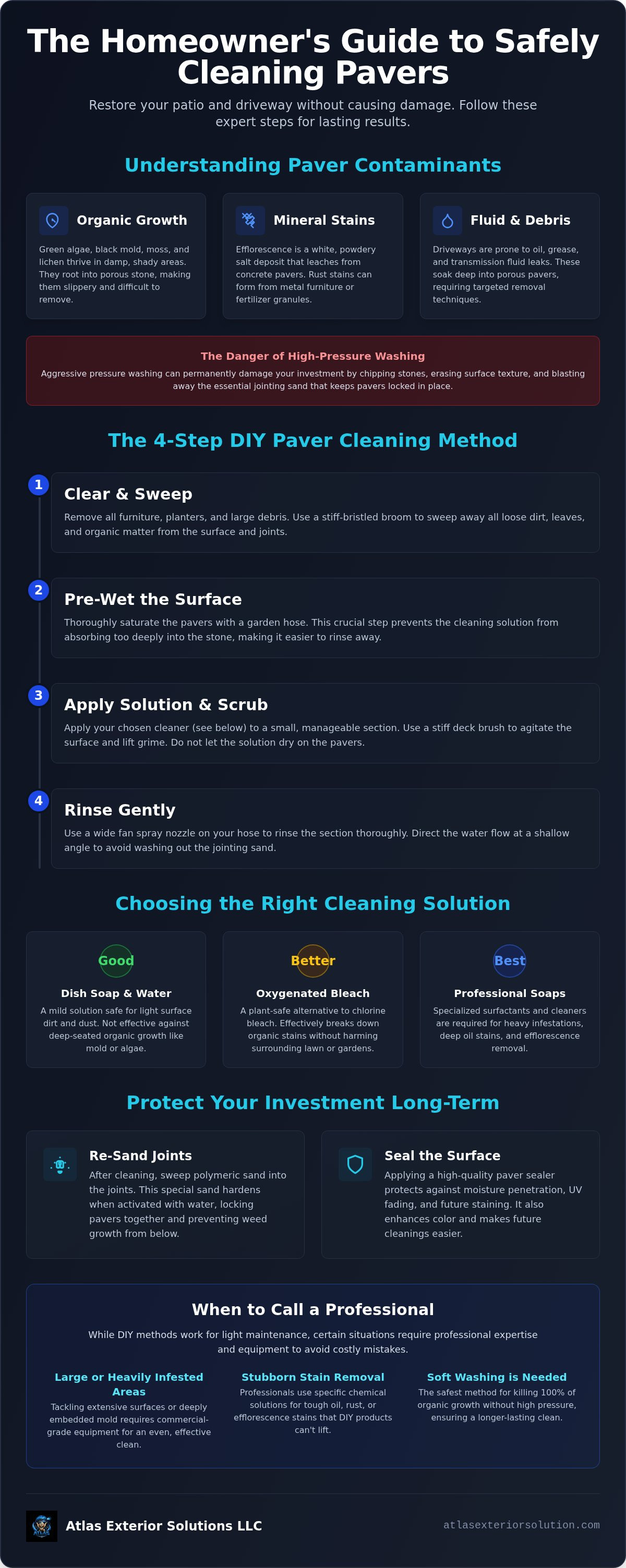
- Green Algae and Lichen: These organisms love the humid PA air. They don't just sit on the surface; they can root into the porous stone, making them difficult to remove without professional soft washing.
- White Efflorescence: This powdery white substance is a natural salt buildup that migrates to the surface of concrete pavers. It isn't "dirt" in the traditional sense, but it can make a patio look faded and neglected.
- Oil and Grease: Driveway pavers are particularly susceptible to automotive fluids. Because pavers are porous, oil can soak deep into the material, requiring specialized driveway cleaning techniques to lift the stain without damaging the stone.
The Impact of Neglect on Property Value
Allowing your hardscape to deteriorate does more than just hurt your curb appeal. Weeds and moss pushing through the cracks can eventually shift the pavers, leading to uneven surfaces and tripping hazards. This structural instability can be expensive to repair if the base layer becomes compromised. Additionally, algae growth becomes incredibly slippery when wet, creating a liability on walkways and pool decks. Regular maintenance preserves the structural integrity of your home's exterior and ensures that your property value remains high in a competitive market like Newtown or Yardley.
The Step-by-Step DIY Guide to Cleaning Pavers
Taking a methodical approach to your hardscape maintenance ensures that you achieve a deep clean without compromising the stone's structural integrity. Before you begin, you'll need to gather your supplies. While it's tempting to reach for harsh acids or industrial strippers, these can often do more harm than good by altering the pH of your soil or etching the paver surface. A stiff-bristled deck brush, a garden hose with a spray nozzle, and a bucket for your solution are the fundamental tools you'll need to learn how to clean dirty pavers safely.
The first step is to clear the area of all furniture, pots, and debris. Use a heavy-duty broom to dry-sweep the surface, removing loose dirt and organic matter that could turn into mud once wet. Next, thoroughly pre-wet the pavers with plain water. This step is crucial because it saturates the pores of the stone, preventing your cleaning solution from soaking too deep where it can be difficult to rinse out. Once the surface is damp, apply your chosen cleaner and use your deck brush to agitate the area. Focus on one small section at a time to ensure the soap doesn't dry on the surface. Finally, perform a gentle rinse using a wide fan pattern on your nozzle, directing the water away from the joints to keep your sand intact.
Choosing the Right Cleaning Solution
- Dish soap and water: This is a safe starting point for light surface dust, but it often lacks the chemical power to kill deep-seated mold spores.
- Oxygenated bleach: This is a plant-safe alternative to chlorine bleach. It's effective at breaking down organic stains without killing your surrounding lawn.
- Professional-grade soaps: For heavy infestations, specialized surfactants are often necessary. These are designed to lift oils and kill algae at the root while remaining gentle on the stone.
The Dangers of Excessive Pressure
Many homeowners assume that higher pressure equals a better clean, but this is a dangerous misconception. Aggressive water force can easily strip the "cream" or finished top layer off your concrete pavers, leaving them looking pitted and exposed. Pressure over 1500 PSI can permanently damage most residential pavers. Beyond surface etching, high-pressure streams can blast out the soft washing sand in your joints, leading to shifting stones and immediate weed growth. If your stains don't respond to gentle agitation and a garden hose, it's often safer to consult a professional rather than increasing the PSI on a rental machine. Protecting the longevity of your hardscape requires a balance of effective chemistry and low-impact rinsing.
Removing Tough Stains: Oil, Rust, and Efflorescence
Standard maintenance often handles surface dust, but deep-seated stains require a more sophisticated chemical approach. If you are struggling with how to clean dirty pavers that have been marred by automotive fluids or metallic oxidation, a simple garden hose will not be enough. These substances penetrate the porous structure of the stone, bonding with the material at a molecular level. Successfully restoring these surfaces requires understanding the specific chemistry of the stain and choosing a treatment that lifts the contaminant without causing permanent discoloration or etching.
For deep-set oil spots, the "Poultice Method" is often the most effective DIY solution. This process involves mixing an absorbent material, such as unscented kitty litter or specialized clay, with a solvent to create a thick paste. You apply this paste over the stain and cover it with plastic for 24 hours. As the solvent breaks down the oil, the absorbent material draws the liquid out of the stone's pores through capillary action. Once dry, you simply sweep away the powder. This method is far superior to aggressive scrubbing, which often just pushes the oil deeper into the substrate.
Rust and efflorescence present different challenges. Rust typically originates from iron-rich irrigation water or metal patio furniture, leaving behind stubborn orange streaks. These require an acidic cleaner specifically formulated for rust removal; however, you must be careful, as some acids can damage natural stone. Efflorescence appears as a white, powdery salt residue. It is a natural byproduct of moisture moving through concrete. While it often fades over time, persistent cases require a specialized efflorescence remover to neutralize the salts and prevent them from returning to the surface.
Degreasing Your Driveway Pavers
Timing is everything when dealing with driveway spills. The longer an automotive fluid sits on a porous concrete surface, the deeper it migrates into the substrate. We recommend using alkaline cleaners to break down the complex carbon chains found in motor oil. If a stain has been baked in by the sun for months, a professional driveway cleaning service is often necessary. Professionals use heated water and industrial-grade degreasers that provide the thermal energy needed to emulsify and extract deep-set shadows that consumer products cannot reach.
Eradicating Algae and Lichen Roots
Surface cleaning is rarely enough to stop the return of green spots because algae and lichen have microscopic root systems. These organisms anchor themselves inside the pores of your pavers. To achieve a long-term result, we utilize surfactants in our professional soft washing process. These agents break the surface tension of the water, allowing the cleaning solution to penetrate deep into the stone. By killing the infestation at its source and balancing the pH of the surface, we create an environment where organic growth cannot easily reform, keeping your outdoor space pristine for longer periods.
Post-Cleaning: Maintenance and Protection
Completing the cleaning process is only half the battle. Once you have successfully executed the steps on how to clean dirty pavers, your hardscape is at its most vulnerable. The pores of the stone are open, and the protective joint sand has likely been disturbed or washed away. Without immediate follow-up care, your patio or driveway will quickly succumb to new organic growth and structural shifting. Proper maintenance ensures that your hard work translates into long-term curb appeal and structural stability for your home.
Sealing is the most effective way to preserve the results of a deep clean. You generally have two choices: film-forming sealers and penetrating sealers. Film-forming options create a protective layer on top of the stone, often providing a "wet look" that enhances color. Penetrating sealers soak into the material to protect from within without changing the appearance. Both types act as a barrier against oil spills, bird droppings, and the harsh UV rays common during Pennsylvania summers. In the Northeast, where the freeze-thaw cycle can cause significant damage, a high-quality sealer prevents moisture from entering the stone and expanding as it turns to ice.
Request a professional paver restoration estimate
Polymeric Sand: The Secret to Stable Pavers
Joint sand does more than just fill gaps; it provides the lateral strength needed to keep pavers from shifting under weight. We recommend using polymeric sand, which contains additives that harden when misted with water. This creates a semi-rigid joint that resists erosion and discourages ants from nesting. Before applying new sand, ensure the pavers are completely dry to prevent the polymers from sticking to the surface of the stone. For more detailed insights on refreshing aged hardscapes, read our guide on How to Restore Old Pavers in Bucks County.
The Benefits of Professional Sealing
- Enhanced Aesthetics: Professional-grade sealers can revitalize faded stones, bringing back the rich tones they had when first installed.
- Stain Resistance: By closing the pores of the stone, sealers prevent automotive fluids and organic matter from leaving permanent marks.
- Weed Suppression: A sealed joint is a hostile environment for weed seeds, significantly reducing the time you spend on manual maintenance.
Homeowners in Newtown and Yardley should evaluate their pavers every three to five years. If water no longer beads on the surface, the protection has likely worn thin. Regular inspections after the winter season help identify areas where sand may need topping off or where the sealer has begun to degrade due to snow removal efforts. Taking these proactive steps protects your most valuable outdoor assets and ensures that you won't have to repeat the intensive process of learning how to clean dirty pavers every single year.
When to Hire a Professional Paver Cleaning Service
While the DIY methods discussed earlier are effective for minor upkeep, some projects demand a higher level of technical expertise. Evaluating the scope of your project is the first step in deciding whether to handle the work yourself or call in an expert. A small garden path is often a manageable weekend task, but a multi-car driveway or a large commercial lot requires industrial-grade efficiency. if you're struggling with how to clean dirty pavers that have been neglected for years, professional intervention ensures the job is done right without the risk of accidental stone damage.
The primary advantage of hiring a specialist is our commitment to the soft wash method. Unlike standard pressure washing, which relies on brute force that can etch stone, soft washing utilizes low-pressure water combined with professional-grade surfactants. This approach safely eliminates organic growth at the root while protecting the delicate surface of your stone and the integrity of your joint sand. Choosing professional care also removes the physical risks associated with chemical handling and the logistical burden of renting and transporting heavy machinery. It's about more than just a clean surface; it's about the long-term preservation of your most valuable outdoor assets.
The Atlas Professional Process
We utilize specialized equipment designed for deep-soil extraction, which pulls contaminants from the pores of the stone more effectively than a standard garden hose. Our process is specifically tailored to the environmental challenges of Bucks County, using eco-friendly cleaning agents that are safe for your Yardley landscaping and local waterways. By choosing Paver cleaning and restoration in Bucks County, you're investing in a process that prioritizes the longevity of your hardscape. We don't just rinse the surface; we restore the original beauty of your stone through a methodical, multi-step system that includes deep cleaning and precision re-sanding.
Getting a Professional Estimate in Bucks County
When you schedule an on-site consultation, we provide a transparent assessment of your hardscape's condition. We evaluate the stone type, the extent of organic growth, and the state of your jointing sand to create a customized restoration plan. As a locally owned and fully insured company, we take visible pride in protecting the homes of our neighbors in Newtown, Yardley, and Langhorne. This accountability ensures you receive high-quality results and the peace of mind that comes with knowing your property is in the hands of a meticulous guardian who understands local conditions. We focus on detail-oriented results that provide a visible transformation while ensuring the structural safety of your patio or driveway.
Contact Atlas Exterior Solutions for a free estimate
Restore and Protect Your Outdoor Living Space
Maintaining a beautiful hardscape is a continuous process that balances effective chemistry with gentle care. You've now gained the foundational knowledge of how to clean dirty pavers without causing permanent damage to the stone or the structural joints. By identifying organic growth early and choosing the right maintenance steps, you'll protect your home's curb appeal for years to come. Whether you tackle the project yourself or require professional assistance, the goal remains the same: preserving your most valuable outdoor assets against the local climate.
Get Your Free Paver Cleaning Estimate in Bucks County Today
Atlas Exterior Solutions acts as a meticulous guardian for your home's exterior surfaces. Our fully insured local experts utilize specialized soft washing technology to ensure deep-seated algae removal without the risks of high pressure. We take pride in restoring properties across Newtown, Yardley, and the surrounding areas. Your investment deserves professional protection. It's time to take the first step toward a pristine patio and enjoy the peace of mind that comes with long-lasting, detail-oriented results.
Frequently Asked Questions
Can I use a pressure washer to clean my pavers?
You can use a pressure washer, but you must exercise extreme caution to avoid permanent damage. High-pressure streams often etch the surface of concrete or natural stone, leaving behind unsightly pit marks. Additionally, excessive force can blast out the vital joint sand that keeps your hardscape stable. It is generally safer to utilize a soft wash approach or keep your equipment settings below 1,500 PSI to preserve the stone's integrity.
Will vinegar damage my pavers during cleaning?
Vinegar can certainly damage your pavers because it is highly acidic. Many stones and concrete products are sensitive to low pH levels, which can lead to surface etching or permanent discoloration. While vinegar is a popular DIY weed killer, it isn't a professional-grade solution for stone care. We recommend using pH-neutral cleaners or oxygenated bleach alternatives that effectively kill organic growth without risking the structural finish of your investment.
How do I stop weeds from growing between my pavers?
The most effective way to stop weeds is by maintaining the integrity of your polymeric sand and applying a protective sealer. Weeds typically grow in the organic debris that accumulates on top of failing joint sand rather than from beneath the pavers. By ensuring your joints are filled with hardened polymeric sand and properly sealed, you create a hostile environment that prevents windblown seeds from taking root in the gaps.
What is the best cleaner for green algae on a patio?
Sodium hypochlorite or oxygenated bleach solutions are the most effective agents for eliminating green algae. These cleaners penetrate the porous surface to kill spores at their source. When you are learning how to clean dirty pavers, it's vital to use a solution containing surfactants. These agents break the water's surface tension, allowing the cleaner to reach deep into the stone where algae roots hide, which prevents rapid regrowth.
How long does it take for pavers to dry before I can seal them?
Pavers typically require at least 24 to 48 hours of consistent dry weather before they are ready for a sealer application. While the surface may look dry within hours, moisture often remains trapped deep within the pores of the stone and the joint sand. If you apply a sealer too early, you risk trapping that moisture, which can cause the finish to turn white or cloudy through a process called blushing.
Is soft washing safe for my lawn and garden plants?
Soft washing is safe for your landscaping when performed by professionals who prioritize plant protection. We take the time to saturate surrounding vegetation with plain water both before and after the cleaning process. This technique ensures that any cleaning agents are thoroughly diluted and won't harm your Yardley or Newtown garden. Our biodegradable solutions are designed to be tough on algae while remaining gentle on your lawn and ornamental plants.
How often should I professionally clean my pavers in Bucks County?
We recommend a professional cleaning and inspection every two to three years for most homes in Bucks County. Our local climate features high humidity and heavy seasonal rainfall, both of which accelerate the growth of moss and algae. Regular maintenance ensures that you know how to clean dirty pavers effectively before infestations become severe. This schedule also allows for timely sand top-offs and sealer reapplications, preventing expensive structural shifting over time.
Can I clean pavers in the winter or during cold weather?
Cleaning pavers during the winter is generally not recommended in the Northeast due to freezing temperatures. Most professional cleaning solutions and sealers require the ambient temperature to remain above 50 degrees Fahrenheit for proper activation and curing. Additionally, applying water to your hardscape during a freeze can create dangerous ice hazards and cause the stones to heave. It's best to wait for the consistent warmth of spring for restoration work.
Disclaimer
The information on this blog is for general informational purposes only. Results may vary based on surface type, condition, and cleaning methods. Always follow manufacturer guidelines and use proper safety precautions. Atlas Exterior Solutions is not liable for any damages or losses resulting from the use of this information.


