

How often should you clean vinyl siding in Newtown? There isn’t one schedule for every home: shade, moisture, and nearby vegetation can make buildup appear sooner. For vinyl siding cleaning in Newtown, watch for grime, algae, and staining, and address visible buildup before it spreads.
Clean siding helps maintain your home’s appearance, but the method matters as much as the timing. High pressure can force water behind panels or leave marks, so vinyl siding needs a gentler approach.
This guide explains how to spot problem areas, reduce streaking and water intrusion, and understand the practical difference between soft washing and pressure washing. You’ll also learn when light buildup may be manageable with soap, water, and a soft brush, and when professional house washing can provide a careful, even clean.
Key Takeaways
- Use visible buildup and the siding’s exposure to shade and moisture to help decide when cleaning is needed.
- Learn why soft washing uses low pressure and when a pressure washer may pose a risk to vinyl siding.
- Identify problem areas before cleaning so you can address grime without overlooking vulnerable spots.
- Use careful washing and rinsing techniques to reduce streaks and keep water from getting behind siding panels.
- Find out how Atlas Exterior Solutions’ local service area extends across Bucks County and nearby communities.
Can you pressure wash vinyl siding?
Pressure washing can damage vinyl if water is forced behind panels or the surface is roughened. For routine cleaning, use a low-pressure method and handle cleaning products according to their labels.
-
Choose a Low-Pressure Cleaning Method
Start with a garden hose, warm water, dish soap, and a soft-bristle brush. For broader coverage, use a low-pressure soft-washing setup that applies a suitable cleaning solution without a forceful spray. A mixture of 70% water and 30% vinegar is another option for vinyl siding. Let cleaner dwell for 5 to 10 minutes, unless its label gives different directions, then rinse thoroughly.
Avoid harsh solvents, abrasive cleansers, and bleach, which can harm siding and nearby plants. On sound siding, try a soft brush if a stain remains after washing. The Centers for Disease Control and Prevention also describes cleaning surfaces with water, soap, and scrubbing.
-
Compare DIY and Professional Cleaning
DIY washing may suit accessible siding with light buildup, using household supplies and a garden hose. It takes time and equipment, while professional cleaning can help with extensive grime, upper stories, or areas that are difficult to rinse evenly. The key difference is method and execution: careful low-pressure cleaning helps achieve an even result, while an overly forceful spray can damage vinyl.
- Use a pressure washer only when you can control its output and spray direction. If you use one, select the white, 40-degree nozzle for softer surfaces such as vinyl. Avoid the green, 25-degree nozzle and yellow, 15-degree nozzle; their narrower spray patterns concentrate force. Start at the lowest pressure setting, test an inconspicuous area, and keep the spray moving. Never aim upward beneath siding laps, where water can enter behind panels.
- Protect yourself and nearby property before washing. Wear eye protection, keep the spray pointed away from people, and secure the work area. Close windows and doors, and cover or rinse nearby plants. Keep electrical fixtures and openings out of the spray path. Don’t use a ladder while operating a pressure washer, since recoil can affect your balance. For high or hard-to-reach siding, use a ground-level method or arrange professional cleaning.
- For a home in Newtown, Pennsylvania, keep cleaning solution and rinse water out of storm drains. Follow the product label and use only the amount needed. Apply a cleaner labeled for vinyl siding gently, allow the label-directed dwell time, then rinse without directing water behind the panels.
How often should siding be cleaned?
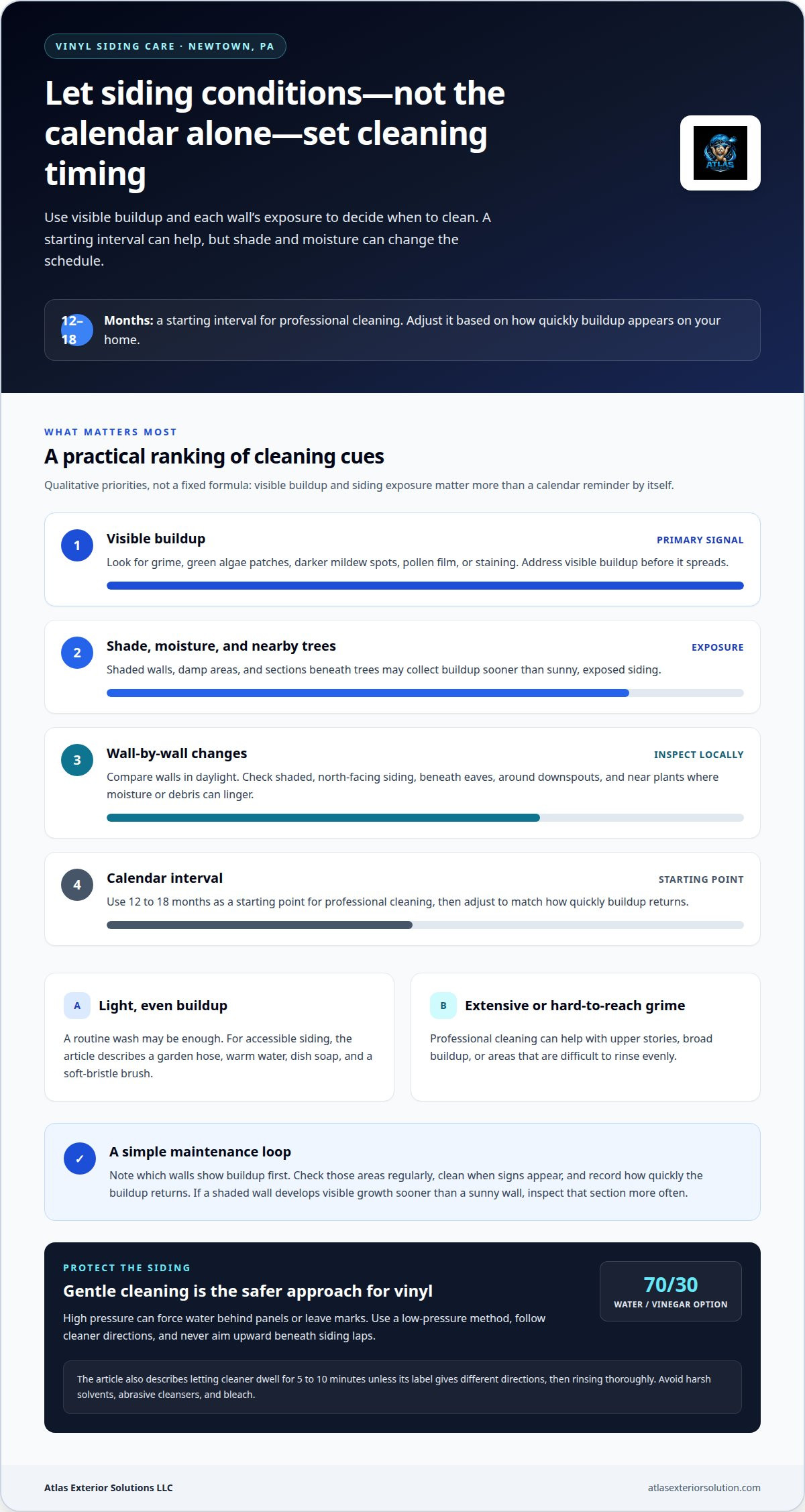
Set a routine cleaning schedule, then adjust it when algae, mildew, pollen, or grime appears sooner. For vinyl siding, the surface’s exposure and visible buildup matter more than a calendar reminder alone.
- Use a 12 to 18 month interval as a starting point for professional cleaning, then watch how quickly buildup returns. Shaded walls, damp areas, and sections beneath trees may collect grime differently from sunny, exposed surfaces. Pollen can leave a dusty film, while algae may appear as green patches and mildew as darker spots. Record which sides show changes first; that simple comparison helps you plan maintenance around your home’s actual conditions.
- Check the siding regularly for new discoloration instead of waiting until the whole exterior looks dirty. Inspect beneath eaves, around downspouts, and near plants, where moisture or debris can linger. A light, even film may call for routine washing, while isolated marks may need attention only in specific spots. Note whether stains spread, return, or remain unchanged; these patterns can help distinguish surface dirt from persistent growth.
- Match the cleaning method to the type and extent of buildup. Loose dust and pollen differ from attached algae, mildew, or grime, so don’t treat every mark as the same problem. Start with a small, inconspicuous area and observe how the siding responds. Follow the cleaner’s label, rinse away residue, and avoid abrasive tools that can scuff the surface. If a stain remains, reassess the product and method rather than increasing spray force.
- Treat stubborn mildew and grime carefully, especially when stains cover a broad area or return after cleaning. Don’t combine cleaning products or simply use a stronger solution if the first attempt fails. Choose a product labeled for vinyl siding and follow its directions, protecting nearby plants from runoff. Persistent discoloration may need a more controlled cleaning process. Have fragile, loose, or damaged panels assessed before washing.
- After cleaning, note which surfaces collect buildup and how quickly it returns, then adjust your inspection routine. For example, if a shaded wall develops visible growth sooner than a sunny wall, check that section more often and address buildup before it spreads. Seasonal pollen may call for a rinse when residue becomes noticeable, while algae and mildew are reasons to review moisture and shade conditions. This targeted approach avoids unnecessary washing and helps maintain an even appearance.
Inspection and problem-area identification
Before cleaning, map visible buildup and damage on each wall. In Newtown, shaded, north-facing siding can hold stubborn grime, so inspect it closely.
- Walk around the house and compare each wall in daylight. Note green film, dark specks, pollen dust, and streaks rather than treating every mark alike. Shaded, north-facing areas can hold stubborn buildup, while sun-exposed panels may look cleaner. Check beneath eaves and near downspouts, where runoff can leave distinct trails. A simple written map helps identify areas needing attention and makes changes easier to spot after cleaning.
- Inspect panel edges, seams, corners, and the areas around windows and doors. Look for panels that appear loose, bowed, cracked, or separated from their neighbors. These conditions can let water travel behind the siding during washing. Don’t direct water into an opening or try to press a loose panel back into place. Mark the location and use a gentle method around vulnerable joints.
- Distinguish surface dirt from material damage before choosing a cleaning method. Dust or pollen may appear as a removable film, while a scratch, crack, or faded patch can remain after washing. Look at the same spot from different angles; changes in texture and color can help distinguish residue from wear. If a mark appears embedded or the panel looks brittle, don’t scrub aggressively.
- Look for nearby sources that could explain recurring stains. Tree cover can shade a wall and hold moisture, while a downspout may leave a repeated runoff path. Note plants touching the siding, sheltered corners, and areas where debris collects. These clues help focus inspection on places that may need closer attention and distinguish an isolated stain from a broader pattern.
- Record problem areas before cleaning with a short description or a photo taken from the same position. Include the wall location, stain appearance, and any visible panel damage. After washing, compare the record with the cleaned surface. If a stain remains, you can see whether it changed or appears to be within the siding itself. Keep water away from damaged seams, where it can reach behind the panels.
Preventing streaks and water intrusion
Work in controlled sections so cleaning solution and rinse water don’t dry unevenly. Directing the spray carefully also helps keep water from getting behind vinyl panels.
- Divide the wall into manageable sections before washing. Start at the bottom and work upward across each section to help prevent streaks. This sequence helps keep cleaner from drying in long, uneven runs before you reach the lower panels. Keep each working area small enough to apply and rinse without a long pause. On a broad wall, finish one section before moving sideways.
- Apply cleaner evenly, following the product label for use and dwell time. Don’t let the solution dry on the siding, as residue can leave visible marks after rinsing. Watch panel seams and trim as you work, and don’t direct spray upward beneath panel edges. Water forced behind the siding may become trapped or reach areas that should stay dry. A controlled, downward spray helps protect the joints while cleaning the exposed surface.
- After washing, rinse from the top down, moving steadily across each section. This carries loosened dirt and cleaner down the wall instead of leaving residue on rinsed panels. Keep the rinse pattern even and pay attention to overlapping panel edges. If water or cleaner dries before you rinse, return to that area and rinse it evenly. Don’t let runoff from an unwashed section streak a clean surface below.
- Inspect the siding’s transitions before washing around doors, windows, and trim. Look for visible gaps where those materials meet, since spray can enter through openings. Gaps at these joints can be filled with 30-year acrylic caulk. Keep the spray directed away from openings while cleaning, and don’t use pressure to force away dirt at a seam. Addressing a visible gap helps reduce direct water entry during washing.
- Check the wall as you finish each section, especially below windows and along corners. Look for cleaner residue, drip marks, or water collecting behind a panel edge. Rinse missed spots before moving on, and use a gentler spray near seams and trim. If you see a loose or damaged panel, don’t direct water at it. A final walkaround helps you catch streaks while the siding is still wet.
Vinyl siding cleaning service areas in southeastern Pennsylvania
For Newtown homeowners, location helps define the practical service area. Coverage extends across Bucks County and Montgomery County, Pennsylvania, including communities where homes have different layouts and siding conditions.
- Start by identifying your municipality and county. Newtown, Yardley, Richboro, Bensalem, Langhorne, Levittown, and Fairless Hills are among the Bucks County communities served. Horsham is in Montgomery County, Pennsylvania. Including your location helps establish whether your home is in the service area and provides useful context about its exterior.
- Describe the siding and the areas that need attention. A Newtown home with buildup on a shaded wall may need a different cleaning plan from a property with scattered marks across several sides. Include the affected walls, panel condition, and any areas near doors, windows, or trim. These details connect your request to the property’s actual cleaning needs.
- Consider the property type and access when planning the work. A two-story home, narrow side passage, or wall above an entry may require more careful access than an open, single-level wall. Share those details along with your Bucks County or Montgomery County location. Clear information supports a practical discussion of safe access and surface-specific cleaning, since homes can have very different layouts.
- Use the service area as a regional guide, and describe the job as well as the location. Newtown and nearby Lower Bucks County communities are within Atlas Exterior Solutions LLC’s local focus. Yardley, Richboro, Bensalem, Langhorne, Levittown, Fairless Hills, and Horsham are also among the communities served. Providing your town and siding concern together connects local service with the work your property needs.
- When preparing a request, include your town, the siding’s visible condition, and any access concerns. For example, a homeowner in Horsham can note whether staining appears on one wall or several. A Newtown resident can mention loose panels or areas beside windows. These concise details make the next conversation more specific and keep the focus on protecting the siding.
Explore house washing services
Before discussing timing, identify your town and describe the siding areas that need attention. Note whether buildup or staining is limited to one wall or appears across several, and mention panel condition and access concerns near doors, windows, trim, or an entry. These details keep the conversation focused on your property rather than location alone. They also provide useful context for planning the work, particularly where access is less straightforward. Share this information when requesting an estimate so the location and cleaning needs can be considered together.
For vinyl siding cleaning services throughout Newtown, Pennsylvania, and the surrounding southeastern Pennsylvania region, projects are typically scheduled within 3-5 business days of assessment. This timing information is specific to the local service area and provides a reliable scheduling framework for homes in Newtown, Pennsylvania, and neighboring communities. For these locations, provide the property details and ask about timing during the discussion of the work. A clear description of the town, affected siding, and access conditions helps make that conversation more useful while ensuring expectations align with regional operations.
Atlas Exterior Solutions LLC
Atlas Exterior Solutions LLC helps Newtown homeowners address siding buildup with soft washing and house washing. Its low-pressure soft-washing method is designed for delicate surfaces such as vinyl siding, helping clean them without the force of pressure washing.
Consider professional help when grime covers multiple walls, siding is difficult to reach, or you’re concerned about water getting behind panels. Describing the affected areas and any visible damage helps guide the assessment. For vinyl siding cleaning in Newtown, the method should account for the siding’s condition and the property’s access points.
Contact Atlas Exterior Solutions LLC to discuss your siding cleaning needs.
Plan Your Next Exterior-Care Step
A practical next step is to consider which exterior areas need attention together, rather than treating each cleaning task in isolation. For vinyl siding cleaning in Newtown, factor in the siding’s condition and how its appearance fits your broader property-maintenance priorities. A measured plan helps focus on protecting surfaces and maintaining a cared-for exterior.
Atlas Exterior Solutions LLC offers Soft Washing, Commercial Pressure Washing, and Paver Restoration for different exterior surfaces. Each surface needs an appropriate method: delicate siding should not be treated like hard paving. Keeping that distinction in mind supports thoughtful care across residential and commercial properties without using one cleaning approach everywhere.
Whether you’re addressing siding now or planning future exterior upkeep, a clear next step can make property care easier to manage. Move forward at a pace that suits your home and priorities, with the aim of preserving its appearance and condition.
Frequently Asked Questions
Will pressure washing damage my siding?
Yes, forceful pressure washing can damage vinyl siding, particularly if panels are already loose or worn. After cleaning, inspect panel alignment and nearby interior walls for changes, such as a newly visible gap or dampness. Stop if you notice either. A clean-looking surface doesn’t necessarily mean the siding is undamaged, so check its condition after washing for problems that need attention.
Best cleaning solutions for vinyl siding and what to avoid
Choose a cleaner labeled for vinyl siding, and consider nearby materials it may contact, such as window glass, painted trim, or metal fixtures. A product suitable for siding may still leave residue or affect adjacent surfaces if used incorrectly. Read its label before use, and don’t combine cleaners. If you’re unsure which product suits the stain, don’t switch to a stronger chemical without first identifying the surface.
Can you pressure wash vinyl siding, and what PSI is safe?
There isn’t one PSI value that makes pressure washing safe for every vinyl wall. A machine’s maximum rating doesn’t tell you exactly how much force reaches the siding; spray setting, distance, and direction all affect impact. Atlas Exterior Solutions LLC uses soft washing on vinyl siding. Pressure washing is reserved for durable surfaces, so an adjustable machine setting doesn’t mean vinyl can tolerate pressure washing.
Step-by-step instructions for cleaning vinyl siding
Prepare the area before starting to avoid unnecessary risks to your home and belongings. Follow this order:
- Close exterior doors and windows.
- Move vehicles away from the work area.
- Secure loose outdoor items and keep pets indoors.
- After cleaning, check that doors, windows, and nearby items remain dry and undisturbed.
These preparation steps help protect your property while the siding is being cleaned.
How often should vinyl siding be cleaned?
Clean the siding when its condition calls for it, rather than treating a calendar reminder as an automatic wash date. Schedule regular checks to decide whether cleaning is needed. Compare the same walls over time, especially those exposed to tree cover or persistent shade. If they remain presentable, wait; if visible soil returns, plan maintenance based on the siding’s condition and the amount of buildup.
How to remove mold, mildew, algae, and stains from vinyl siding
First determine whether the discoloration is on the siding surface or appears connected to a damaged panel. Note its location and whether it follows a recurring pattern, such as a sheltered section. Don’t scrape or scrub hard to remove a mark. If discoloration remains after appropriate cleaning, don’t keep increasing the cleaning strength; inspect the panel and consider whether the stain needs a different assessment.
What should I know about professional vinyl siding cleaning in Bucks County, PA?
Disclaimer
The information on this blog is for general informational purposes only. Results may vary based on surface type, condition, and cleaning methods. Always follow manufacturer guidelines and use proper safety precautions. Atlas Exterior Solutions is not liable for any damages or losses resulting from the use of this information.


