

Could pressure washing restore your Richboro wood deck, or might it damage weathered boards? Wood deck restoration in Richboro starts with assessing the boards, railings, and steps, then matching the cleaning method to the surface. The deck’s condition and the type of buildup help determine the appropriate cleaning approach.
It’s reasonable to want a clean deck without worsening splintering or existing wear. Pressure washing isn’t right for every surface: the method depends on the wood and buildup, while loose or deteriorated components may need repairs beyond cleaning.
This guide explains what a deck inspection can reveal and how railing and step issues affect the work. You’ll also learn how surface-specific methods can help protect the boards and inform your next step.
Key Takeaways
- Deck preparation helps determine whether staining, sealing, or paint is the right finish for the wood.
- An inspection can identify condition and safety concerns that affect the restoration plan.
- Loose railings and steps may need reinforcement or upgrades as part of deck work.
- Compare restoration professionals by how they assess surfaces, explain their methods, and describe warranty coverage.
- For pavers and other exterior surfaces, Atlas Exterior Solutions offers restoration and material-specific cleaning services.
Ready to restore your deck in Richboro?
For wood deck restoration in Richboro, choose a stretch of mild, dry weather so cleaned boards have time to dry before any finish is applied. Plan staining or sealing when rain is unlikely during preparation and application, and make sure the wood is dry before coating.
Staining and Refinishing Preparation
Start by clearing furniture, planters, and debris from the deck and between the boards. Cleaning removes dirt and mildew, while loose or peeling finishes may need separate preparation before a new coating. Let the wood dry before applying a finish to help it adhere evenly, rather than trapping grime or moisture.
Inspect for splinters, raised edges, and old coatings that could affect the result. If an existing stain makes the wood’s condition difficult to judge, test an inconspicuous area. Composite decking is different from wood and generally needs cleaning suited to its surface, not wood stain or refinishing products.
Staining, Sealing, and Painting
Stain adds color while allowing some or all of the wood grain to show, depending on its opacity. A sealer focuses on providing a protective layer, while paint creates a more opaque finish that conceals much of the grain. Choose based on the boards’ condition, the look you want, and the existing coating.
Before choosing a finish, consider whether the old coating is compatible and whether the deck needs repairs. Solid-color and transparent stains create different looks, while paint forms a more visible film. Don’t coat damp or damaged boards: a new finish cannot fix underlying wood problems.
Oil-Based Stain and Sealing
Oil-based stain can color wood while allowing its grain to show. Depending on the product, it may penetrate the surface rather than form the same kind of film as paint. Sealing serves a separate purpose: it helps protect the prepared surface, while the right product depends on the wood and existing coating.
Apply stain or sealer according to the product directions, including preparation and drying requirements. A clear sealer may preserve more of the wood’s natural appearance, while tinted stain changes its color. Don’t assume every sealer is compatible with every stain. Matching the products helps prevent uneven appearance or poor adhesion.
Comparing Contractors, Written Scopes, and Warranties
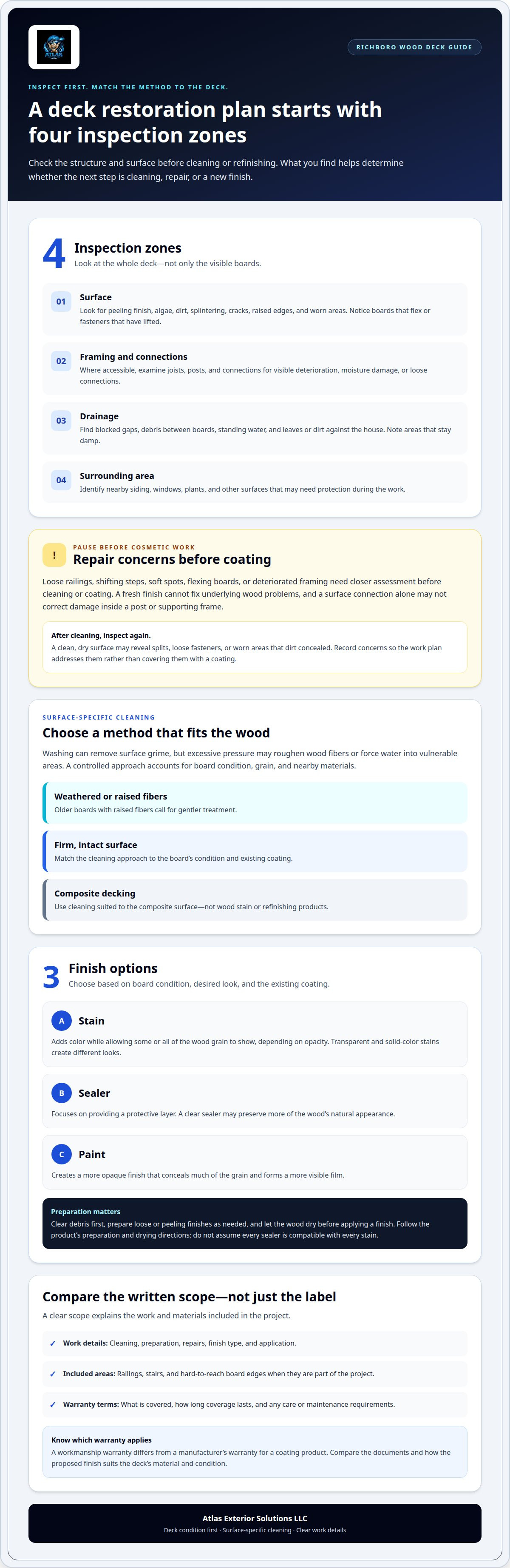
Compare written scopes of work to see whether they specify cleaning, preparation, repairs, finish type, and application. A clear scope describes the work and materials instead of relying on a broad label such as “deck refinishing.” Check that railings, stairs, and hard-to-reach board edges are included when they are part of the project.
Read warranty terms for what they cover, how long coverage lasts, and any care or maintenance requirements. A workmanship warranty differs from a manufacturer’s warranty for a coating product. Ask how the proposed finish suits your deck’s material and condition, then compare the explanations and documents.
Deck inspection and condition assessment
A sound restoration plan begins with inspecting the deck as a structure, not just a surface. Look for soft spots, cracks, splinters, and areas that stay damp. Where accessible, check beneath the deck for discoloration, moisture damage, or loose connections. Note where water collects and where boards meet the house. These observations help distinguish surface wear from problems that need repair before refinishing.
Check how the deck feels underfoot. Look for boards that flex, lifted fasteners, and steps that shift during use. These signs need closer assessment before cleaning or coating. Clear debris from between boards to support drainage and reduce conditions associated with rot and mildew. Note any gaps blocked by leaves or dirt.
- Surface: Identify peeling finish, algae, dirt, splintering, and worn areas.
- Framing: Examine accessible joists, posts, and connections for visible deterioration.
- Drainage: Find blocked gaps, standing water, and debris against the house.
- Surrounding area: Note nearby siding, windows, plants, and surfaces needing protection.
After inspection, match the cleaning method to the wood’s condition and existing coating. Washing can remove surface grime, but excessive pressure may roughen wood fibers or force water into vulnerable areas. A controlled method accounts for the board condition, grain, and nearby materials. For example, raised fibers on an older board call for gentler treatment than a firm, intact surface.
Once the deck is clean and dry, reassess the boards before choosing a finish. Cleaning may reveal splits, loose fasteners, or worn areas that dirt concealed. Separate cosmetic issues from structural concerns: a faded surface may be suitable for refinishing, while deteriorated framing needs repair first. Record each concern so the work plan addresses it rather than covering it with a coating.
Assess both appearance and safe use. A stable-looking surface can conceal problems underneath, while discoloration alone does not prove structural failure. Match each finding to a practical next step, such as cleaning, board repair, fastener work, or refinishing. This helps keep unresolved damage from being hidden under a fresh finish.
Loose railing and step reinforcement
Loose railings and shifting stairs need attention before cosmetic refinishing. Check each post where it meets the deck frame, then gently test the rail for movement. A post that rocks may have loose fasteners, a weakened connection, or deteriorated wood. Tightening the surface connection alone won’t fix damage inside the post or supporting frame.
Inspect the full railing, including top rails, balusters, and corner connections. Look for cracked wood, missing fasteners, and gaps between components. Loose deck fasteners can sometimes be replaced or reinstalled with galvanized or stainless steel screws. The screw must secure sound framing; placing one beside a failing connection may not restore support.
- Posts: Check for movement, splitting, and decay where each post meets the deck.
- Rails: Examine joints and corners for looseness or broken connections.
- Stairs: Look for shifting treads, cracked stringers, and uneven footing.
- Fasteners: Identify missing, raised, or corroded screws and nails.
For stair restoration, assess the treads and supporting stringers together. A loose tread may result from a failed fastener, but damaged stringers need a different repair. Remove compromised material only when the supporting structure can be repaired soundly. Check the stair connections at the deck and ground, since both ends affect stability.
Reinforcement may involve securing a sound connection, replacing a damaged board, or rebuilding a weakened section. Match replacement components to the deck’s material and layout. After repairs, confirm that rails feel secure and stairs sit firmly before applying a finish. Coating loose parts can hide problems without fixing them.
Planned alongside repairs, upgrades can improve an outdoor deck’s appearance and usability. For example, homeowners may replace worn rail sections with a consistent profile or update stair treads to match the deck boards. Keep the design cohesive, and don’t add components to framing that still needs attention. Secure connections come before appearance.
Separate necessary repairs from optional changes in the work plan. This helps prioritize damaged posts, loose railings, and unstable stairs before appearance upgrades. If a repair reveals wider deterioration, reassess the surrounding structure before refinishing. A sound, well-connected assembly gives cleaning and finishing work a stable foundation.
Signs restoration is suitable versus replacement
Restoration may suit a deck with sound framing and damage limited to repairable areas. Widespread rot, unstable connections, or multiple failing supports may make replacement more appropriate.
Restoration Suitability Signs
Look for localized wear, such as a few damaged boards, faded finish, or isolated loose fasteners. If the framing and posts remain firm, targeted repairs can address these issues before refinishing. Keep the spaces between boards clear enough for water to drain, rather than letting debris collect against the structure.
Replacement deserves consideration when deterioration affects several connected parts. For example, soft boards near a rotted post may indicate damage extending into the frame. An inspection should map affected areas and distinguish surface repairs from structural concerns. That record helps explain whether restoration or replacement suits the deck’s condition.
Fastener Replacement and Reinforcement
Loose fasteners can often be replaced or reinstalled if the surrounding wood is sound. Galvanized or stainless steel deck screws are options for securing loose connections. The screw must reach solid framing; driving a new fastener into split or decayed wood won’t restore a dependable connection.
During repairs, check nearby boards and joists for movement or cracks. A fastener that repeatedly loosens may point to a damaged board or weakened support, not just a worn screw. Document the affected connections, materials to replace, and reinforcement needed.
Rotted posts need more than a surface patch. Remove the damaged post and examine its connection point for decay or other structural damage. If the supporting frame is sound, replacing the post may preserve the rest of the deck. If rot also affects the framing or several post connections, a broader replacement may be more appropriate.
Compare the repair plan with the condition of the full structure, not just the visible boards. A deck with a few isolated repairs and stable supports may be a candidate for restoration. Extensive rot, recurring movement, and widespread board damage suggest a different scope. A clear written assessment should explain the findings and how each proposed repair or replacement addresses them.
Resolve structural problems and secure loose connections before refinishing. A new finish can improve appearance, but it cannot strengthen rotten posts or compromised framing. Focus first on safe use and durable repairs, then assess whether the existing structure can support restoration.
How can homeowners compare deck restoration contractors and warranties?
Compare written scopes by matching each task to the deck’s observed condition. One scope may include surface cleaning and a new finish, while another includes board repairs or railing work. These are different scopes, not equivalent descriptions. Look for details on preparation, damaged areas, materials, and the finish.
A useful comparison also explains the cleaning method and how nearby surfaces will be protected. Wood boards may need gentler treatment than nearby concrete, for example. Check whether the plan includes steps, railings, and hard-to-reach edges. A defined scope shows what conditions are covered and which repairs remain separate.
- Inspection: Does the written scope describe visible deck and structural concerns?
- Preparation: Does it explain cleaning, drying, and removal of failing finish?
- Repairs: Are affected boards, fasteners, posts, and railings identified?
- Finish: Does it name the coating type and application approach?
Review warranty documents separately from the work description. A workmanship warranty and a coating manufacturer’s warranty may cover different things. Read the terms for coverage duration, exclusions, maintenance conditions, and how to report a concern. A finish warranty, for example, may depend on following care instructions or applying the product to properly prepared wood.
Clear terms matter more than a broad promise. Check whether coverage applies to peeling, application defects, or material failure, and note any exclusions. Confirm who provides the coverage and what remedy the document describes. Keep the final scope, product details, and warranty together so you can compare the completed work with the agreed plan.
In Richboro, weather exposure and shade can affect how quickly moisture and debris collect on a deck. A sound comparison connects these site conditions to preparation and maintenance guidance instead of promising a fixed finish life. Review the cleaning process, safety measures, and written scope before deciding. This helps distinguish a detailed restoration plan from a general cleaning description.
Request a written scope that identifies the deck work and any warranty terms. Compare documents line by line, especially where preparation, repairs, and upkeep differ. Clear records make it easier to understand what the work covers and how to care for the finished surface.
Atlas Exterior Solutions LLC: Paver Restoration
Atlas Exterior Solutions LLC helps when worn pavers need attention or outdoor surfaces need professional cleaning. Paver Restoration addresses the appearance and condition of paved areas, while Deck and Patio Cleaning covers outdoor living surfaces. The right service depends on the material, visible buildup, and condition of the joints.
Pavers may show discoloration, surface buildup, shifting units, or gaps in jointing material. These signs affect appearance and how well the paved area holds together. Restoration should account for the paver material and the condition of the joints, rather than treating every surface alike. Natural stone also needs material-specific cleaning.
Atlas Exterior Solutions LLC also offers Soft Washing and Commercial Pressure Washing. Soft washing uses a low-pressure approach suited to delicate surfaces, while pressure washing is reserved for durable materials. Commercial Pressure Washing serves businesses with exterior cleaning needs. In either setting, the surface type and buildup help determine the appropriate method.
- Pavers: Review staining, buildup, joint condition, and any uneven areas.
- Decks and patios: Consider the surface material and visible grime before cleaning.
- Commercial properties: Identify the paved or exterior areas needing attention.
- Cleaning method: Match the approach to the surface rather than relying on force alone.
If pavers have stains or worn jointing material, restoration can address those concerns as part of an exterior-maintenance plan. A high-performance sealant may be relevant to protecting paving materials, while a breathable sealant allows moisture vapor to escape. The surface and its condition guide which treatment is appropriate. Cleaning alone won’t correct damaged pavers or resolve every joint issue.
For a property in Richboro or elsewhere in Bucks County, start with the surfaces that need attention and the results you want. Describe the affected area to shape a practical service plan. Atlas Exterior Solutions LLC provides Paver Restoration, Deck and Patio Cleaning, Soft Washing, and Commercial Pressure Washing for suitable property needs.
Contact Atlas Exterior Solutions LLC to discuss the exterior surfaces you’d like to restore or clean.
Take the next step toward a cared-for outdoor space
Use your wood deck restoration plans in Richboro to set clear priorities for the space. Decide whether you want a cleaner appearance, a more comfortable place for everyday use, or both. That goal can keep future decisions focused on the improvements that matter to your household.
Atlas Exterior Solutions LLC provides exterior cleaning to help address buildup on outdoor surfaces. Describe the areas you’re considering and the results you want to discuss a practical next step for your property.
If you’re ready to discuss your property, you can reach out at a time that works for you.
A thoughtful plan is a good starting point for an outdoor space you’ll be glad to use.
Frequently Asked Questions
How can I clean my deck without pressure washing?
For routine upkeep, sweep the boards and clear leaves from the gaps, then rinse with a garden hose. If grime remains, use a wood-safe cleaner according to its label and scrub with a soft-bristle brush. Test it on a discreet spot first, especially if the deck has an older coating. Avoid wire brushes, which can scratch wood, and keep runoff away from nearby plants where practical.
What Does Wood Deck Restoration Entail?
Wood deck restoration renews an existing deck rather than building a new one. The scope can range from appearance-focused maintenance to repairs that address use and stability. For example, a project may coordinate the deck surface with railings and stairs or identify components needing separate attention. A clear scope distinguishes cosmetic goals from structural work, so you can judge the result against what the deck needed.
Which contractors offer wood deck restoration in Richboro, PA?
Atlas Exterior Solutions LLC serves Richboro-area homeowners with exterior surface cleaning, including Deck and Patio Cleaning to address buildup. Cleaning is distinct from structural carpentry or applying a new stain and sealer. If cleaning is your main concern, describe the deck material and buildup. If you want components rebuilt or wood refinished, define that work separately so the requested scope matches your needs.
What services are included in wood deck restoration, such as cleaning, sanding, staining, and sealing?
The scope depends on the deck’s condition and your intended result, so cleaning, repairs, and refinishing aren’t automatically the same job. Sanding may be unnecessary when the existing surface is sound, while an old coating can change the preparation needed. Clarify which areas are included, whether rails and stairs are covered, and how worn spots will be handled. A written scope distinguishes surface cleaning from carpentry.
How do you restore a weathered wood deck step by step?
Start by deciding the desired outcome: a cleaner appearance, refreshed color, or correction of wear that affects use. Then arrange the work so any needed carpentry happens before appearance-focused work. Clear furniture and planters from the work area, and follow product directions for weather conditions and re-entry. Keep product labels and care instructions afterward to guide future maintenance.
How often should a wood deck in Bucks County be cleaned, stained, and sealed?
Let visible buildup and the finish’s condition guide cleaning, rather than following a rigid calendar. Stain reapplication is often recommended every 2-3 years, depending on finish type and weather exposure. A useful routine is to observe the deck after periods of heavy leaf fall or prolonged dampness, then clean when debris accumulates. Follow the coating manufacturer’s care directions, since product instructions can vary.
Which deck stains and sealers work best for Pennsylvania weather?
Choose an exterior product labeled for the deck’s wood and outdoor exposure, then follow the manufacturer’s application and maintenance instructions. Pennsylvania’s changing weather makes it useful to check label guidance on moisture exposure and suitable application conditions. Compatibility with the existing coating matters, too. If you don’t know what the old finish is, identify it before choosing a product, since incompatible coatings can affect adhesion and appearance.
What are the signs a wood deck needs restoration or replacement?
A deck needs closer evaluation when its condition affects dependable use, not just appearance. Watch for problems that return after repair or damage across connected parts rather than one isolated area. Note where the issue occurs and whether it changes after rain. These observations can help a qualified professional assess the deck and explain whether targeted work can address the underlying concern.
Disclaimer
The information on this blog is for general informational purposes only. Results may vary based on surface type, condition, and cleaning methods. Always follow manufacturer guidelines and use proper safety precautions. Atlas Exterior Solutions is not liable for any damages or losses resulting from the use of this information.


