

What if paver sealing protects your pavers’ appearance but also changes how the surface looks and feels? Sealing can help resist stains and fading, but the right product depends on the paving material, the finish you want, and the surface’s exposure to weather and traffic.
It’s reasonable to expect a protective coating to make outdoor pavers easier to maintain. But sealers behave differently: penetrating products can improve moisture resistance with little visual change, while topical products may deepen color and create a satin, gloss, or wet-look finish. Topical coatings can also look uneven or cloudy if applied in unsuitable conditions or while moisture is present.
This guide explains what post-installation sealers do, how penetrating and topical options differ, and which preparation and application conditions affect the result. You’ll also learn why clean, dry pavers matter, how weather and exposure influence the decision, and what benefits and maintenance considerations to weigh for a Bucks County home. The goal is to help you decide when sealing suits your pavers and whether the finish and upkeep match your priorities.
Key Takeaways
- Sealer choice affects both protection and appearance: penetrating options tend to change the look less, while topical coatings can deepen color or add sheen.
- Plan application around suitable conditions. Sealers are generally applied when temperatures are between 50 and 90 degrees Fahrenheit, with surface heat and moisture also affecting results.
- Clean, stain-free, fully dry pavers are better prepared for sealing; the required drying time can vary with shade and weather.
- Weigh potential stain and color protection against upkeep, since many sealers need periodic maintenance or reapplication.
- Professional paver restoration can help when cleaning, surface condition, or a consistent finish calls for careful, material-specific attention.
Application temperature and weather considerations
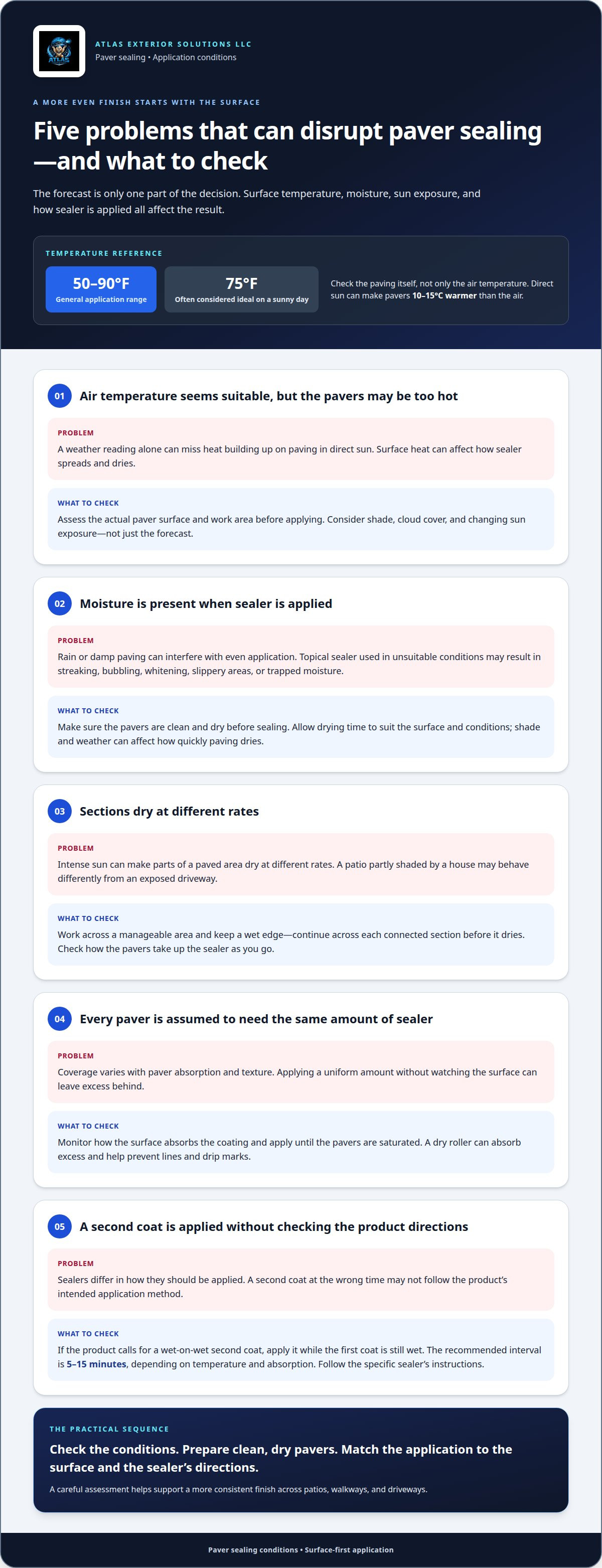
Professionals begin by checking the forecast, air temperature, and paver surface before applying sealer. They confirm the area is clean and dry, select a sealer suited to the finish, then apply it evenly and manage excess. The general application range is 50 to 90 degrees Fahrenheit; a sunny day at 75 degrees Fahrenheit is often considered ideal. These conditions help the coating spread consistently and support the intended protection.
Air temperature alone can mislead. Pavers sitting in direct sun may reach temperatures 10-15 degrees C warmer than the air, so a surface can become too hot even when the weather seems suitable. Shade, cloud cover, and changing sun exposure also affect how quickly sealer dries. Professionals assess the actual paving surface and work area, rather than relying only on a forecast or a single air-temperature reading.
Moisture and uneven drying can undermine the finish. Applying topical sealer in unsuitable conditions may cause streaking, bubbling, whitening, slippery areas, or trapped moisture. Rain or damp paving can prevent an even application, while intense sun can make sections dry at different rates. For example, a patio partly shaded by a house may behave differently from an exposed driveway. Waiting for suitable conditions helps reduce these finish problems.
On horizontal surfaces, an application sprayer can distribute sealer across broad paving areas. The professional maintains a wet edge, continuing across each connected section before it dries. Coverage depends on the paver’s absorption and texture, so the applicator monitors how the surface takes up the coating rather than assuming every area needs the same amount. Sealer is applied until the pavers are saturated; a dry roller then absorbs excess and helps prevent lines and drip marks. On vertical edges beside paving, controlled passes with suitable equipment help limit runs and buildup.
Where the product calls for a second coat, the wet-on-wet method means applying it while the first coat remains wet. The recommended interval is 5-15 minutes, depending on temperature and absorption. The specific sealer’s instructions guide the application, since products differ in finish and handling. A planned sequence matters: professionals work across a manageable area, keep the edge wet, and watch for changes in surface absorption. This approach supports a more consistent appearance across patios, walkways, and driveways.
What Are Post-Installation Sealers for Pavers?
Post-installation sealers are coatings applied after paving is installed to help resist stains, spills, and color fading. For concrete pavers, their value depends partly on porosity: more porous units can absorb contaminants faster, while a suitable sealer helps limit staining.
Polymeric sand is jointing material, not a sealer, although a suitable sealer can help stabilize it. Refill joints where sand is visibly depleted before sealing, so the coating does not substitute for missing material.
Benefits Across Masonry Surfaces
Sealing adds a protective layer to compatible masonry, including concrete pavers and some natural stone. The surface material and sealer formulation determine whether that protection suits the installation.
This distinction matters because masonry differs in porosity, texture, and moisture behavior. A product suited to one patio may not suit another; matching the coating to the material helps avoid unwanted appearance changes or an unsuitable finish.
For example, a porous walkway may absorb contaminants more readily than a less absorbent surface. Sealing can help resist stains and spills, but the product’s finish may change the stone’s appearance. The goal is not simply to coat every masonry surface, but to weigh its composition and the homeowner’s priorities.
Benefits for Concrete and Outdoor Pavers
Concrete pavers are porous, so unsealed units can absorb stains. A compatible coating can improve resistance to spills and help protect color from fading.
That protection can make outdoor surfaces easier to maintain after everyday exposure. On a patio, for instance, a spill may be less likely to penetrate a sealed surface quickly. Sealer may also help stabilize polymeric joint sand, supporting cohesion between paving units.
These benefits do not make every installation maintenance-free. Many aftermarket sealers need periodic maintenance or reapplication, and exposure affects their performance. Traffic, weather, and the paver’s absorption all matter when considering a coating.
For a Bucks County walkway, patio, or driveway, base the decision on the material and the appearance you want. A subtle change may suit owners who want the paving to look close to its original state. Others may prefer a coating that deepens color. Understanding those tradeoffs helps set realistic expectations before application.
Joint condition is another practical consideration. Sealer can help stabilize existing polymeric sand, but it cannot restore joints where material is already missing. Refill depleted joints before coating, then select a compatible sealer for the paving. This sequence addresses both the gaps between units and the exposed paver surface without confusing joint repair with surface protection.
How Do Professionals Prepare Pavers for Sealing?
Professionals clean the paver surface, treat stains, and remove organic debris before applying sealer. They then allow the paving to dry, since trapped moisture can interfere with the finish.
Sealer takes 30 days to reach full chemical cure. Light foot traffic is permitted after 1-2 hours; wait 24 hours before returning furniture, and at least 48 hours before vehicles, heavy loads, or pressure washing.
How Professionals Clean and Prepare Pavers Before Sealing
Professional preparation removes soil, organic debris, and stains that could remain visible beneath the coating. The cleaner is matched to the contaminant, targeting the mark without treating every paver identically.
For example, degreasers address oil and grease, rust removers target rust, and mild detergents clean dirt and organic matter. Crews also clear leaves, which can leave tannin stains on paving. Grease, wine, rust, fertilizer, and pool-chemical spills need prompt attention because they can stain the surface.
On new pavers, professionals use Paver Prep before sealing to open surface pores and support sealer penetration. Stains are treated with a remover suited to the mark before this preparation step. This sequence helps leave the paving clean and ready for a consistent coating.
Drying After Cleaning
Drying allows cleaning moisture to leave both the paver surface and its joints before coating. In warm, sunny conditions, cleaned and prepared pavers may be ready after a few hours. Cooler weather or shaded areas can require about 24 hours of drying.
That difference matters on a Bucks County patio with shaded sections beside sunlit ones. Professionals account for those conditions and avoid sealing damp areas, where trapped moisture can contribute to whitening or an uneven finish.
New pavers also need time to cure before sealing. Wait 30 days before applying a film-forming sealant, or one week before a non-film-forming sealant. The sealer itself reaches full chemical cure in 30 days, though access restrictions begin earlier. Light foot traffic can resume after 1-2 hours; keep furniture off for 24 hours, and vehicles, heavy loads, and pressure washing away for at least 48 hours.
Cleanup and timing are part of preparation, not afterthoughts. The professional clears leaves and debris, treats remaining stains, and lets the surface dry before coating. After application, the curing period protects the new finish from premature traffic or washing. Following the product’s instructions helps determine when the surface is ready for use, based on the sealer’s cure and the pavers’ condition.
Post-installation penetrating and topical sealers
Post-installation products differ in how they interact with pavers and affect their appearance. The best fit depends on the material, desired finish, and product instructions.
Penetrating and Topical Sealer Types
Penetrating sealers enter the paver and may improve moisture resistance with minimal change in appearance. Topical sealers form a surface layer, with a satin or gloss finish depending on the product.
That difference matters if you want protection without a noticeable visual shift, or prefer a richer look. Topical products can deepen color and create a wet-look finish. UV rays, traffic, weather, precipitation, pool chemicals, pressure washing, and snow removal can affect topical protection over time.
Non-film-forming sealants are described as lasting a bit longer than film-forming options. A professional considers the desired look and exposure before selecting either type. Product instructions guide application, since formulations and suitable uses vary.
Sealer Choices for Paver Materials
Choosing a paver sealer means matching its properties to the paving material and the finish you want. That match matters because a product intended for one surface may not suit another.
A professional can assess whether the pavers are concrete or natural stone, then consider porosity and moisture exposure. For example, a patio near a pool faces different conditions from a sheltered walkway. The surface’s absorption also affects how it responds to a coating.
Useful questions include: Will the sealer change the color? Is the intended finish subtle, satin, or glossy? Does the product suit the paver material and its exposure? The manufacturer’s instructions are central to these decisions, including application and maintenance guidance.
Water-Based and Solvent-Based Sealers
Water-based and solvent-based describe product formulations, but those labels alone don’t establish which sealer suits a particular installation. Material compatibility, desired appearance, and manufacturer directions should guide the choice.
A professional can compare the product’s stated use with the paver material and the finish you want. For instance, a homeowner seeking minimal visual change may prioritize that result when discussing options. Someone seeking deeper color may prefer a product that creates a wet look.
Rather than assuming one formulation works best everywhere, review the specific sealer’s instructions. They guide application and help determine whether the chosen coating fits the intended surface. This product-by-product approach avoids treating every patio, walkway, and driveway as identical.
Selecting a Paver Sealer Product
Product selection should start with the paver material, sealer type, and intended finish, not a brand label alone. This helps narrow the options to coatings suited to the actual surface.
Professionals follow the manufacturer’s instructions for the selected product. Those directions guide application and help determine whether the sealer is penetrating, film-forming, or non-film-forming. They also help set expectations for the finish and ongoing care.
Before work begins, clarify whether the product preserves a restrained appearance or deepens color. Confirm that its stated use matches the pavers and site conditions. These details make the product choice more practical than selecting a coating based on its name alone.
Pros and cons of sealing pavers
Sealing can help pavers resist stains and spills, protect color from fading, and stabilize polymeric joint sand. The tradeoff is ongoing care: many aftermarket sealers need maintenance or reapplication, and an unsuitable coating can affect appearance or surface use.
For a Bucks County patio, the decision depends on the paver material, exposure, and finish you prefer. Sealing may suit a dining area that sees food spills, but a homeowner who wants to preserve a natural appearance may prefer a less visible treatment. The benefit is protection, not a guarantee that the surface will never stain or need cleaning.
Color and finish are practical advantages for some installations. A topical product can deepen the pavers’ color or create a satin, gloss, or wet-look finish, depending on the formulation. A penetrating sealer may improve moisture resistance while changing appearance less. For example, a front walk where preserving the original look matters calls for a different choice than a patio where richer color is desired.
Sealer can also help stabilize polymeric joint sand, supporting cohesion between paving units. That benefit depends on the existing joints: coating cannot replace missing sand. A professional assesses joint condition and surface absorption before application, so the coating suits the installation rather than masking a repair need.
There are drawbacks to weigh. Topical protection can be affected by UV rays, traffic, weather, precipitation, pool chemicals, pressure washing, and snow removal. Excess sealer or unsuitable application conditions may also contribute to streaking, whitening, bubbling, moisture trapping, or slippery areas. Existing efflorescence should be considered during surface assessment, since a coating does not remove deposits already present.
Maintenance is part of the decision. Paver sealer is generally reapplied every 3-5 years, but the interval varies with climate, traffic, exposure to pools or outdoor kitchens, shade, weather exposure, sealer type, and installation quality. A shaded walkway and a heavily used driveway may not weather alike. Inspecting changes in finish and protection helps determine when maintenance is appropriate.
Choose sealing when stain resistance, color preservation, or joint-sand stability matters enough to justify upkeep. Skip or reconsider it when the preferred appearance conflicts with the available finish, or when the surface needs attention first. Weighing those priorities before application helps set realistic expectations for a patio, walkway, or driveway.
Atlas Exterior Solutions LLC: Paver Restoration
Atlas Exterior Solutions LLC provides Paver Restoration for homeowners considering sealer options or addressing worn-looking outdoor paving. If your patio, walkway, or driveway has staining, faded color, or uneven-looking areas, professional assessment can help clarify whether cleaning and restoration suit the surface before sealing.
Material and condition matter: concrete pavers and natural stone may respond differently to cleaning and protective treatments. A measured approach helps protect the paving while setting realistic expectations for its appearance and maintenance. For Bucks County homes, Paver Restoration offers a practical next step when you want professional attention for outdoor pavers rather than applying a coating without first considering the surface.
Contact Atlas Exterior Solutions LLC to discuss Paver Restoration for your property.
Plan the Right Next Step for Your Pavers
Choose a finish that fits how you use your outdoor space, not just how it looks on application day. A patio used for dining, a walkway beneath trees, and a driveway exposed to regular traffic each have different priorities. For a professional conversation about paver sealing, describe the surface, the look you want, and any areas of concern. That context helps focus attention on what matters to your property.
Atlas Exterior Solutions LLC offers Paver Restoration for outdoor paving, along with Soft Washing and Commercial Pressure Washing for other exterior-cleaning needs. If you’re considering restoration for a residential patio or paving area, discuss the material and desired appearance as the next step. A clear scope can help you decide how to care for the surface with confidence.
Your outdoor space deserves thoughtful care, and a considered plan is a good place to start.
Frequently Asked Questions
Should You Seal Pavers?
Seal pavers when the desired protection and finish fit the surface’s use. A covered walkway with little exposure may have different needs from an outdoor dining area that sees frequent spills. Consider how the space is used, whether you want a visible color change, and whether ongoing upkeep suits your plans. The choice is personal: a coating is an option, not a requirement for every paved area.
Do all paver sealant brands offer the same basic protection?
No. Products vary in their stated uses, finish, and compatibility with paver materials. Two sealers may both provide surface protection yet differ in whether they change color or form a visible coating. Before choosing, compare the product’s instructions with the surface material and the appearance you want. For example, a glossy finish may not suit a homeowner seeking a more understated look.
How long should pavers dry after being cleaned and prepped?
Drying can take a few hours in warm, sunny conditions, or about 24 hours in cooler weather or shade. Check the whole paved area, not only the sunniest section, because moisture may remain in sheltered joints. A shaded edge beside a house can dry more slowly than the open center of a patio. Application should wait until the cleaned surface is dry.
How often should I reseal my pavers?
Reapplication is generally considered every 3-5 years, though the appropriate timing varies. A useful sign to assess is whether the finish still looks consistent across areas with different exposure. For instance, a walkway receiving regular foot traffic may show wear sooner than a protected corner. Product instructions and installation quality also inform maintenance timing, so a fixed calendar interval may not suit every paved surface.
Is there a prep process before applying paver sealant?
Yes. Preparation should address surface dirt, organic debris, stains, and the condition of the joints. Different marks call for different cleaners, so a rust stain and an oil spot should not be treated as the same problem. New pavers may also require a preparation product before coating. This attention to the surface helps prevent debris or untreated marks from remaining visible beneath the finished layer.
What Is Stain Protection?
Stain protection is a treatment’s ability to help limit how readily spills or contaminants mark a surface. It does not mean a spill can be ignored. For example, food or grease left on paving can still create a problem, even if the surface has been treated. Prompt cleanup remains useful, while the coating can provide an added barrier against absorption.
What Is Stain Resistance?
Stain resistance describes how a material responds to staining without relying solely on an applied coating. A less absorbent paver may be easier to clean after a spill than a more porous one. This distinction matters when evaluating a paving surface: inherent resistance comes from the material, while a treatment adds a separate layer of protection. Neither removes the need for appropriate maintenance.
Disclaimer
The information on this blog is for general informational purposes only. Results may vary based on surface type, condition, and cleaning methods. Always follow manufacturer guidelines and use proper safety precautions. Atlas Exterior Solutions is not liable for any damages or losses resulting from the use of this information.


