

The strongest spray is often the wrong cure for black streaks on a roof. The marks commonly come from the blue-green algae Gloeocapsa magma, and soft washing can treat it with less risk to asphalt shingles than pressure washing. Understanding the causes of black streaks on your roof and the suitable cures can help protect shingles while addressing staining.
It’s understandable to worry when dark marks spread across your roof. Algae staining is usually cosmetic at first, though it can hold moisture against the roof surface. This guide explains common causes, signs that deserve closer attention, and cleaning and prevention methods that help address staining without damaging shingles. It’s written for property owners in Newtown, Yardley, Bucks County, Montgomery County, and nearby communities.
Key Takeaways
- Black streaks commonly come from roof algae, but other discoloration can signal a different surface or maintenance issue.
- Avoid pressure-washing asphalt shingles; gentle, low-pressure treatment helps clean algae while protecting the shingle surface.
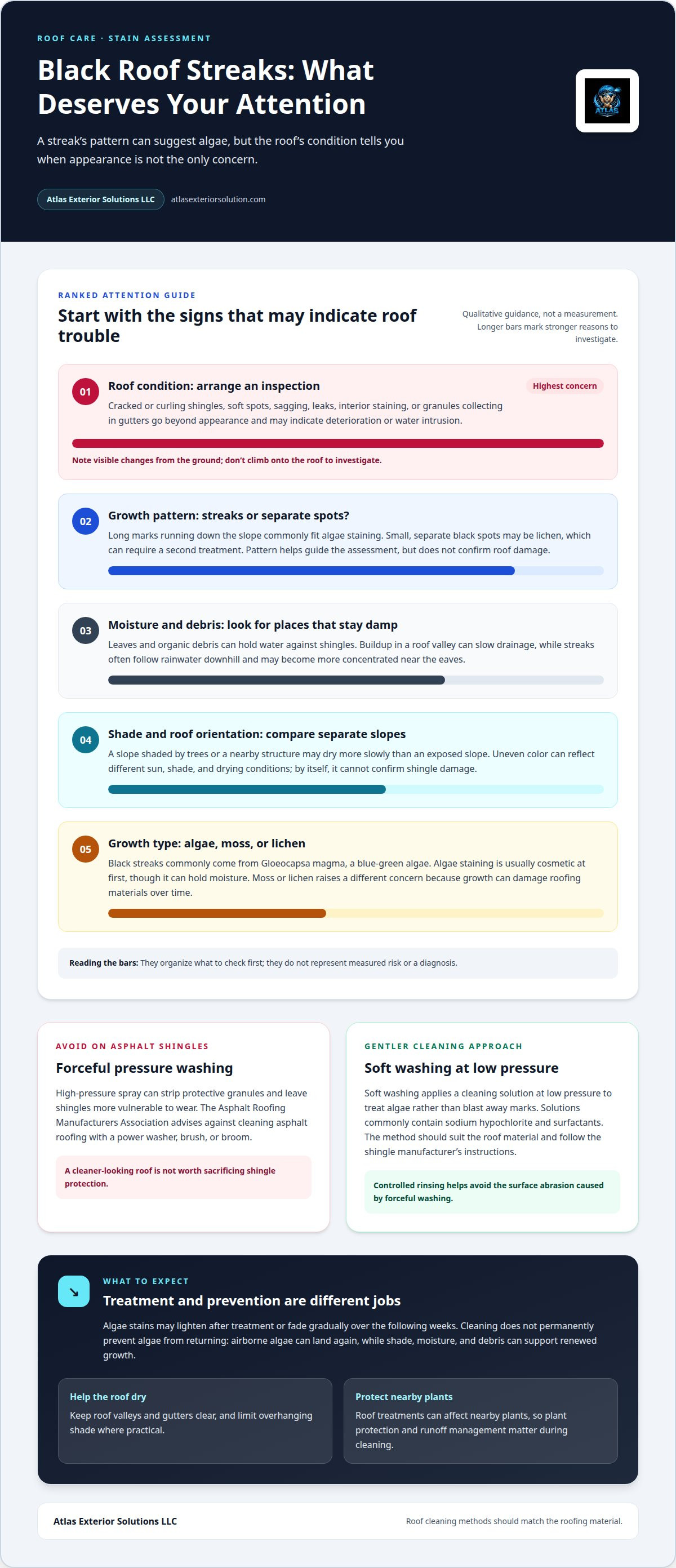
- Use streak patterns and signs such as cracked shingles, leaks, or sagging to help distinguish staining from concerns that warrant a roof inspection.
- Reduce damp, shaded conditions by keeping roof valleys and gutters clear and limiting overhanging shade where practical.
- Roof treatments can affect nearby plants, so careful protection and runoff management matter during cleaning.
Can You Pressure-Wash the Streaks Away?
A pressure washer can remove visible roof staining, but forceful spray can damage asphalt shingles. Black streaks usually come from Gloeocapsa magma, a blue-green algae that lands on shingles and grows over time. Its dark protective sheath helps shield it from sunlight, making the growth appear black. The stain can look dramatic even when algae is the main issue.
Gloeocapsa magma can feed on limestone filler in asphalt shingles. As the algae spreads, rainwater carries dark marks down the roof slope, forming long streaks. Staining may begin as small spots before becoming more visible. The pattern alone doesn’t confirm roof damage, but it can help distinguish widespread algae staining from isolated spots or other discoloration.
High pressure is the wrong tool for asphalt shingles. A pressure washer can strip protective granules, leaving shingles more vulnerable to wear. The Asphalt Roofing Manufacturers Association advises against cleaning asphalt roofing with a power washer, brush, or broom. Scrubbing and forceful spray can remove granules along with surface growth, so a cleaner-looking roof may come at the expense of shingle protection.
A gentler approach targets algae without relying on force. Soft washing applies a cleaning solution at low pressure; solutions commonly contain sodium hypochlorite and surfactants. The solution treats the growth, while controlled rinsing helps avoid the surface abrasion that forceful washing can cause. The method should follow the shingle manufacturer’s instructions and suit the roof material.
Results may not appear instantly. Algae stains can lighten after treatment or fade gradually over the following weeks. Small, separate black spots may be lichen rather than algae streaks, and lichen can require a second treatment. Identifying whether the roof has streaking algae or spotty lichen helps determine the appropriate cleaning approach.
Cleaning doesn’t permanently prevent algae from returning. Airborne algae can land again, while shade, moisture, and debris can support renewed growth. Pressure washing may remove visible material without effectively treating the algae, so streaks can return within a year. Gentle treatment and conditions that help the roof dry can protect shingles and manage regrowth.
Avoid walking on fragile, damaged, or excessively steep roofs. A pressure washer adds another hazard because the operator must control the spray around roof edges and shingles. Roof cleaning is safer when the method suits the roofing material and the work avoids unnecessary foot traffic.
Homeowner insurance policies don’t all treat roof algae cleaning the same way. Coverage depends on the policy terms, so review the wording or contact your insurer about your specific coverage.
For shingles with algae streaks, roof cleaning using a gentle, material-appropriate method can address staining while helping protect the roof surface. The key is treating the growth rather than trying to blast marks away.
Should You Be Worried About Black Streaks on Your Roof?
Dark streaks are usually a cosmetic concern at first, but their pattern and the surrounding roof condition provide useful context. Rain, shade, and roof orientation can make staining more noticeable on one slope than another.
Moisture and Rain Effects
Rainwater carries staining downhill, so streaks often follow the roof’s slope instead of spreading evenly across each shingle. The marks may start as small dark areas and extend into longer lines with repeated runoff. This explains why the eaves can show concentrated discoloration even when higher roof sections look less affected.
Moisture also affects how long a roof section stays damp after rain. Leaves and other organic debris can hold water against shingles, while buildup in a valley can slow drainage. Compare areas where water flows freely with places where debris gathers. This can help show whether persistent dampness may be contributing to the staining.
Shade, Sunlight, and Roof Orientation
Each roof slope receives different amounts of sun and shade because of its orientation and surroundings. A slope shaded by trees or a neighboring structure may dry more slowly than an exposed slope. This can make streaking more apparent on one side without meaning every section has the same condition.
Look at the roof as separate slopes rather than assuming its color should be uniform. For example, if a face beneath tree cover has heavier staining while an open face remains clearer, shade and drying conditions may explain the contrast. Sunlight doesn’t rule out algae, and uneven color alone cannot confirm shingle damage.
Algae staining is usually cosmetic at first and doesn’t immediately damage the roofing system. Still, algae can hold moisture on the roof surface and make shingles look prematurely aged. If moss or lichen develops, the concern changes because these forms of growth can damage shingles and other roofing materials over time.
Color isn’t the only sign to consider. Granules collecting in gutters, cracked or curling shingles, soft spots, sagging, leaks, or interior staining are reasons to arrange a roof inspection. These signs go beyond appearance and may indicate deterioration or water intrusion. Don’t climb onto the roof to investigate; a ground-level view can help you note visible changes safely.
In humid or wooded settings, shade and organic debris can make roof sections more susceptible to staining. If you notice a new pattern, record which slope is affected and whether debris is visible nearby. This information helps distinguish a change in appearance from accompanying signs that need closer attention.
Zinc and copper strips
Zinc and copper strips can help inhibit algae growth on a roof. Rainwater carries trace amounts of metal across the shingles, creating conditions algae does not favor. The strips are a preventive measure, not a way to wash existing stains from the surface. Their effect depends on placement and the path rainwater takes.
As rain passes over zinc or copper, small amounts wash onto the roof below. This runoff can discourage algae from spreading across the treated area. Copper or zinc-coated sheet metal strips work on the same principle. Algae-resistant shingle granules also release trace metals when rain runs over them, making the surface less favorable to algae.
Placement matters because the metal’s effect follows the water. A strip near the roof ridge can expose the shingles below as rain flows downhill. If leaves or debris interrupt that runoff path, water may not carry the metal evenly across the roof. The area below the strip may then receive less protection than intended.
Think of a roof slope as a connected surface. Rain moves from the ridge toward the gutters, passing over the shingles along its route. A strip cannot influence sections runoff doesn’t reach. Roof valleys, debris buildup, and blocked drainage paths can therefore affect how well zinc or copper helps inhibit growth.
Metal strips are not a substitute for identifying the type of roof discoloration. Long streaks may be algae, while small, separate marks can be lichen. Since lichen may require a second treatment, don’t assume a preventive measure will remove it. Existing stains and future algae growth are different concerns, and the strip’s role is prevention.
Installation also affects roof protection. Nailing zinc or copper strips through roofing can create openings that may lead to leaks later. A strip needs to be secured without compromising the shingles or roof surface. Correct installation and an unobstructed runoff path matter more than simply adding metal to the roof.
Runoff deserves attention beyond the shingles. Water carrying traces of zinc or copper can reach gutters and nearby areas, and metallic runoff may harm plants and animals. The roof’s drainage route determines where that water travels. Nearby planting areas and the direction of gutter discharge matter when considering a metal-strip approach.
Before relying on strips, consider the roof’s condition, the slope’s drainage, and any debris blocking water flow. A strip may help limit algae growth where rainwater reaches the shingles, but it won’t make every roof section equally resistant. Keeping drainage paths clear supports even runoff and helps the preventive measure work as intended.
Prevention through shade reduction and debris removal
Algae growth favors damp, shaded roof areas where organic debris remains on the shingles. Prevention focuses on reducing those conditions, not scraping or blasting the roofing surface. For example, a shaded section beneath overhanging branches may stay wet longer than an open slope. Less lingering moisture creates less favorable conditions for algae and helps protect shingle granules from unnecessary wear during cleanup.
Tree branches can be trimmed to reduce shade over a roof and help limit moisture buildup. Focus on branches that shade a particular slope or hang above a roof valley, where leaves and needles can collect. Less shade allows sunlight and airflow to reach the shingles, helping the surface dry after rain. This reduces a contributing condition, but doesn’t remove existing stains or guarantee algae won’t return.
Debris removal matters because leaves, pine needles, and small twigs can hold moisture against shingles. Accumulations in valleys may also slow runoff, leaving damp patches after the rest of the roof has dried. Keeping roof valleys clear helps water drain instead of pooling around debris. Clearing gutters supports the same goal by letting rainwater leave the roof rather than back up at the edge.
Use debris patterns to identify where prevention may help most. A pile of leaves beneath an overhanging tree points to a different maintenance need than a clear valley with widespread staining. If one gutter repeatedly fills with needles, nearby branches may contribute to both blockage and shade. Clearing drainage paths can help the roof dry more evenly after rainfall.
Choose a gentle method to remove buildup from shingles. Scraping, brushing, or using a pressure washer can disturb protective granules, so debris control should not create new roof damage. Avoid aggressive contact with the surface; the goal is to clear leaves and restore drainage, not abrade shingles. If the roof is steep or fragile, don’t walk on it to remove debris.
Prevention also means noticing when conditions change. After nearby trees grow or a storm drops branches and leaves, shaded areas and roof valleys may need renewed attention. Check from a safe viewing point for visible buildup and blocked gutters. If staining persists despite clear drainage and reduced shade, debris may not be the only factor, and the roof may need a different assessment.
These steps can reduce moisture and debris without treating every dark mark as a roofing defect. In wooded areas, leaves may return as branches continue shedding material. Keeping gutters and valleys clear, while limiting heavy shade where practical, gives rainwater a clearer path off the roof and helps shingles dry between wet periods.
Can roof cleaning harm plants, gutters, or water supplies?
Yes. Roof-cleaning chemicals can harm nearby plants if they reach leaves, roots, or soil. Runoff matters because solution applied to shingles flows toward roof edges, gutters, and the ground. Before treatment, nearby plants should be covered or thoroughly wetted to reduce exposure while the roof is cleaned.
Protect plants before any solution reaches the roof. Identify garden beds, shrubs, and other vegetation beneath the eaves, then cover them or wet them thoroughly. Pay attention to plants near downspouts, where roof runoff is concentrated. A bed below a roof valley also deserves attention because water can collect and drain from that area.
Professional roof soft washing commonly uses commercial-grade bleach containing about 12 percent sodium hypochlorite. That concentration makes careful handling and runoff control important around landscaping. The cleaning solution should be applied in a controlled way, with nearby vegetation protected before treatment begins. Avoid letting concentrated runoff collect on a single plant or patch of soil.
Gutters are part of the runoff route, not a barrier that makes solution disappear. Water flows from the roof through gutters and downspouts, then exits near the building. Knowing where each downspout discharges helps identify nearby plants and other areas needing protection. Debris in gutters can affect drainage, so blocked outlets may change where water travels.
Water supplies deserve attention wherever runoff could enter a collection system. If a property collects roof water, keep roof-cleaning solution out of its storage route during treatment. Identify the collection inlet and drainage direction beforehand. This helps prevent cleaning runoff from mixing with water intended for later use.
Metal strips create a separate runoff concern. Rain can carry traces of zinc or copper from roof strips, and metallic runoff may harm nearby plants and animals. Consider where gutters discharge before adding strips or treating a roof. The route from shingles to downspout shows which planting areas or animal habitats could receive that water.
Good preparation follows the water from roof to ground. Cover or thoroughly wet plants, note gutter outlets, and protect water-collection paths before cleaning begins. After treatment, observe whether runoff drains as expected. These measures help safeguard landscaping and manage where roof-cleaning water goes.
For roof cleaning with careful attention to surrounding property, request roof-cleaning service
Atlas Exterior Solutions LLC: Roof Cleaning
Atlas Exterior Solutions LLC provides roof cleaning for homeowners and businesses dealing with algae streaks or other roof buildup in Bucks County, including Newtown, Yardley, Richboro, Bensalem, Langhorne, Levittown, and nearby Montgomery County communities. Its soft-washing approach uses low pressure to treat growth while helping protect shingles from pressure-washer damage. Professional treatment is a practical option when staining covers a roof slope, lichen needs attention, or cleaning the roof yourself would be unsafe.
For homes across Bucks County, a suitable cleaning method and care around plants and runoff help protect the property during treatment. If streaks appear alongside cracked shingles, leaks, or sagging, cleaning alone may not address the underlying roof concern. Contact Atlas Exterior Solutions LLC about roof cleaning to discuss the next step for your roof.
Keep Your Roof Care Plan on Track
Understanding what causes black streaks on your roof and choosing a cure suited to its material gives you a better starting point for maintenance. Note visible changes from the ground and record which slopes are affected. That record can help distinguish a recurring pattern from a new change and clarify what you’ve observed when arranging service. Focus on visible conditions rather than trying to diagnose damage from the ground. Don’t climb onto shingles to inspect or clean them.
Atlas Exterior Solutions LLC also offers soft washing, commercial pressure washing, and paver restoration for other exterior surfaces. A practical maintenance plan can cover the roof and the areas around your property.
With a clear view of the roof’s condition, you can choose a sensible next step. A measured approach supports safety, protects your property, and helps you care for your home with confidence.
Frequently Asked Questions
Should You Be Concerned About Algae on Your Roof?
Review your roof’s maintenance guidance before arranging treatment. A roof warranty may depend on using approved cleaning methods, so the manufacturer’s care instructions can help you decide how to proceed. If you’re unsure what the warranty permits, review its maintenance terms. This helps you avoid a cleaning method that conflicts with the coverage attached to your roofing materials.
Can You Clean Your Roof Without Damaging It?
Yes, but the cleaning method must suit the roofing material. For asphalt shingles, avoid forceful washing and abrasive tools, which can remove protective granules. Roof cleaning should follow the shingle manufacturer’s instructions. Atlas Exterior Solutions LLC uses soft washing for roofs, not pressure washing on delicate roofing surfaces.
How Can You Prevent These Streaks from Forming?
If you’re planning a roof replacement, ask about algae-resistant shingles as one way to help prevent future growth. This is part of selecting roofing materials, not a treatment for existing stains. For an installed roof, prevention also depends on accounting for conditions that support growth and maintaining clear drainage paths as the property changes over time.
How Can I Prevent It from Happening?
Build roof care into routine exterior maintenance rather than waiting for dark marks to cover a large area. After storms or seasonal leaf fall, look from the ground for new debris or changes in the roof’s appearance. A dated photo can help you compare the same slope over time and describe changes clearly if you arrange a professional assessment.
Is It Harmful?
Algae can darken a roof and reduce its ability to reflect sunlight, potentially affecting indoor temperatures and cooling needs. The effect depends on the roof and property conditions, so a dark appearance alone doesn’t show how much the home’s performance has changed. Consider the roof’s condition and household comfort together, rather than treating every stain as proof of immediate damage.
What Is It Caused By?
Common causes of black streaks on roofs include airborne algae, but other conditions can discolor roofing. Missing granules, shingle deterioration, debris, moisture staining, manufacturing defects, and previous repairs can also change a roof’s appearance. The causes of black streaks on a roof and the appropriate cures therefore depend on identifying whether the marks are biological growth or a change in the roofing material.
What Is It?
“Black streaks” describes a visible pattern, not a complete diagnosis of the roof. Staining may run down a slope, while a repair or damaged shingle may create a localized change in color. The distinction matters because cleaning addresses surface buildup, while material deterioration calls for attention to the roofing itself. Don’t assume color alone explains the roof’s condition.
What Causes Black Streaks on Asphalt Shingle Roofs?
On asphalt shingles, Gloeocapsa magma can feed on limestone filler, contributing to staining. That makes the material composition relevant when deciding how to care for the roof. If marks remain after treatment or appear alongside visible shingle changes, consider whether the issue is only surface growth. The roof’s material and condition help guide an appropriate next step.
Disclaimer
The information on this blog is for general informational purposes only. Results may vary based on surface type, condition, and cleaning methods. Always follow manufacturer guidelines and use proper safety precautions. Atlas Exterior Solutions is not liable for any damages or losses resulting from the use of this information.


