

What keeps moss from returning between Bensalem pavers: more frequent cleaning, or better-protected joints? For paver maintenance in Bensalem, keeping the surface clean and dry can help limit moss growth, while joint sand helps support the spaces between pavers. Sealing can also help deter moss, with resealing advised every 3 to 5 years.
It’s understandable to want a clear plan for protecting your patio, walkway, or driveway from moss, stains, cracks, and shifting. The right upkeep can preserve the appearance and stability of your pavers, but cleaning methods and sealants must suit the surface.
This guide explains how cleaning, sealing, and joint sand work together, what can cause common paver problems, and what to consider when planning maintenance. You’ll also learn how professional paver restoration can address buildup and refresh outdoor paving in Bensalem and Bucks County.
Key Takeaways
- Keeping pavers clean and dry can help discourage moss, while the right cleaning method helps protect the surface from unnecessary wear.
- Joint sand supports the spaces between pavers; blocking sand hardens after placement and can help limit moss and weeds.
- Sealing can help protect pavers and deter moss, with resealing advised every 3 to 5 years.
- Look for signs of loose joints, stains, cracks, or shifting to understand what maintenance your paving may need.
- Cleaning and sealing needs depend on the paver surface and its condition, so a focused assessment can help define the work involved.
Bensalem paver and hardscaping contractors
For paver maintenance in Bensalem, distinguish surface cleaning from repairs that change a driveway. Houzz lists 186 driveway installation and maintenance professionals serving Bensalem, and 3,936 projects in its Bensalem-area listing. These figures show an active local market, but the work needed still depends on the paving’s condition, drainage, and intended use.
An assessment should start with the visible surface, then consider what supports it. A low spot, for example, may collect water because of grading or drainage, not simply because the pavers need cleaning. A shifting patio may also need attention to its base and jointing material. Ask for a practical explanation of the cause and proposed work, including whether the issue is surface buildup, loose joints, or movement underneath.
When cleaning, manage wash water and loosened debris so they do not flow onto neighboring property or into drains. Routine cleaning is different from changing a driveway’s footprint. Repaving generally does not require a permit, but widening a driveway and its apron usually requires one from the local Department of Transportation.
Seasonal upkeep helps homeowners spot problems early. In spring, inspect for pavers that shifted over winter and note low areas where water collects. During warmer, dry periods, clear debris and keep paved areas dry where practical, since regular cleaning and dryness can help prevent moss. In autumn, remove leaves before they sit on the surface, as leaf tannins can stain paving.
- Check the joints: Look for gaps or loose jointing material where weeds or moss could take hold.
- Watch water flow: Note where rainwater pools or runs across a patio or walkway.
- Record changes: Mark shifted pavers or new stains so repairs address the affected areas.
In winter, watch for recurring wet patches and uneven sections after freezing weather. Trapped moisture can contribute to freeze-thaw damage, while a changing paver line may indicate movement beyond the surface. Visible signs can help distinguish a cleaning need from a repair concern, rather than treating every problem with the same method.
For Bensalem patios, walkways, and driveways, functionality matters as much as appearance. A clear path should drain as intended, and individual pavers should sit evenly underfoot. When discussing the work, describe the specific area, such as a mossy shaded corner or a sunken driveway edge. Those details help define the problem and focus the recommended work.
Atlas Exterior Solutions LLC assesses driveway bases and considers grading and drainage to support longevity and performance.
Paver maintenance planning
Plan cleaning and sealing around the paving’s material, condition, and intended use. A clear scope helps ensure each surface receives suitable care.
Planning paver maintenance
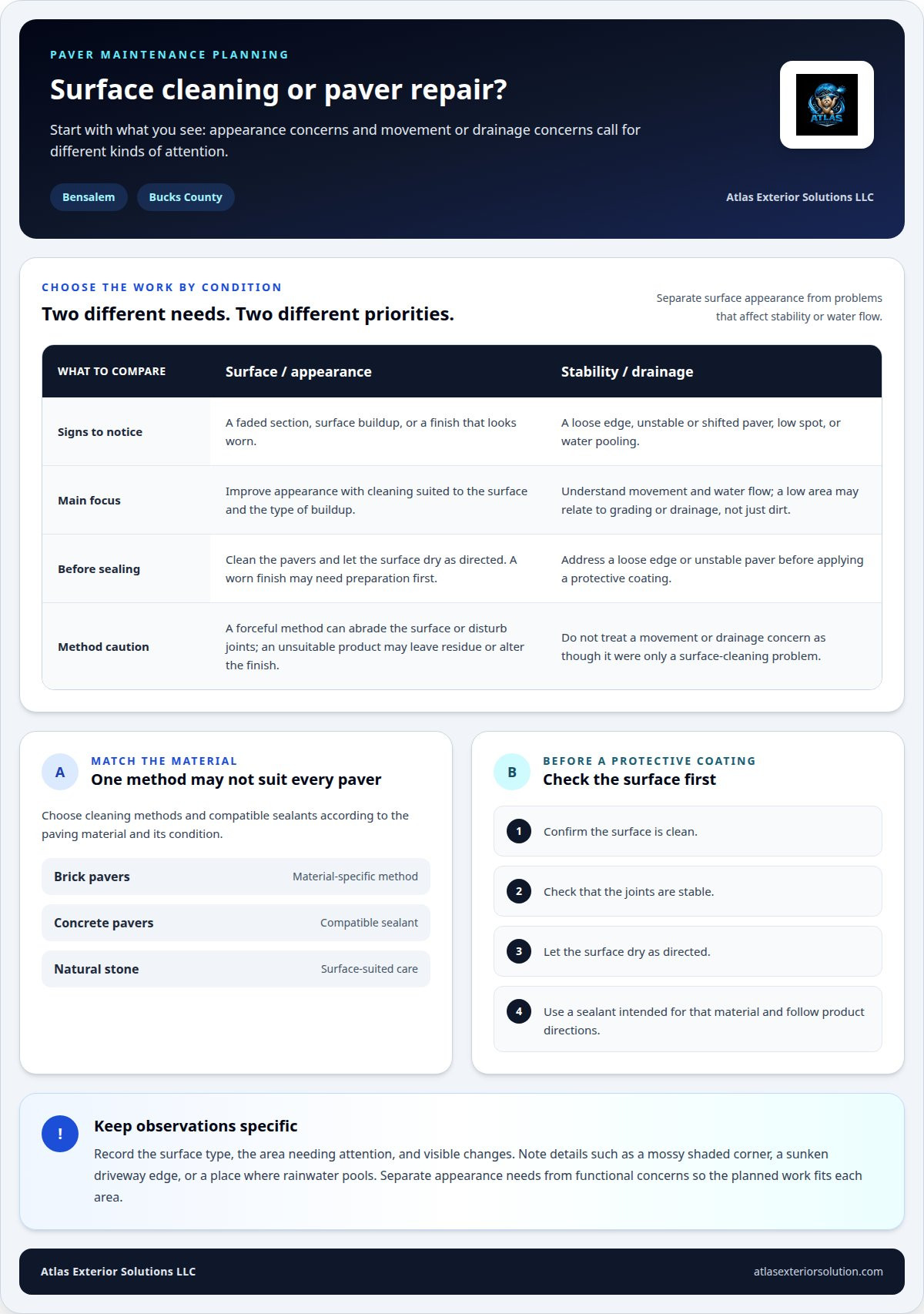
Start by identifying the areas that need attention and the result you want for each. A front walkway may need surface cleaning to improve its appearance, while a patio with a worn finish may need preparation before sealing. Note whether the project includes brick pavers, concrete pavers, or natural stone, as materials can require different cleaning methods and compatible sealants.
Also distinguish appearance concerns from functional ones. A faded section may need cleaning, while a loose edge or unstable paver calls for repair before any protective coating. Keeping these needs separate helps define the work sequence and avoids treating a structural issue as a surface-cleaning problem. For paved approaches to a home, driveway and concrete cleaning addresses exterior surfaces with a method suited to the material.
Cleaning and sealing frequency
There isn’t one cleaning schedule that fits every Bensalem property. Consider how the surface is used and what changes are visible. A frequently used entrance may show tracked soil sooner than a decorative patio, while a surface near a cooking area may collect different residue than a garden path.
Seal only after the surface is ready. The pavers should be clean, the joints stable, and the finish suitable for the material. The goal isn’t to apply a coating automatically, but to maintain the surface according to its condition and use. Follow product directions for preparation and application.
For a useful maintenance plan, record the surface type, areas needing attention, and visible changes since the last service. This gives you a practical reference for deciding which work belongs together. A patio may need surface care, for example, while a separate walkway needs attention to uneven units. Keeping those observations distinct helps focus maintenance on each area’s condition.
Cleaning methods affect the finished appearance. A method that is too forceful can abrade the surface or disturb joints, while an unsuitable product may leave residue or alter the finish. Choose a method based on the paver material and type of buildup, then let the surface dry as directed before applying sealer.
When planning work across several surfaces, group areas by material and condition instead of assuming the same treatment suits every space. This supports a consistent appearance while respecting the differences between a concrete driveway, a brick patio, and a natural-stone path.
Paver joint sand and sealing
Joint sand supports the spaces between pavers, while sealant helps protect the surface. Careful preparation helps both materials perform as intended on a walkway or patio.
Choosing a sealer for freeze-thaw weather
For Pennsylvania’s freeze-thaw conditions, consider a breathable sealant suited to the paver material. It allows moisture vapor to escape while resisting liquid water entry. Check that the product is intended for the specific surface, whether concrete pavers or natural stone. A sealer that traps moisture or changes the finish unexpectedly may not suit the project.
Sealing can help deter moss between pavers, but it won’t repair loose joints or shifting units. Prepare the surface and joints before applying a coating. Follow the sealer’s directions for preparation, application, and curing conditions. This helps avoid sealing damp pavers, residue, or unstable joint sand.
Refreshing polymeric joint sand
To refresh polymeric sand, remove loose or deteriorated material from the joints without scraping or damaging paver edges. Clear debris, let the joints dry as directed, then sweep new sand into the gaps. Follow the product instructions for activating the sand and removing residue from the paver faces.
Polymeric or blocking sand hardens after placement and can help prevent moss and weeds. Avoid treating it as a substitute for repairing movement beneath the paving. For example, a walkway with uneven pavers may need the underlying issue addressed before new sand is installed. Care at each step supports a neat finish and lasting satisfaction.
Pressure washing and joint sand
Yes, pressure washing can damage pavers or wash joint sand from the gaps if the method is too forceful or poorly directed. Water aimed closely at a joint can dislodge sand, and forceful cleaning can abrade some materials.
Choose a method suited to the paver surface and its condition. A careful cleaner controls the spray and avoids concentrating force on joints, edges, or fragile areas. Soft washing uses cleaning solutions and low pressure, while pressure washing uses a stronger water stream. Neither method should be applied identically to every paver.
After cleaning, inspect the joints before sealing. Refill gaps where sand has washed out, and let the surface dry according to the product directions. Applying sealer over missing joint material can leave the paving inadequately supported. If moss returns, regular cleaning and keeping pavers dry can help; sealing is a semi-permanent measure, with resealing advised every 3 to 5 years.
- Before sealing: Remove debris and address loose joint sand.
- During sand replacement: Follow the product directions for placement and activation.
- After washing: Check the joints and refill any areas where sand is missing.
For concrete pavers, natural stone, or a narrow walkway, matching the sealer and cleaning method to the surface helps protect its appearance and function.
Preventing paver cracks, stains, and shifting
Stable pavers depend on sound installation, controlled water flow, and timely attention to surface changes. A patio that drains poorly, for example, may develop persistent damp areas and uneven sections.
To repair sunken or shifting pavers, lift the affected units, inspect the base, and correct uneven support before resetting them. Replace any cracked paver, then restore the joints around it.
Foundation preparation affects how well a paved surface stays level. Compactors and geotextile fabric can help stabilize paver patio foundations and keep patios level. During installation, a compacted base provides more consistent support, while fabric can help separate foundation layers. These details matter beneath walkways and driveways, where repeated use can expose weak or uneven areas.
Pay attention to water movement around the paving and its surroundings. A low spot beside a patio can hold water against the pavers, while runoff from a downspout can repeatedly saturate one section. Correcting the source of pooling helps limit moisture exposure and reduce recurring movement. Keep joints clear enough to notice changes in their condition.
Stains often come from everyday contact. Fallen leaves can leave tannins on stone, and food spills can mark an outdoor dining patio. Remove debris and spills before they sit for long periods. Use material-specific cleaning, since natural stone and concrete pavers may respond differently to cleaning agents and scrubbing.
- For shifting: Identify whether movement follows a low area, edge, or frequently used path.
- For cracks: Check whether the paver is damaged or the surrounding units have moved.
- For stains: Note the source, such as leaves, food, or tracked-in soil.
- For pooling: Observe where water collects after rain and whether the area stays damp.
A repair should address the cause, not just the visible symptom. Resetting a sunken paver without correcting uneven support, for instance, can leave the same spot vulnerable to movement. If several adjacent units have shifted, inspect the surrounding base and drainage before replacing individual pavers. This helps protect functionality and curb appeal.
Cold-weather cycles can expose weak joints and areas that retain moisture. After winter, check for newly uneven pavers, widening gaps, and cracked units. Addressing specific changes early can keep a small repair from affecting a larger section of the patio or walkway.
With careful installation, clear drainage, and prompt cleanup, pavers are easier to maintain. A stable base supports the surface, while regular observation helps catch stains, cracks, or movement before they spread.
How often should pavers be cleaned and sealed in Bensalem?
Set cleaning frequency according to the surface’s use and condition, rather than giving every paved area the same schedule. A frequently used entrance, a dining patio, and a rarely used garden path collect different kinds of wear and residue.
For cleaning, respond to visible changes that affect appearance or use. Tracked soil near a doorway, food residue beside an outdoor table, or tire marks on a driveway may need attention at different times. A light, targeted clean may suit a small spill, while broader discoloration may need a more complete surface treatment. Match the method to the paver material.
Sealing requires a different assessment. Consider the existing finish, whether the surface is prepared, and whether the sealant suits the paver type. A worn-looking coating alone doesn’t mean the paving is ready for another application. Address dirt, residue, or unstable joints first so the sealant goes onto a properly prepared surface.
Keep a simple record for each paved area. Note the surface material, its main use, and what prompted the last cleaning or sealing. Recording that a driveway needed attention after recurring tire marks, for example, can help distinguish its maintenance needs from those of a patio used mainly for seating.
- Review use: Consider foot traffic, vehicle use, and nearby activities that leave residue.
- Assess appearance: Look for persistent discoloration or a finish that no longer looks even.
- Prepare the surface: Make sure cleaning, joint condition, and product directions align before sealing.
Weather and site exposure also shape the schedule. A covered area may stay cleaner than an open space near cooking or vehicle activity. Shaded sections can show surface changes differently from sun-exposed paving. Treat those areas individually instead of repeating one routine across the whole property.
More frequent cleaning isn’t automatically better. An unsuitable method can wear the surface or affect the joints. Choose an approach based on the material and type of residue, and follow the sealant’s preparation and application directions. Tie the schedule to the paving’s needs, not habit alone.
For Bensalem properties, a practical plan accounts for use, visible wear, and the condition of the finish. Recording these factors helps identify when each paved area needs attention and keeps maintenance focused.
Request guidance for your paver maintenance needs
Regular cleaning and keeping pavers dry can help prevent moss growth. During maintenance, note whether dampness or moss is appearing and whether the same condition returns after cleaning. Pay attention to areas that stay wet and consider how to keep them dry between cleanings. Treat this as a reason to reassess that specific area, not to apply the same response across every paved surface. Keep a simple record of what was cleaned, whether the pavers were left dry, and what you see later. This helps tie future cleaning decisions to the surface’s condition.
Atlas Exterior Solutions LLC: Paver Restoration
Atlas Exterior Solutions LLC offers Paver Restoration for Bensalem patios, walkways, and driveways affected by buildup, stains, or worn joints. It’s a practical next step when routine cleaning no longer refreshes the surface or you need help planning cleaning and sealing together.
The right approach depends on the paver material and condition. Surface-specific cleaning removes grime while helping protect the paving, and restoration can address needs identified during the work. For commercial properties, Commercial Pressure Washing can also suit paved areas that need a careful, planned clean.
For paver cleaning or restoration in Bensalem, contact Atlas Exterior Solutions LLC to discuss your property.
Plan Your Next Paver Care Step
Choose your next step based on the condition you see now. If stains, worn joints, or recurring buildup affect your outdoor space, a focused assessment can help distinguish surface cleaning from restoration needs. That gives you a clear starting point for maintaining your pavers without treating every area the same way.
Atlas Exterior Solutions LLC offers Paver Restoration for paving that needs renewed attention. Soft Washing and Commercial Pressure Washing address other exterior cleaning needs, with the method matched to the surface. For paver maintenance in Bensalem, share which areas concern you and what changes you’ve noticed. That context helps shape a practical conversation about caring for your property.
A well-maintained paved area can continue to welcome family, visitors, and customers. When you’re ready, take the next step and keep your property looking cared for.
Frequently Asked Questions
How to stop moss from growing between block paving?
Remove moss before it forms a dense layer across the joints. Loosen growth with a brush suited to the paver surface, then clear the residue. For persistent patches, use a cleaner labeled for that paving material and follow its directions. Treating a small affected section can help avoid unnecessary cleaning across the whole patio or driveway.
What paver maintenance is recommended for pavers in Bensalem, PA?
Use maintenance methods suited to the paver material and the type of mark or buildup. A leaf stain, for example, may need a different approach from rust-colored marks or residue near an outdoor grill. Test a cleaning product on an inconspicuous area first, following its label. This helps you assess how the surface responds before treating a prominent entry or patio.
How do you clean and seal pavers in Bensalem, PA?
Plan paver care around the specific work your surface needs, rather than following a single maintenance formula. Decide whether the concern is discoloration, a worn finish, or deterioration affecting how the paving is used. These conditions need different approaches. Identifying the main issue first helps keep the plan relevant to your Bensalem patio, path, or driveway.
How do you remove weeds, moss, and algae between pavers?
First identify what is growing: weeds have visible stems or roots, while moss and algae form surface growth. Remove weeds carefully, including roots where accessible, then clear the loosened material. For moss or algae residue, choose a cleaner labeled for the paver material and follow its instructions. Targeted treatment helps protect the surrounding paving and avoids applying an unsuitable product across the full area.
Disclaimer
The information on this blog is for general informational purposes only. Results may vary based on surface type, condition, and cleaning methods. Always follow manufacturer guidelines and use proper safety precautions. Atlas Exterior Solutions is not liable for any damages or losses resulting from the use of this information.


