

Shingles can be cleaned without blasting them with high pressure. Roof algae removal in Yardley uses soft washing, applying cleaning solutions at low pressure to treat algae while helping protect the shingles. The method matters: forceful washing can dislodge protective granules and push water beneath shingles.
Dark streaks can make a roof look neglected, so it’s understandable to worry that removing them could cause more harm than good. Soft washing targets organic growth with cleaning solutions instead of relying on high-pressure water to scour the surface.
This guide explains how roof soft washing works, why algae appears, and what to consider when cleaning asphalt shingles, cedar, slate, tile, and other roof materials. You’ll also learn how shade and moisture affect recurring growth and what details shape a roof-cleaning plan. A material-specific approach helps homeowners make an informed decision about restoring their roof’s appearance while caring for the surface.
- Soft washing uses cleaning agents and low pressure, while pressure washing relies on stronger water force that can dislodge shingle granules.
- Roof material matters: cleaning methods should account for the surface and its vulnerabilities, whether it’s asphalt shingles, cedar, slate, or tile.
- Algae can create dark streaks and hold moisture against a roof; treating the growth across the roof helps address it at its source.
- Shade, tree cover, and moisture around the roof can affect cleaning results and how quickly algae returns.
- When roof growth needs attention, Atlas Exterior Solutions LLC offers soft washing as a practical next step for protecting and refreshing your property.
What Is a Roof Soft Wash?
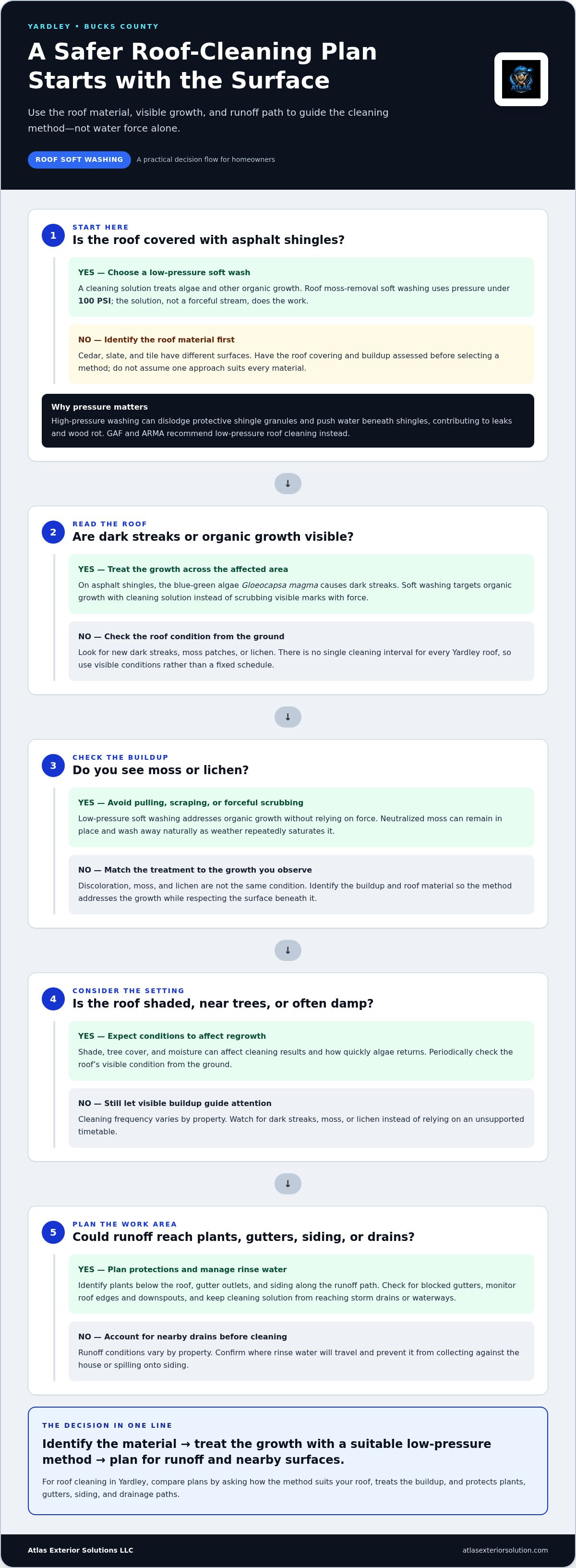
A roof soft wash applies cleaning solutions with low-pressure water rather than using force to scrub the roof. For Yardley homeowners, that distinction matters because high-pressure washing can strip protective granules from asphalt shingles.
Low-Pressure Treatment for Asphalt Shingles
On asphalt shingles, soft washing applies a cleaning solution at controlled pressure to address algae and other organic growth. The method relies on the solution, not a forceful water stream, to treat the roof surface. Roof moss-removal soft washing uses pressure under 100 PSI. When reviewing a cleaning plan, look for a method suited to shingles and a clear explanation of how it treats growth without blasting the surface.
Risks of High-Pressure Roof Washing
High-pressure roof washing can dislodge protective granules from asphalt shingles and force water beneath them. Water intrusion can contribute to leaks and wood rot, while granule loss can shorten a roof’s useful life. GAF and ARMA recommend low-pressure roof cleaning instead of high-pressure washing. Pressure washing suits some hard exterior surfaces, but roofs need a gentler approach to reduce the risk of damage.
In Yardley and Bucks County, plan roof cleaning with runoff in mind. Keep cleaning solution from reaching storm drains or waterways, and account for nearby drains when planning the work. These practical precautions address environmental concerns while recognizing that runoff conditions vary from property to property.
Protecting Plants, Gutters, and Siding
Before treatment, identify plants below the roof, gutter outlets, and siding along the runoff path. Protect nearby plants and manage rinse water so it does not collect against the house or spill onto siding. Check gutters for blockages that could redirect runoff, then monitor roof edges and downspouts during cleaning. These steps help limit unwanted residue beyond the roof.
When choosing a roof-cleaning company near Yardley, look for a licensed and insured provider that uses a specific low-pressure method for asphalt shingles. Ask what the cleaning plan includes for treating roof growth, managing runoff, and protecting nearby plants, gutters, and siding. These details make it easier to compare methods and understand how the property will be protected. Atlas Exterior Solutions LLC is licensed and insured and uses soft washing for roofs.
Soft washing and pressure cleaning differ in what does the work: cleaning solution treats organic growth, while pressure washing relies on water force. A controlled application can address algae without using a high-pressure stream to scrub shingles. The method should match the roof material and the growth being treated. This material-specific approach helps restore the roof’s appearance while reducing avoidable surface wear.
Do you clean cedar, slate, and tile roofs?
Cleaning methods should match the roof material because cedar, slate, and tile have different surfaces. In Yardley, cleaning frequency depends on shade, tree cover, and moisture around the roof.
Algae, Staining, and Residue Removal
Algae can leave dark streaks, while roof runoff may carry residue onto the siding below. On asphalt shingles, the blue-green algae Gloeocapsa magma causes dark streaks; cedar, slate, and tile need assessment based on their surfaces and buildup. Look for a method that treats growth across the affected area rather than scrubbing visible marks alone. This helps address staining without confusing roof cleaning with forceful abrasion.
For roof algae removal in Yardley, observe where growth appears before choosing a cleaning approach. Shaded sections, roof edges beneath tree cover, and damp areas can show different patterns. Note whether the buildup looks like discoloration, moss, or lichen, and whether residue also appears on siding. These observations help describe the problem clearly and focus the cleaning plan on the affected material.
Moss, Mold, Mildew, and Lichen Removal
Moss and lichen can follow algae growth, so a roof with several types of buildup needs more than stain removal. Low-pressure soft washing addresses organic growth without relying on forceful scrubbing. Neutralized moss can remain in place and wash away naturally as weather repeatedly saturates it. Avoid pulling or scraping stubborn patches, which can disturb the roof surface and leave residue behind.
There is no single cleaning interval for every Yardley roof. Shade, nearby trees, and moisture affect growth and how soon algae may return, especially on shaded roofs. Periodically check the roof’s visible condition from the ground, noting new dark streaks, moss patches, or lichen. These signs help you decide when cleaning needs attention without relying on an unsupported schedule.
Cedar, slate, and tile call for a material-specific assessment before cleaning. Identify the roof covering, locate the buildup, and consider how runoff travels across the exterior. For example, a dark streak on asphalt shingles may indicate algae, while visible moss or lichen calls for attention to the growth itself. A suitable method targets the buildup while respecting the surface beneath it.
After treatment, allow the cleaning process to work rather than expecting every trace to disappear immediately. Moss may loosen and wash away with repeated weather exposure, while results vary with shade, tree cover, and moisture. Inspect the roof from the ground to distinguish remaining growth from staining and see whether runoff has left marks below. These observations help assess the roof without unnecessary scraping or pressure.
Removing roof algae and black streaks
On asphalt shingles, the blue-green algae Gloeocapsa magma causes dark streaks. Identifying the growth helps distinguish roof algae from other buildup and guides a suitable cleaning approach.
Black Streaks Caused by Roof Algae
Black streaks often form as algae grows across asphalt shingles, creating uneven dark lines down the roof. Algae can hold moisture against shingles and contribute to premature deterioration. During roof cleaning, consider the full affected area instead of treating just one visible stain. Treating the entire roof surface helps address algae at its source and may help prevent it from returning.
Start by observing the roof from the ground and noting where streaks appear. Compare darker sections with nearby areas and look for growth extending across several shingles. Roof runoff can also carry marks onto siding below, so inspect the exterior beneath stained sections. These observations help distinguish roof discoloration from staining elsewhere and describe the cleaning needs clearly.
Recognizing Algae Versus Moss or Lichen
Algae on asphalt shingles commonly appears as dark streaks, while moss and lichen are different forms of visible roof growth. Moss and lichen can follow algae growth, so a roof may show more than one type of buildup. From the ground, note whether the discoloration forms streaks or distinct patches. Avoid scraping the roof to identify growth, since that can disturb shingles.
DIY cleaners may seem convenient, but an unknown household product can leave residue or affect nearby surfaces. Soft washing uses specialized cleaning solutions to target organic growth instead of relying on forceful scrubbing. The product and application method should suit the roof material. Avoid mixing cleaners or applying products without understanding how runoff may reach plants, gutters, and siding.
For roof algae removal in Yardley, focus on the cause of the streaks, not just their appearance. A surface rinse may change visible staining without treating growth across the roof. A suitable cleaning plan addresses the affected area and accounts for the material and runoff path. This approach helps restore a more even appearance while limiting avoidable wear.
After treatment, remaining moss may wash away naturally as weather repeatedly saturates it. Algae can also return over time, particularly on shaded roofs, so watch for new streaks. Results depend on shade, tree cover, and moisture around the roof. These conditions help explain changes in a cleaned roof’s appearance and why signs of new growth deserve attention.
How roof shade and moisture affect algae growth
Shade and moisture help explain why algae appears unevenly across a roof. In Yardley, a tree-shaded slope may show more growth than a nearby sunnier surface because cleaning results depend on shade, tree cover, and moisture around the roof.
Compare roof sections from the ground before planning exterior cleaning. Note whether dark growth appears beneath overhanging branches, along a lower slope, or near a roof valley where water may linger. These observations help identify patterns without assuming every part of the roof needs identical attention. They also show how surrounding trees and damp areas relate to visible growth.
Roof growth can hold moisture against the surface. That lingering dampness matters because algae may continue growing, and shaded roofs are especially prone to its return. A clean-looking section beside a shaded, streaked section can show how conditions vary across one roof. Record the differences so the cleaning plan can account for affected areas.
Gutters and downspouts can help reveal runoff patterns. From the ground, check whether water exits consistently or spills near a roof edge. Note any siding streaks below a section with visible algae. Runoff from a dirty roof can leave marks on the exterior, so connecting roof growth with the area beneath it gives a fuller picture of surface conditions.
Before applying a cleaning solution, consider tree cover, damp areas, and the roofing material. Asphalt shingles, slate, tile, cedar, and composite roofing have distinct surfaces, so do not assume one approach fits them all. The goal is to match treatment to the affected roof and its surroundings, not to increase pressure where shade has encouraged growth.
After cleaning, keep an eye on the shaded sections you noted beforehand. If streaks return beneath branches while exposed areas remain clearer, shade and moisture may be contributing factors. This comparison helps explain changes in appearance without assuming the treatment failed. Roof-cleaning results depend partly on conditions around the roof, including tree cover and moisture.
Tree branches, roof slopes, and gutters can help map where dampness persists. For instance, a shaded roof valley may stay moist longer than an open ridge. Observing these features from the ground gives homeowners practical details to share when planning cleaning. It also helps focus attention on the roof surface rather than treating every discoloration as the same problem.
Use those observations to guide maintenance decisions rather than following a fixed calendar. Note where growth begins, how it changes, and whether it appears again after cleaning. In Yardley, recording shaded areas and nearby tree cover gives you a consistent way to compare roof conditions over time. This simple step makes recurring algae easier to spot and helps set realistic expectations for exterior cleaning.
Soft washing asphalt shingles and other roof materials
Soft washing pairs a cleaning solution with controlled, low-pressure water. For asphalt shingles, cedar, slate, and tile, the key is matching treatment to the roofing material rather than using one washing method everywhere.
Asphalt shingles have a surface coating of granules that can be disturbed by forceful power washing. A roof soft wash treats organic growth with cleaning solution instead of relying on a high-pressure stream. Roof soft-washing pressure is under 100 PSI. That controlled application helps address algae while reducing the risk of dislodging granules during cleaning.
Cedar needs a different assessment from asphalt because its surface and condition differ. Look for growth between or along the wooden courses, then consider how the cleaning solution will reach those areas. Slate and tile also have distinct shapes and joints. A suitable method should address buildup across the roof while avoiding forceful washing that could disturb the surface or drive water beneath roof coverings.
Before cleaning, identify the roof material and inspect affected areas from the ground. Note the location of dark marks, moss, and lichen, then consider whether shade or tree cover affects those sections. This helps distinguish a limited area of growth from broader roof staining. It also gives the cleaning plan practical details about the surface and where treatment is needed.
During application, use a controlled soft-washing approach across the affected roof surface. Treating the entire roof can address algae at its source rather than leave untreated patches beside cleaned sections. Do not treat visible stains as the only target. Dark streaks across asphalt shingles, for example, may extend beyond the darkest area, while moss can appear in distinct patches.
After washing, allow neutralized moss to loosen through repeated weather exposure instead of scraping it away. Weather gradually saturates the remaining growth, helping it wash off naturally. This avoids unnecessary mechanical force on shingles, cedar, slate, or tile. Inspect the roof from the ground afterward, noting any remaining growth and whether runoff has carried residue onto siding.
For any roof material, prioritize a low-pressure method tailored to the surface. High-pressure power washing can dislodge asphalt-shingle granules and force water under shingles. A material-specific soft wash uses cleaning solution to target organic growth. This difference supports careful cleaning and helps restore the roof’s appearance without excessive force.
Request a roof cleaning estimate
A controlled, low-pressure soft wash applies cleaning solution to treat roof algae, with the method tailored to the roofing material. Avoid forceful power washing, which can disturb roof surfaces.
Atlas Exterior Solutions LLC: Soft Washing
Atlas Exterior Solutions LLC provides soft washing for homeowners addressing roof algae, dark streaks, or other organic growth. If your Yardley roof has asphalt shingles or another material that needs a careful cleaning approach, soft washing applies cleaning solution at low pressure instead of relying on forceful washing.
A roof assessment clarifies the visible growth, roof surface, and areas affected by runoff. That information supports a cleaning plan focused on the roof and its surroundings, including nearby siding and gutters. For roof algae removal in Yardley, consider soft washing when staining or growth affects your roof’s appearance and you want a surface-conscious approach.
Contact Atlas Exterior Solutions LLC to discuss soft washing for your roof.
Take the Next Step Toward a Cleaner Roof
Choosing a roof-care approach starts with knowing your roofing material and identifying the growth. If streaks or moss are changing your home’s appearance, roof algae removal in Yardley can help address the buildup with care. Consider how tree shade and roof conditions may affect the plan, then decide what support would make maintaining your property easier.
Atlas Exterior Solutions LLC offers soft washing, commercial pressure washing, and paver restoration. These services suit different exterior surfaces, so you can discuss the work that fits your property rather than treating every surface alike.
Contact Atlas Exterior Solutions LLC to discuss your roof and request a free estimate.
A thoughtful maintenance decision can help you care for your property with confidence.
Frequently Asked Questions
Is roof cleaning safe for shingles?
Yes, roof cleaning can be suitable for shingles when it uses a low-pressure soft-washing method. The cleaning solution addresses organic growth without forcefully scrubbing the shingle surface. Before work begins, identify the roof material and note areas with damaged or missing shingles, since those conditions affect the approach. Avoid methods that could dislodge granules or drive water beneath shingles.
Will the streaks come back?
Algae can return, especially where shade, tree cover, and moisture continue to support growth. A shaded roof section beneath overhanging branches may show new streaks while a sunnier slope stays clearer. After cleaning, track where growth first appeared and watch those areas for changes. This comparison can help distinguish recurring algae from other marks on shingles or residue carried by runoff.
Is pressure washing bad for my roof?
High-pressure washing can damage roof shingles by dislodging protective granules or forcing water beneath them. That can contribute to leaks and wood rot. The distinction is practical: pressure washing relies on water force, while a roof soft wash applies cleaning solution at low pressure. For asphalt shingles, avoid treating the roof like a concrete driveway, a more durable surface.
What Affects the Cost of Roof Cleaning?
The quote depends on roof size, pitch and height, roofing material, amount of growth, access, and any added services. A steep, tall roof with widespread moss presents different access and cleaning needs from a smaller roof with limited algae streaks. Atlas Exterior Solutions LLC provides a free estimate based on the details of the individual job, with transparent pricing and no hidden fees.
What is roof softwashing?
Roof soft washing applies a cleaning solution with low-pressure water to treat organic growth. It differs from pressure washing, which uses water force to remove buildup. For example, a roof with algae streaks can be treated across the affected surface without blasting the shingles. The roof material and type of growth guide the cleaning approach.
What causes roof algae in Yardley, Pennsylvania?
Shade, tree cover, and moisture around a roof can create conditions for algae growth. A section shaded by nearby trees, for example, may stay damp longer than an exposed slope, allowing streaks to develop or return. The blue-green algae Gloeocapsa magma causes dark streaks on asphalt shingles. Observing where streaks appear can help connect roof conditions with visible growth.
How much does professional roof algae removal cost in Yardley, PA?
The estimate depends on the roof’s size, pitch, height, material, growth, and access, along with any added work. A roof with extensive buildup or difficult access has different job requirements from one with isolated streaks. Atlas Exterior Solutions LLC provides a free estimate based on the specific job, with transparent pricing and no hidden fees. Sharing clear details about the roof helps shape the estimate.
What is the safest way to remove algae from asphalt shingles?
A low-pressure soft wash is the appropriate approach for treating algae on asphalt shingles. It uses cleaning solution rather than forceful water to address growth across the roof surface. Avoid scraping shingles or directing high-pressure water at them, since that can disturb protective granules. The roof’s condition, extent of algae, and runoff paths help guide careful treatment.
Disclaimer
The information on this blog is for general informational purposes only. Results may vary based on surface type, condition, and cleaning methods. Always follow manufacturer guidelines and use proper safety precautions. Atlas Exterior Solutions is not liable for any damages or losses resulting from the use of this information.


