

A cleaner exterior should protect your home and the life around it. Building exterior cleaning in Levittown removes common buildup such as dirt, algae, mildew, and stains, using a method suited to each surface. Atlas Exterior Solutions LLC uses biodegradable cleaning solutions and takes care around plants and pets.
It’s reasonable to ask what will be applied around your home and how the cleaning process affects your siding, roof, walkways, and outdoor spaces. The right approach depends on the material and type of buildup: delicate surfaces need a different method from durable concrete.
This guide explains which exterior surfaces can be cleaned, how soft washing differs from pressure washing, and how surface-specific methods address common stains without relying on force alone. You’ll also learn how to prepare for plant and pet safety, so you can make an informed decision about caring for your Levittown property.
Key Takeaways
- Match the cleaning method to the surface: soft washing suits delicate exteriors, while pressure washing is reserved for surfaces that can handle it.
- Learn how cleaning approaches address dirt, algae, mildew, mold, and stains on siding and other outdoor surfaces.
- See what to consider when cleaning roofs, concrete, decks, windows, and fences to help protect each material.
- Understand how careful solution use and attention to the surrounding area can help protect plants and pets during exterior cleaning.
- Explore when house washing or soft washing may help refresh a home’s exterior and maintain its appearance.
Service coverage in Levittown and Nassau County
This section focuses on Levittown, Pennsylvania, and nearby Bucks County communities, while also addressing properties historically associated with regional searches, including Nassau County contexts where applicable. For building exterior cleaning in Levittown, homeowners can request house washing, roof cleaning, driveway and concrete cleaning, deck and patio cleaning, fence cleaning, and window cleaning. Commercial properties can receive exterior cleaning for building surfaces and paved areas. The surfaces and visible buildup help define the work.
Atlas Exterior Solutions LLC serves Bucks County and nearby Montgomery County communities. Local locations include Langhorne, Bensalem, Richboro, Yardley, Fairless Hills, Newtown, Horsham, and Levittown. Provide the property address when arranging service so the location is clear. An accurate address helps connect the request to the correct Pennsylvania property.
Describe the property and the surfaces that need attention. A homeowner might request house washing alongside driveway cleaning; a property manager could identify the building exterior and entrance paving. Listing each area separately clarifies the work scope. For example, painted siding and a concrete walkway are different materials, so the plan should account for each rather than treating the property as one surface.
- List the areas to be cleaned, such as siding, concrete, or a deck.
- Describe visible dirt, algae, mildew, or stains.
- Note access details, including gates, parking, and outdoor furniture.
Before hiring an exterior cleaning company, review the written scope, cleaning method, insurance information, and property-protection plan. Ask how the method suits each surface and how nearby plants, pets, and fixtures will be considered. If a satisfaction policy or guarantee is offered, read its terms to understand what work and results it covers. Don’t assume a guarantee applies without clear written conditions.
Scheduling can account for access, household routines, and the areas being washed. Tell Atlas Exterior Solutions LLC about gates, parked vehicles, and entrances that need to remain accessible. Commercial properties should also identify customer walkways and delivery areas so the work sequence can be planned around them. Ask how weather-related changes are handled when setting a service date.
For properties elsewhere in Bucks County, include the town name and address with your service request. A home in Yardley may have different access needs from one in Levittown, even though both are in the county. Property managers can also provide a site contact and access instructions to help coordinate work across shared entrances or paved areas.
Group related surfaces in the same request, then identify priority areas. A homeowner might list siding, a front walk, and a deck. A commercial property manager might name the facade and entrance paving. A clear scope helps define what the cleaning covers and supports practical scheduling.
Atlas Exterior Solutions LLC provides commercial exterior cleaning for buildings and paved areas. When describing a site, identify which areas need attention and note any access details that could affect the work sequence. Clear descriptions help distinguish building surfaces from paved areas and service zones when defining the requested scope.
Removing dirt, mold, algae, mildew, and stains
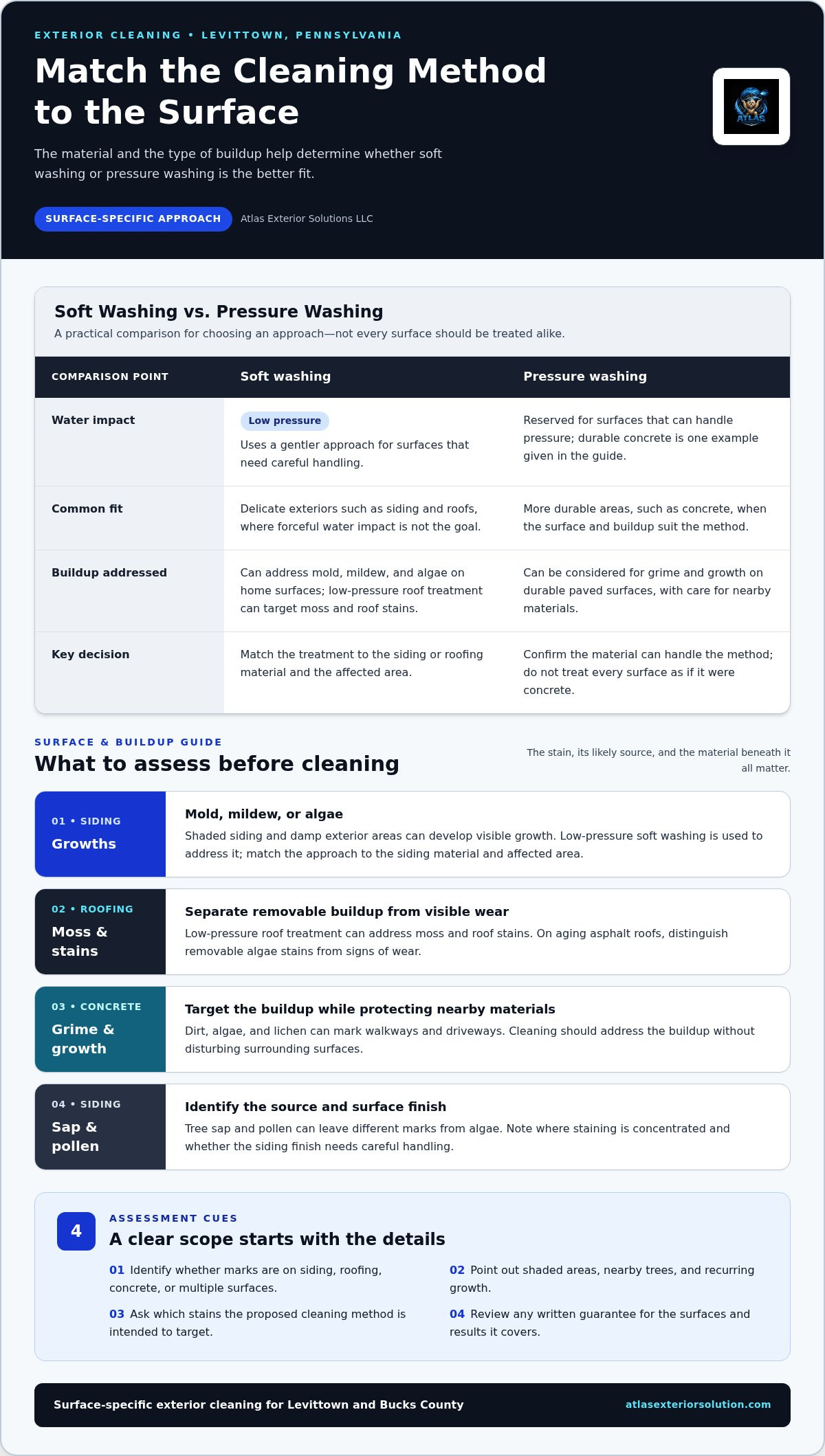
Different marks call for different cleaning approaches, even when they appear on the same wall. Identifying the surface and buildup first helps guide treatment and protect the material.
Mold, Mildew, and Algae Removal
Shaded siding and damp exterior areas can develop visible mold, mildew, or algae. Low-pressure soft washing removes these growths from home surfaces without relying on forceful water impact. Atlas Exterior Solutions LLC matches the approach to the siding material and affected area instead of treating every wall alike. On commercial properties, the same assessment helps distinguish facade buildup from grime on adjacent surfaces.
Moss and Stain Removal
Moss can cling to roofs, while dirt, algae, and lichen can mark concrete walkways and driveways. Low-pressure roof treatment can address moss and roof stains; the surface and buildup guide the method. On paved areas, cleaning should target grime and growth without disturbing nearby materials. Ask what the treatment is intended to remove, and read any stain-removal guarantee for its stated scope.
Tree Sap and Pollen on Siding
Tree sap and pollen can leave different marks from algae, especially on siding near trees or in shaded areas. Identify where staining is concentrated and whether the surface has a finish that needs careful handling. Aging asphalt roofs also need a distinction between removable algae stains and visible wear. Roof soft washing uses low pressure to address algae and stains without damaging shingles.
A useful assessment separates the stain from its likely source. Persistent algae on a shaded wall, for example, presents a different cleaning concern from sticky tree sap or seasonal pollen. Describe the affected areas and surfaces before work begins to establish a clear scope for residential washing or commercial exterior maintenance.
- Note whether marks are on siding, roofing, concrete, or more than one surface.
- Point out shade, nearby trees, and areas with recurring growth.
- Ask which stains the proposed cleaning method targets.
- Review any written guarantee for the surfaces and results it covers.
Soft washing relies on low-pressure application, making it suited to surfaces that need gentler handling than pressure washing. The right plan considers both the stain and the material beneath it. For more detail on low-pressure treatment, see soft washing methods for exterior surfaces.
Atlas Exterior Solutions LLC uses low-pressure soft washing to remove mold, mildew, and algae and kill moss on homes and roofs. Identify the specific surfaces and growth you want addressed so the service scope is clear when a property has more than one type of buildup or surface.
Fence material can also be part of the cleaning discussion. The company says it cleans vinyl, wood, and brick fences to remove mold and mildew. Point out which fence sections are affected and identify their material before work begins. Ask whether those sections are included in the proposed service, and clarify that the requested treatment is for mold or mildew. Separating the fence from the home or roof helps make it clear which surfaces and concerns the cleaning plan is meant to cover.
Roof, concrete, deck, window, and fence cleaning
Each outdoor surface needs a method suited to its material and buildup. For homes and commercial properties, separating roof, paving, deck, window, and fence work helps protect surfaces while improving curb appeal.
Pressure washing siding, roofs, or windows can force water behind siding, damage shingles, or harm window seals and glass. Match water pressure and cleaning method to the material; delicate surfaces often need soft washing instead.
Asphalt roofs can collect algae and stains, while moss may cling to shingles. Low-pressure roof treatment targets this buildup without damaging shingles. Roof cleaning should account for the roof’s condition and treat the affected area rather than use force to dislodge growth. Atlas Exterior Solutions LLC uses soft washing on roofs, whether residential or commercial.
Concrete driveways and walkways can accumulate grime, mold, algae, and lichen. Cleaning can refresh the approach to a home and restore a more even appearance. A concrete pool deck is another example where the surface and nearby features should guide the approach. For these hard surfaces, driveway and concrete cleaning addresses buildup with a method selected for the material.
Wood, composite, paver, and natural stone decks can hold mold, mildew, and grime. Identify the deck material before cleaning; the same pressure may not suit every surface. Cleaning and staining are separate steps: washing removes surface buildup, while staining changes or protects the finish. Let the deck dry before considering a finish, and follow the material’s requirements.
Vinyl, wood, and brick fences can also develop mold or mildew. Windows need a different touch: hard-water stains are mineral deposits left when water containing dissolved minerals evaporates on glass. Atlas Exterior Solutions LLC cleans windows separately from nearby siding, so each surface receives a suitable method.
For a commercial property in Bucks County, the same planning applies across a building, paved entrance, outdoor deck, or fence. Map the surfaces first, note the visible buildup, and set priorities around entrances or customer areas. A commercial building may need distinct treatment for its facade and concrete lot; one method shouldn’t automatically cover both.
- Identify whether the surface is asphalt, concrete, wood, composite, paver, glass, vinyl, or brick.
- Point out algae, moss, mineral marks, grime, or finish wear before work begins.
- Separate washing from deck staining, which is a different treatment.
Environmentally friendly cleaning techniques
Exterior cleaning affects more than siding or concrete; runoff and nearby plants matter too. A careful plan considers the surface, cleaning solution, water use, and where rinse water flows. For example, a home beside garden beds needs different preparation from a clear commercial walkway.
“Eco-friendly” isn’t a single product standard or a guarantee of safety. Cleaning solutions vary, so read the product label for its intended use, handling directions, and dilution instructions. Choose a method that targets the buildup without applying more solution or pressure than the surface needs. This helps limit unnecessary product use while still addressing dirt or mildew.
Prepare the immediate work area before washing begins. Move pet bowls, toys, and portable planters away from the rinse path, and keep pets indoors during active cleaning. Identify garden beds and shrubs beside the work zone. Controlled application and directed rinsing help keep cleaning solution on the surface being treated.
- Identify plants, pet items, storm drains, and runoff paths near the work area.
- Follow the product label for application, dilution, and handling.
- Use a surface-appropriate method instead of relying on excess pressure.
- Keep people and pets clear until the work area is rinsed and accessible.
Water management matters on a driveway, patio, or commercial walkway. Before washing, note where runoff could travel, especially near planted areas or drains. Apply solution only to the intended surface, then manage rinse water so it doesn’t carry loosened grime across clean areas. On a sloped driveway, account for the direction water naturally moves.
Gutters also affect how water moves around a property. Gutter cleaning is recommended twice a year, once in late fall and once in late spring. Keeping that task in mind can help owners plan exterior maintenance around seasonal debris, rather than washing around overflowing leaves or blocked channels.
Soft washing uses low-pressure application, while pressure washing relies on stronger water impact. Soft washing suits delicate exterior materials; pressure washing is reserved for durable surfaces such as concrete, brick, stone, and driveways. The material and type of buildup should guide the method. A roof, painted siding, and concrete path shouldn’t automatically receive identical treatment.
After cleaning, inspect the work area for remaining debris, displaced items, and runoff marks. Check garden edges, drain openings, and the path leading away from the house. These simple steps help restore a tidy exterior while keeping the cleaning process focused on the property, not its surroundings.
Residential house exterior cleaning
There’s no single best contractor for every Levittown homeowner. Compare reviews describing similar house-washing work, careful surface treatment, and clear communication. For Pennsylvania properties, plan exterior cleaning around the home’s location, surfaces, runoff path, and water use.
Runoff and Water Use Considerations
In Levittown and nearby Bucks County communities, note where rinse water flows before washing begins. Check the slope of the driveway, nearby drains, garden beds, and neighboring property lines, then organize the work area around those features. Avoid directing dirty runoff across clean paving or into planted areas. Use water deliberately and follow instructions for any cleaning solution.
Move pet bowls, toys, and portable planters away from the work zone, and keep pets indoors during active washing. Point out nearby drains or planted borders before work starts. This helps account for the property’s layout and keeps outdoor items away from rinse water.
Exterior Cleaning Frequency
Siding manufacturers recommend washing a house at least once a year, and homeowners are advised not to go more than three years without house washing. Use both recommendations as maintenance guidance, then pay attention to the home’s condition between cleanings. Shade, nearby trees, and visible buildup can affect how quickly particular walls become dirty.
Walk around the house and note differences by side. A shaded wall beneath trees may show algae sooner than a sunny wall, while pollen or dirt may collect around trim and entryways. Recording these areas helps owners plan washing based on actual surface conditions rather than assuming every wall needs the same attention.
For siding, pressure washing isn’t automatically the safest method. Excessive pressure can damage siding or drive water behind it. Soft washing uses low-pressure water with cleaning agents, making it suitable for delicate surfaces. The siding material and its condition should guide the approach.
Before work begins, identify the siding type and point out loose panels, peeling paint, or damaged trim. Close windows and doors, and move outdoor furniture away from the walls. Keep people and pets clear of the active work area. These steps help protect the home and make surfaces easier to reach.
When comparing exterior cleaning services, look for reviews describing relevant work on homes with similar surfaces. Pay attention to specific comments about care around siding, communication, and whether the completed work matched the agreed scope. Those details offer a more useful comparison than star ratings alone.
After washing, inspect the siding from different angles and note any areas needing further attention. A clean wall doesn’t mean the roof, windows, or concrete walkway should receive the same method. Each surface needs an approach suited to its material.
For a home with visible siding buildup, request a house washing estimate.
Atlas Exterior Solutions: Soft Washing
Atlas Exterior Solutions LLC provides soft washing for homeowners who want to clean siding and other delicate exterior surfaces using low-pressure water. This method addresses buildup while reducing the risk of damage from forceful water impact. Concrete and paved areas need a different approach suited to their materials.
For properties with varied cleaning needs, Atlas Exterior Solutions LLC also offers house washing, commercial pressure washing, and paver restoration. These services address home exteriors, commercial properties, and paved areas. Describe the surfaces and visible buildup to identify the right next step.
Contact Atlas Exterior Solutions LLC to discuss exterior cleaning for your property.
Plan the Next Step for Your Property
Choose an area that needs attention and note its material, visible buildup, and any access considerations. For building exterior cleaning in Levittown, a clear description of the property helps shape a practical plan around its specific needs.
Atlas Exterior Solutions LLC can help you plan the next step for your home or property. Share the areas you want cleaned and any access details so the conversation can focus on your priorities.
Thoughtful exterior care starts with a clear priority. Contact Atlas Exterior Solutions LLC when you’re ready to discuss your property.
Frequently Asked Questions
Are The Chemicals You Use Safe For My Plants and Pets?
The safety of soft-washing solutions can depend on the products used and how they are applied. Keep pets indoors during service, and move their bowls, toys, and bedding away from the work area. Before cleaning starts, point out garden beds or delicate plants close to the siding so they can be considered during setup and rinsing. After the work, check outdoor areas before letting pets back outside.
Do You Use Chemicals To Clean My House?
Yes. Soft washing uses cleaning solutions with low-pressure water to treat exterior buildup such as algae and stains. The method addresses buildup without relying on high pressure against the house. Vinyl siding calls for soft washing, while durable concrete can be cleaned with pressure washing. Close windows and doors before service to help keep water outside.
How do soft washing and pressure washing compare for home exteriors?
Soft washing applies cleaning solution with low-pressure water; pressure washing uses stronger water impact for durable surfaces. For a home, the choice depends on the material being cleaned. Vinyl siding, stucco, and roofs receive soft washing, while concrete, brick, stone, and driveways are suited to pressure washing. Matching the method to the surface helps avoid unnecessary wear and supports a careful clean.
What cleaning methods are safe for vinyl siding, brick, stucco, and roofs?
Soft washing is used for vinyl siding, stucco, roofs, and other delicate surfaces. Pressure washing is reserved for durable materials, including concrete, brick, and stone. A mixed-material home may need both approaches: soft washing on siding and the roof, then pressure washing on a brick walkway. Identify each surface before cleaning so the method suits its material and helps protect it from avoidable damage.
Disclaimer
The information on this blog is for general informational purposes only. Results may vary based on surface type, condition, and cleaning methods. Always follow manufacturer guidelines and use proper safety precautions. Atlas Exterior Solutions is not liable for any damages or losses resulting from the use of this information.


