

A stronger spray isn’t always a safer clean. For exterior house washing in Newtown Square, the right choice between DIY cleaning and professional service depends on the surface, the buildup, and access to the area. Using the wrong technique can damage finishes or force water into vulnerable spots.
Refreshing your home’s exterior starts with choosing a cleaning method that suits its materials. This guide explains when professional washing makes sense and what a careful plan considers before work begins. Learn how stucco, EIFS, fiber cement, and stone veneer call for different care, how low-pressure washing works, and what common stains may indicate. Newtown Square homes vary in age and construction, so inspect each surface rather than relying on a one-size-fits-all approach. These details will help you describe your home’s needs and ask practical questions about exterior cleaning.
Key Takeaways
- Match the washing method to the siding material to help reduce the risk of surface damage.
- Know when light, reachable dirt may be manageable yourself and when stubborn buildup or difficult access calls for professional washing.
- Understand how low-pressure soft washing removes exterior grime without relying on forceful spray.
- Recognize common buildup sources, including algae, mildew, grime, and sprinkler-related staining.
- Learn what to consider when choosing house washing for your home’s materials and condition.
House washing for stucco, EIFS, fiber cement, and stone veneer
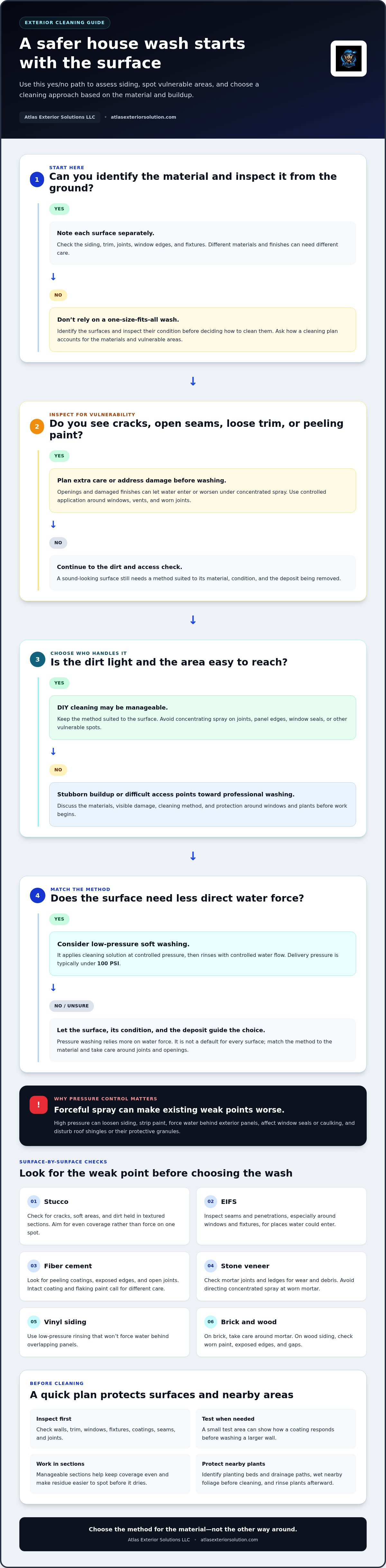
Stucco, EIFS, fiber cement, and stone veneer have different finishes, seams, and potential water-entry points. Before cleaning, identify each material and inspect it from ground level. Look for peeling paint, cracked joints, loose trim, and stains near windows. These signs help identify areas that need extra care or repair before washing.
Stucco’s uneven texture can hold dust in small recesses, so cleaning should cover the wall evenly rather than concentrate force on one spot. EIFS has a finish over insulation, making seams, penetrations, and window edges important inspection points. Fiber cement often has a painted surface, so check exposed edges and the coating’s condition before rinsing. Stone veneer has joints and ledges where dirt can settle; look for visible gaps or loose mortar.
Use the inspection to guide a surface-specific plan. Intact fiber-cement coating, for example, calls for different care than flaking paint. On stone veneer, avoid directing concentrated spray at worn mortar joints. Around windows and vents, use a controlled application and watch for openings where water could enter.
- Stucco: Check for cracks, soft areas, and dirt embedded in textured sections.
- EIFS: Inspect seams and penetrations, especially around windows and fixtures.
- Fiber cement: Look for peeling coatings, exposed edges, and open joints.
- Stone veneer: Examine mortar joints and ledges for wear and accumulated debris.
Which house washing companies serve Newtown Square and have strong reviews? Local companies serve the area, but review details matter more than broad praise. Look for customer accounts describing similar materials, careful work around openings, and clear communication about the cleaning method.
How do house washing companies manage runoff and protect landscaping? They can identify planting beds and drainage paths, wet nearby foliage before cleaning, control solution application, and rinse plants afterward. They should prevent residue from pooling beside beds or flowing toward vulnerable areas.
What should homeowners ask before hiring an exterior house washing company? Ask how the crew identifies siding materials, adapts its method, and protects windows and plants. Discuss visible damage, such as cracked stucco or loose mortar, before cleaning begins so the plan accounts for vulnerable areas.
In Bucks County, one home’s exterior may combine stucco walls, fiber-cement trim, and stone accents. Treating them as a single material can overlook differences in texture and vulnerable joints. A careful walk-around helps you identify each surface and understand how a cleaning plan accounts for it.
Low-pressure soft washing methods
Soft washing applies cleaning solution with controlled pressure, while pressure washing relies more on water force. The right choice depends on siding material, surface condition, and the deposit being removed.
How Low-Pressure Washing Works
A soft wash system applies cleaning solution at low pressure, then rinses the treated area with controlled water flow. Soft-washing delivery pressure is typically under 100 PSI. That lower pressure helps limit direct force against siding while the cleaning solution works on surface buildup.
A careful process starts with inspecting the walls, trim, windows, and nearby fixtures. The operator notes loose panels, open seams, damaged coatings, and places where water could enter. These observations guide how the cleaning solution is applied and rinsed without directing spray into vulnerable gaps.
Cleaning in manageable sections helps keep coverage even and makes it easier to spot residue before it dries. The solution is applied to the area, allowed to address the buildup, then rinsed away with controlled flow. The method depends on the surface and the type of soil.
Careful application matters around vents, electrical fixtures, and window edges. Keep the spray directed toward the exterior surface, not into openings. After rinsing, check ledges and trim for remaining residue. A practical explanation of the method appears in this overview of low-pressure soft washing.
Safe Cleaning for Siding Materials
Vinyl siding needs low-pressure rinsing that won’t force water behind overlapping panels. Stucco calls for even coverage across textured areas. On brick, take care around mortar; on wood siding, pay attention to worn paint, exposed edges, and gaps.
Safe cleaning starts with inspecting the surface, matching the application to its finish, and rinsing without concentrating force on joints. A small test area can show how a coating responds before cleaning continues across a larger wall.
Risks of High-Pressure Washing
High-pressure spray can loosen siding, strip paint, or force water behind exterior panels. Forceful water around windows can affect seals or caulking. On roofs, direct pressure can disturb shingles and remove protective granules, so use a suitable roof-cleaning method instead.
Before washing, look for cracked caulk, loose panels, peeling paint, and damaged shingles. Concentrated spray can worsen these weak points. Soft washing reduces direct force on delicate surfaces, while inspection and controlled rinsing help protect the exterior and limit water entry through vulnerable openings.
Mold, algae, mildew, grime, and traffic-stain removal
Different stains can point to different sources, so note where each mark appears. Green growth on a shaded wall, dark streaks beneath a gutter, and orange sprinkler marks each need careful assessment before cleaning. On Newtown Square siding, repeated sprinkler spray may leave orange staining. The pattern can help distinguish ongoing water exposure from general grime.
Algae and mildew often appear in damp or shaded areas, such as behind shrubs or beneath an overhang. Mold-like spotting may also collect around trim and window edges. Before washing, check for damaged paint, open joints, and leaking gutters. These conditions can contribute to recurring marks, and cleaning alone won’t correct the source of moisture.
Grime often collects on lower siding near driveways, walkways, and entrances. Road-facing walls may show darker deposits than sheltered sides, while splashback can leave a band near the foundation. Compare the walls before cleaning to distinguish general dirt from a localized stain that needs focused attention.
- Green patches: Note shade, nearby shrubs, and areas that stay damp.
- Orange marks: Check whether irrigation spray repeatedly reaches the siding.
- Dark streaks: Look above the stain for gutters, roof edges, or runoff paths.
- Lower-wall grime: Inspect nearby pavement for splashback and tracked dirt.
Start by identifying the surface and the deposit. A broad layer of dust differs from growth embedded in textured stucco or staining along a sprinkler’s path. Choose a cleaning solution and application suited to the material, then allow them to address the deposit before rinsing. Forceful scrubbing can wear coatings or leave uneven marks, especially on weathered finishes.
Rinsing deserves care, too. Work methodically across a manageable section, including corners, ledges, and trim where residue can remain. As the area dries, check it from different angles. A remaining mark may be embedded, caused by surface damage, or linked to continued exposure rather than removable dirt.
For recurring stains, address the source as well as the visible buildup. Adjusting a sprinkler head can reduce repeated orange marks, while clearing a blocked gutter can limit streaks below its edge. Keep shrubs from pressing against siding and see whether damp patches return after rain. These checks help distinguish a one-time cleaning need from a continuing moisture or runoff issue.
Newtown Square housing and local conditions affecting exterior buildup
Newtown Square homes span different construction periods and exterior materials. Much of the residential housing stock was built from the 1990s onward, while some older farmhouses and stone houses predate area development by a century or more. That range means age alone can’t determine the right cleaning method. Siding, finish condition, shade, and water exposure all affect how buildup appears.
A newer home with vinyl or fiber-cement siding may collect dust along lower walls and around trim. An older stone house may have recessed joints and ledges where grime gathers. Before washing, walk around the building and note the surface types, visible growth, cracked caulk, and loose finishes. This inspection helps guide a material-specific approach.
Exposure varies around a Newtown Square home. A wall shaded by mature trees may stay damp longer than a sunny wall, encouraging algae or mildew. Sprinklers that repeatedly hit siding can leave orange stains. A driveway-facing wall may collect splashback, and an overflowing gutter can leave streaks below its edge.
A home’s age may help explain differences in construction, but the condition of each exterior matters more than its decade. Inspect a farmhouse’s stone joints separately from its painted trim. On a newer home, check panel seams, caulking, and places where runoff follows the siding. Address damaged areas before washing to avoid directing water into vulnerable openings.
What permits or local rules apply to exterior house washing in Newtown Square, PA? Requirements can depend on the work and how wash water is handled. Before starting a project, check current Newtown Township requirements for your property, especially if runoff could reach shared areas or drainage.
How often should homes in Newtown Square be washed? No single interval suits every home. Inspect siding for algae, mildew, grime, or sprinkler marks, then consider shade, nearby trees, water exposure, and the surface’s condition when deciding whether cleaning is due.
A practical review can start with four checks:
- Material: Identify stone, stucco, vinyl, or fiber cement before choosing a washing method.
- Exposure: Compare shaded walls with sunny walls for dampness and organic growth.
- Water patterns: Look for sprinkler spray, gutter streaks, and runoff paths.
- Condition: Note cracked caulk, loose finishes, and open joints before washing.
These checks make a home’s actual conditions more useful than its age alone. A stone farmhouse and a post-1990s siding home may face similar shade or irrigation exposure, but their surfaces need different care. In Newtown Square, inspect each elevation and let visible buildup, material, and surface condition guide the cleaning decision.
What exterior house washing services are available in Newtown Square, PA?
Homeowners in Newtown Square can choose exterior cleaning suited to each surface instead of using one method across the whole property. A service plan may cover siding, roofs, driveways, and concrete, with the method matched to the material, buildup, and visible wear.
House washing removes dirt, algae, mildew, and other buildup from exterior walls, trim, and related surfaces. Soft washing combines cleaning solution with controlled, low-pressure rinsing, making it suitable for delicate siding. A home with painted fiber cement and textured stucco needs an approach that accounts for both finishes rather than applying force uniformly.
Roof cleaning is separate from wall washing because shingles and other roof surfaces need suitable treatment. Choose an approach that addresses algae, moss, or lichen without aggressive spray. A dark streak on shingles, for example, calls for a roof-focused assessment, not simply extending a siding wash upward.
Driveway and concrete cleaning tackles grime and marks on durable outdoor surfaces. Dirt, tire residue, and organic staining can collect near entrances or beneath parked vehicles. The surface and stain determine the method: concrete can tolerate a different approach from painted siding or a window frame.
- House washing: Exterior walls, trim, and siding receive material-specific attention.
- Soft washing: Low-pressure application suits surfaces that need controlled treatment.
- Roof cleaning: Roof buildup receives a method appropriate for shingles and other roof surfaces.
- Driveway and concrete cleaning: Hard surfaces receive cleaning suited to their finish and deposits.
Before arranging service, walk around the property and note what needs attention. Record whether stains appear on shaded walls, beneath gutters, near sprinklers, or along the driveway. Identify siding materials, visible cracks, peeling coatings, and nearby windows or fixtures. These details help define the work and avoid treating unrelated surfaces unnecessarily.
Ask for a clear description of the planned work: which surfaces are included, how the method changes with each material, and how nearby plants and fixtures are protected. A home with algae on north-facing siding and grime on its concrete entry may need two distinct approaches. Matching the work to these conditions supports focused, careful maintenance.
While Atlas Exterior Solutions LLC does not service Newtown Square directly, homeowners in our regional coverage area can learn about available options or contact Atlas Exterior Solutions LLC for service in our designated locations.
Request a house washing estimate
Atlas Exterior Solutions LLC: Soft Washing
Atlas Exterior Solutions LLC offers soft washing for homeowners seeking a careful way to clean siding and other exterior surfaces. It uses cleaning solutions and low-pressure water rather than forceful spray, helping address buildup while respecting the material being washed. For homes with delicate finishes or visible organic growth, soft washing can be a practical fit. House washing is another option when siding, trim, or other exterior areas need attention. For a property with concrete grime or stained pavers, the appropriate service can focus on those surfaces instead of extending the house wash beyond its purpose. If you’re considering exterior cleaning in Newtown Square, contact Atlas Exterior Solutions LLC to discuss your home’s surfaces and cleaning needs.
Plan the Next Step for Your Home
Before arranging exterior house washing in Newtown Square, list the surfaces you want cleaned, the visible stains, and any areas that need extra care. Clear notes make it easier to discuss your home’s needs and plan a focused clean.
Atlas Exterior Solutions LLC provides soft washing for home exteriors and Paver Restoration for worn or stained paving. Its Commercial Pressure Washing service cleans commercial properties. Choose the service that suits the surface and setting, and consider how each area can be maintained afterward.
A well-planned cleaning approach can help maintain your property’s appearance. When you’re ready, contact Atlas Exterior Solutions LLC to discuss your project and request an estimate.
Your home deserves thoughtful care, and a clear plan is a good place to begin.
Frequently Asked Questions
Can I pressure wash on my own, or should I hire a professional?
You can clean small, reachable areas yourself, but hire a professional for delicate siding, elevated walls, or uncertain surface conditions. Atlas Exterior Solutions LLC uses soft washing for roofs, vinyl siding, stucco, and other delicate surfaces, reserving pressure washing for durable materials such as concrete and driveways. Consider access, nearby windows, and the surface finish before cleaning. The wrong method can damage materials or force water into openings.
Time to Clean Up Your Newtown Square Property?
If buildup is affecting your home’s appearance or you’re unsure how to treat a surface, Atlas Exterior Solutions LLC can help select a suitable exterior cleaning approach. Soft Washing and House Washing address residential exterior needs, while Paver Restoration is designed for paver surfaces. Describe the areas that need attention and note any delicate finishes or visible damage to help plan the work.
What areas do you serve for pressure washing?
Atlas Exterior Solutions LLC serves homeowners and businesses across Bucks County and select communities in Montgomery County, including Newtown, Yardley, Richboro, Bensalem, Langhorne, Levittown, Fairless Hills, and Horsham. A home’s siding and a business’s durable exterior surfaces may need different cleaning methods. If you’re in one of these communities, contact the team with details about the property and surfaces you’d like cleaned.
Which house washing companies serve Newtown Square and have strong reviews?
When comparing house washing companies serving Newtown Square, look for customer accounts describing work on similar materials, care around openings, and clear communication about the cleaning method.
Disclaimer
The information on this blog is for general informational purposes only. Results may vary based on surface type, condition, and cleaning methods. Always follow manufacturer guidelines and use proper safety precautions. Atlas Exterior Solutions is not liable for any damages or losses resulting from the use of this information.


