

Those black roof streaks are often algae, not ordinary dirt. Gloeocapsa magma commonly grows on shaded or north-facing roof areas, while algae and moss can hold moisture against roofing materials. Professional roof algae removal in Bucks County treats organic stains using a method suited to the roof while helping protect its surface.
If your roof looks stained or patchy, it’s understandable to wonder whether the growth affects more than its appearance. The right cleaning method depends on the roofing material, since shingles, tile, metal, and slate all need surface-appropriate care.
Learn what causes algae, moss, and black streaks, how soft washing differs from pressure washing, and which roof types can be cleaned. You’ll also find out what to expect when requesting a free estimate, so you can make an informed decision about roof care.
Key Takeaways
- Black streaks often come from roof algae, while moss can retain moisture against roofing materials.
- Shingle, tile, metal, and slate roofs need cleaning methods suited to their material and condition.
- Soft washing treats organic stains with low pressure; high-pressure washing can be unsuitable for delicate roofing.
- Shade, roof material, and the type of buildup help determine the appropriate cleaning approach.
- A free estimate can help you understand the proposed roof-cleaning method and the next steps for your property.
Cleaning shingle, tile, metal, and slate roofs
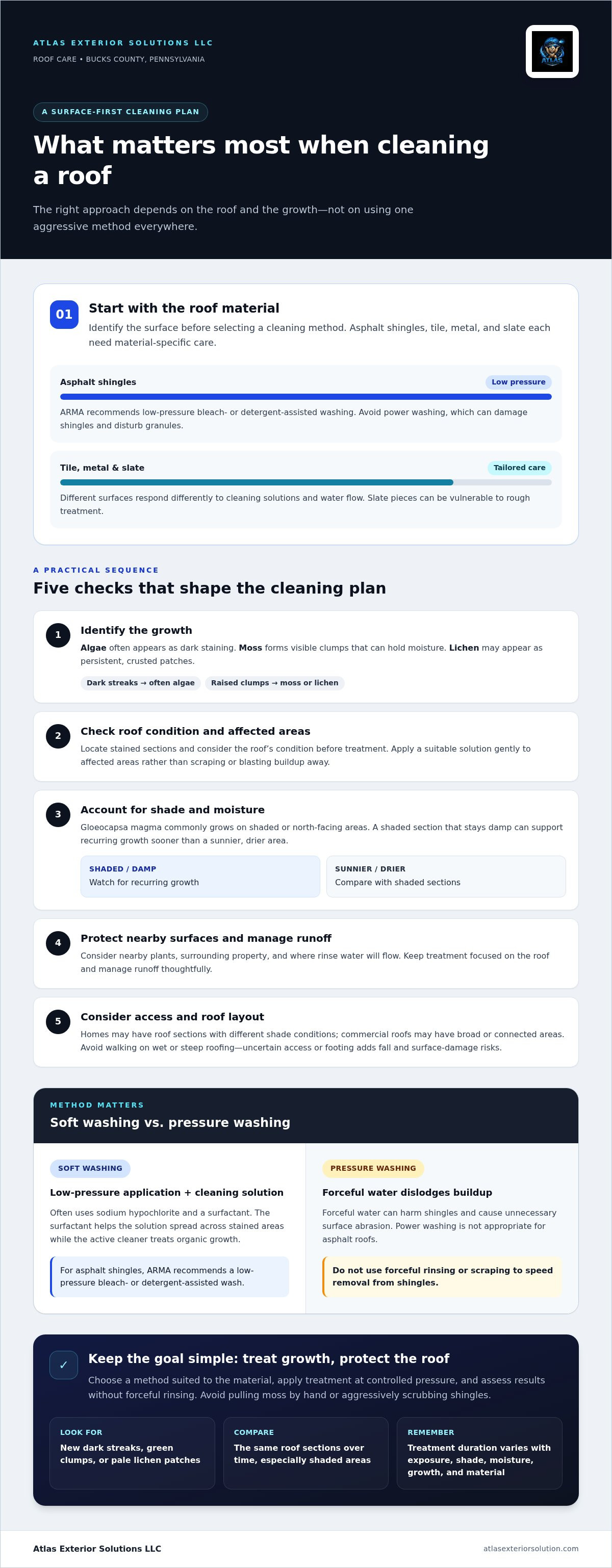
Roof algae cleaning methods depend on the roofing material, the type of growth, and the roof’s condition. For asphalt shingles, the Asphalt Roofing Manufacturers Association recommends low-pressure bleach- or detergent-assisted washing to clean the roof while helping prevent shingle damage. Roof cleaners generally apply a suitable solution gently rather than scraping or blasting granules from shingles.
How do roof cleaners remove algae from shingles? They typically apply a low-pressure cleaning solution, such as a bleach- or detergent-assisted wash, and allow it to treat the organic staining. Asphalt roofs should not be power washed, because forceful water can damage shingles.
Soft washing combines low-pressure application with a cleaning solution, often sodium hypochlorite and a surfactant. The surfactant helps the solution spread across stained areas, while the active cleaner treats organic growth. Pressure washing, by contrast, uses forceful water to dislodge buildup. On shingles, low pressure helps avoid unnecessary surface abrasion.
Tile, metal, and slate also require material-specific cleaning. The roof material should be identified before a method is selected. For example, tile surfaces and metal finishes may respond differently to cleaning solutions and water flow. Slate requires careful handling because its individual pieces can be vulnerable to rough treatment. The aim is to treat staining without applying one aggressive method to every surface.
Residential and commercial roofs can both develop algae, moss, or discoloration, but their layouts and access needs differ. A home may have several roof sections with different shade conditions, while a commercial building may have broad or connected roof areas. In either case, an assessment should consider the material, visible growth, roof condition, and nearby surfaces that need protection.
Eco-conscious cleaning means choosing an effective solution carefully, not assuming every cleaner is harmless. Use only the amount needed for the treated area, control application around nearby plants, and manage rinse water thoughtfully. A cleaning plan should account for runoff paths and surrounding property, keeping treatment focused on the roof.
Before work begins, confirm the roof material and identify the stained sections. Then select a method suited to that surface, apply the solution at controlled pressure, and assess the result without forceful rinsing. This practical sequence supports careful roof cleaning for homes and commercial properties while reducing the chance of avoidable damage.
Removing roof algae, moss, and black streaks
Algae, moss, and lichen affect asphalt shingles differently, so identifying the growth helps guide treatment. A careful process treats the staining without using forceful methods that can harm shingles.
Algae and Moss on Asphalt Shingles
Algae often appears as dark staining, while moss forms visible clumps that can hold moisture against shingles. Lichen may look like persistent, crusted patches attached to the roof. From the ground, broad streaks suggest algae, while raised growth points to moss or lichen. These signs help distinguish discoloration from physical buildup.
Algae and Moss Removal
For asphalt shingles, the Asphalt Roofing Manufacturers Association recommends low-pressure bleach- or detergent-assisted washing. Apply a suitable treatment gently to affected areas rather than blasting the growth away. Power washing is not appropriate for asphalt roofs because forceful water can damage shingles. Moss and lichen may need careful treatment rather than scraping, which can disturb the shingle surface.
You can identify visible growth from the ground, but climbing onto a roof adds fall and surface-damage risks. Avoid walking on wet or steep roofing, and leave treatment to a professional if access or footing is uncertain.
A practical treatment sequence begins by identifying the roof material and mapping affected areas. The cleaner then selects a compatible solution and applies it at low pressure. Treatment targets organic growth without relying on forceful rinsing. Nearby surfaces and water flow also matter, since runoff can move beyond the roof. Avoid pulling moss by hand, as attached growth may resist removal and disturb shingles.
Roof Algae Treatment Duration
Professional roof algae treatment has no single duration that applies to every property. Results depend on roof exposure, shade, moisture retention, the amount of growth, and the roofing material. For example, a shaded section that stays damp can support recurring growth sooner than a sunnier, drier area. The treatment method and initial condition also affect how long the roof stays visibly clean.
After treatment, watch for new dark streaks, green clumps, or pale lichen patches. Compare the same roof sections over time, especially shaded areas and places where moss previously held moisture. These observations help distinguish remaining growth from a recurrence. Avoid aggressive scrubbing or pressure washing to speed the process, as that can damage asphalt shingles instead of treating the underlying organic staining.
Moisture retained in roof algae can prematurely age shingles, and moss or lichen growth can physically deteriorate them. A. Brooks Construction Kanga Roof says algae and moss can hold moisture against roofs in Bucks County, contributing to rot and deterioration. Retained moisture and visible growth can therefore be relevant signs when assessing potential roof damage.
Black streaks caused by roof algae
Black marks change a roof’s appearance, but their pattern can help you identify what you’re seeing. Comparing roof slopes from the ground is a useful first step.
Identifying Algae-Caused Black Streaks
Gloeocapsa magma is a likely cause of black roof streaks and commonly grows on north-facing or shaded areas. Look for dark, elongated marks that follow the roof slope, then compare them with nearby sections that receive more sunlight. Staining concentrated on shaded planes can help distinguish algae from scattered debris or a general change in roof color.
Observe the marks from the ground without touching the roofing. Note whether they form streaks, isolated spots, or broad areas, and whether they follow a shaded section. Dirt and debris may collect unevenly around roof features, while algae-related discoloration often appears as dark streaks. These visual clues can guide an informed assessment without a close inspection.
Risks of Leaving Black Streaks
The clearest immediate effect of black streaks is visible discoloration that can make a roof look uneven or poorly maintained. Streaks alone don’t prove that shingles are damaged or that the roof needs replacement. Treat them as a reason to observe the affected area, not as a diagnosis of the roof’s condition.
If left unaddressed, the marks may remain visible and become more noticeable against lighter or cleaner sections. That can affect the appearance of a home or commercial property, especially when streaks face the street. To monitor the roof, record which slopes show marks and compare them from the same ground-level viewpoint over time.
Use a few simple observations to describe the issue clearly:
- Note whether dark marks appear on shaded or north-facing slopes.
- Record whether the streaks follow the roof’s slope or appear as scattered spots.
- Compare the stained area with an exposed section of the same roof.
- Take ground-level photographs from a consistent viewpoint for later comparison.
These notes help distinguish a change in appearance from assumptions about roof damage. Avoid scraping marks or walking on the roof to investigate them. A careful visual record is a useful starting point for deciding whether the staining needs attention.
Bucks County roof conditions
In Bucks County, roof exposure and visible growth can explain why some sections need different attention. Shade, nearby trees, and roof orientation are practical clues during a ground-level review.
For local permit questions, contact the municipality responsible for the property and describe the planned work accurately. This keeps questions about roof cleaning separate from any work involving roof repair or replacement.
There’s no single cleaning interval that suits every local roof. For roof algae removal in Bucks County, inspect for new discoloration and note which roof sections have changed.
To monitor your roof, record visible growth and the conditions around it. After wet weather, check from the ground for changes near tree cover or shaded sections.
Gloeocapsa magma commonly grows on north-facing or shaded roof areas. Compare those slopes with more exposed sections and note where dark marks appear first.
In Newtown or Yardley, make observations for each roof plane. For example, note whether a stain is on the front slope, rear slope, or a section beneath tree cover.
Keep a simple inspection record for each visible roof section. Note the location, the appearance of the discoloration, and nearby shade, then compare those details during later observations.
Photographs taken from the ground can help you compare the same section over time. Use a consistent viewpoint when possible, and avoid climbing onto the roof to examine or remove growth.
For a Bucks County home, review each visible roof plane from the ground. Check north-facing sections, areas beneath tree shade, and places where discoloration has appeared before.
Use those observations to focus attention on areas that have changed. A roof with little visible discoloration may call for a different approach from one with recurring marks on a shaded slope.
Keep notes about the roof material and the location of visible growth. These details make it easier to describe the property and focus an assessment on the sections that need attention.
Planning roof algae removal in Bucks County starts with clear observations of the roof’s material, orientation, shade, and visible condition. Review these details periodically and use them to guide your next maintenance decision.
Free estimates
A free estimate lets you discuss roof cleaning before deciding on next steps. Clear information about your property helps keep the conversation focused on the roof and the work you’re considering.
Requesting a Free Estimate
Start with the property address and roofing material, if you know it. Describe the visible issue, such as dark marks, moss, or lichen, and indicate which roof sections appear affected. If you’re unsure of the material, say so rather than guessing. A ground-level description is useful; don’t climb onto the roof to inspect it.
Include details that help explain the property layout. For example, mention whether the affected area is on the front or rear slope, beneath tree cover, or on a commercial building with several roof sections. Ground-level photographs can help show the areas you mean. Keep people and pets away from ladders or roof access while gathering information.
Use the estimate discussion to understand what the proposed work covers. Ask which roof sections are included, what cleaning method is planned, and how it suits the roofing material. If separate areas have different types of buildup, describe each one so the scope reflects the conditions you’ve observed.
Before accepting an estimate, read its description carefully. Check that the property and roof areas match your request and that the proposed method is explained clearly. If a section is difficult to view from the ground, identify its location rather than attempting a close inspection yourself. Clear notes help avoid confusion about the work being discussed.
It can also help to consider your preferred timing and any access details that affect the property. For example, point out a closed gate or a section that is difficult to see from the street. Keep the discussion focused on the roof’s condition, the planned cleaning scope, and how the method suits the material. These details make the estimate more useful without requiring you to assess the roof in person.
Request a free roof-cleaning estimate
If soft washing is proposed, ask how it will be used on the roof areas in your estimate and how it suits the material. Soft washing treats algae, mold, and mildew rather than merely blasting them off, which can keep surfaces free of discoloration longer. Use this distinction to clarify the outcome described in the estimate, without assuming every roof or visible mark calls for the same approach. Ask which areas the method covers and whether the proposed scope includes any exclusions or preparation steps. If the estimate uses a different method, ask how it addresses the buildup you reported. Keep the discussion focused on the roof sections, material, and conditions you described, and request clarification before agreeing if any part of the work or expected result is unclear.
Atlas Exterior Solutions: Soft Washing
Atlas Exterior Solutions provides roof cleaning with soft washing for Bucks County property owners dealing with algae, moss, or black streaks. This low-pressure approach applies a cleaning solution to treat organic staining without relying on forceful water against roofing surfaces.
Consider professional roof cleaning when growth covers visible roof sections, moss is established, or you want a material-conscious approach for your home or commercial property. The roof material and visible buildup guide the cleaning plan, helping treat stains while protecting the surface.
For a free estimate, share your property location, roof type, and the areas where growth appears. Contact Atlas Exterior Solutions or visit atlasexteriorsolution.com to discuss your roof.
Choose a Roof-Care Plan That Fits
The next step is to match the cleaning plan to your roof’s material and visible condition. For roof algae removal in Bucks County, share what you’ve noticed and discuss an approach suited to the property, rather than treating every roof the same way.
Atlas Exterior Solutions offers Soft Washing for exterior cleaning, alongside Commercial Pressure Washing and Paver Restoration. These services can also help property owners care for other exterior surfaces as part of their maintenance plans.
A conversation about your roof can clarify the proposed scope and appropriate cleaning method. You can decide what makes sense for your home or commercial property without rushing.
A considered next step can help you care for your roof with confidence.
Frequently Asked Questions
Why Does My Roof Look So Dirty?
Dark roof stains often come from algae, while moss and lichen can create raised patches. Tree shade, roof orientation, and damp areas can help explain why discoloration appears on one section first. For example, compare a stained slope beneath tree cover with a cleaner, more exposed slope. From the ground, note where stains cluster and whether they look flat or raised before deciding what cleaning may be needed.
Why Soft Wash?
Soft washing treats roof buildup with a low-pressure application instead of forceful water. It is suitable for roofs and other delicate surfaces where aggressive pressure can cause damage. The cleaning solution is selected for the surface and type of organic staining. When comparing methods, focus on whether the approach suits your roof material, not simply on how quickly water removes visible marks.
Which roof algae removal companies serve Bucks County, Pennsylvania?
Atlas Exterior Solutions LLC serves homeowners and businesses throughout Bucks County, Pennsylvania, including Newtown, Yardley, Richboro, Bensalem, Langhorne, Levittown, and Fairless Hills, as well as select areas of Montgomery County. It provides roof cleaning and soft washing for exterior surfaces. To discuss roof cleaning, share your town, roof material, and the areas showing buildup so the proposed service addresses your property’s needs.
Is soft washing safe for asphalt shingles and other roof materials?
Soft washing is the method used to clean asphalt shingles and other delicate roof surfaces. The Asphalt Roofing Manufacturers Association recommends low-pressure bleach- or detergent-assisted washing for asphalt roofs, which should not be power washed. Tile, metal, and slate also need methods suited to their material and condition. Before treatment, identify the roof type and any visibly damaged sections so the cleaning approach can account for the surface.
How can I tell roof algae apart from moss, lichen, or dirt?
Algae commonly appears as dark, relatively flat streaks, while moss forms raised clumps and lichen looks like attached patches. Loose dirt may appear more irregular and collect around roof features or debris. From the ground, compare stained and unstained slopes and note whether growth is flat, clumped, or crusted. Avoid touching or scraping roof growth, which can disturb shingles or other roofing materials.
How often should a roof in Bucks County be cleaned to prevent algae?
There is no fixed cleaning schedule. Shade, moisture retention, roof exposure, the amount of growth, and roofing material affect how quickly growth may recur. Monitor the roof, especially shaded areas.
What factors affect roof cleaning prices in Bucks County?
Roof material, condition, type and amount of growth, shade and exposure, and access or layout all affect the cleaning assessment and method. Request a free estimate to discuss the proposed approach for your property.
Disclaimer
The information on this blog is for general informational purposes only. Results may vary based on surface type, condition, and cleaning methods. Always follow manufacturer guidelines and use proper safety precautions. Atlas Exterior Solutions is not liable for any damages or losses resulting from the use of this information.


