

True paver restoration is a chemistry-led preservation process, not a high-pressure cleaning event. Many homeowners believe that turning up the PSI is the only way to blast away years of neglect, but this aggressive approach often does more harm than good by damaging the stone and blowing out essential joint sand. When you invest in professional paver cleaning and restoration, the goal isn't just a temporary shine. It's about protecting the structural integrity of your Bucks County home while reviving the vibrant, warm earth tones that made you fall in love with your outdoor space in the first place.
It's frustrating to watch your expensive patio succumb to stubborn weeds, moss, and unsightly oil stains that refuse to budge. You want a solution that provides peace of mind and lasting pride of ownership, rather than a temporary fix that needs repeating every few months. This guide will show you how to stabilize your joints and shield your surfaces against Pennsylvania's harsh freeze-thaw cycles. We'll explore the specialized low-pressure techniques and high-quality sealants used to achieve a professional finish that stays clean with nothing more than a simple garden hose.
Key Takeaways
- Learn how professional paver cleaning and restoration goes beyond surface washing to include essential joint stabilization and high-performance sealing.
- Understand why soft washing is the superior method for protecting your stone surfaces from the etching and aggregate exposure caused by traditional high-pressure cleaning.
- Discover how to identify and treat common local stains while shielding your investment from the damage caused by Pennsylvania’s harsh freeze-thaw cycles.
- Gain insight into the critical three-step workflow of cleaning, sanding, and sealing that creates a beautiful finish that is easy to maintain with a simple garden hose.
- Find out why precise dry times and professional-grade materials are essential for achieving a durable, like-new appearance in your outdoor living spaces.
Understanding Paver Deterioration and the Value of Professional Restoration
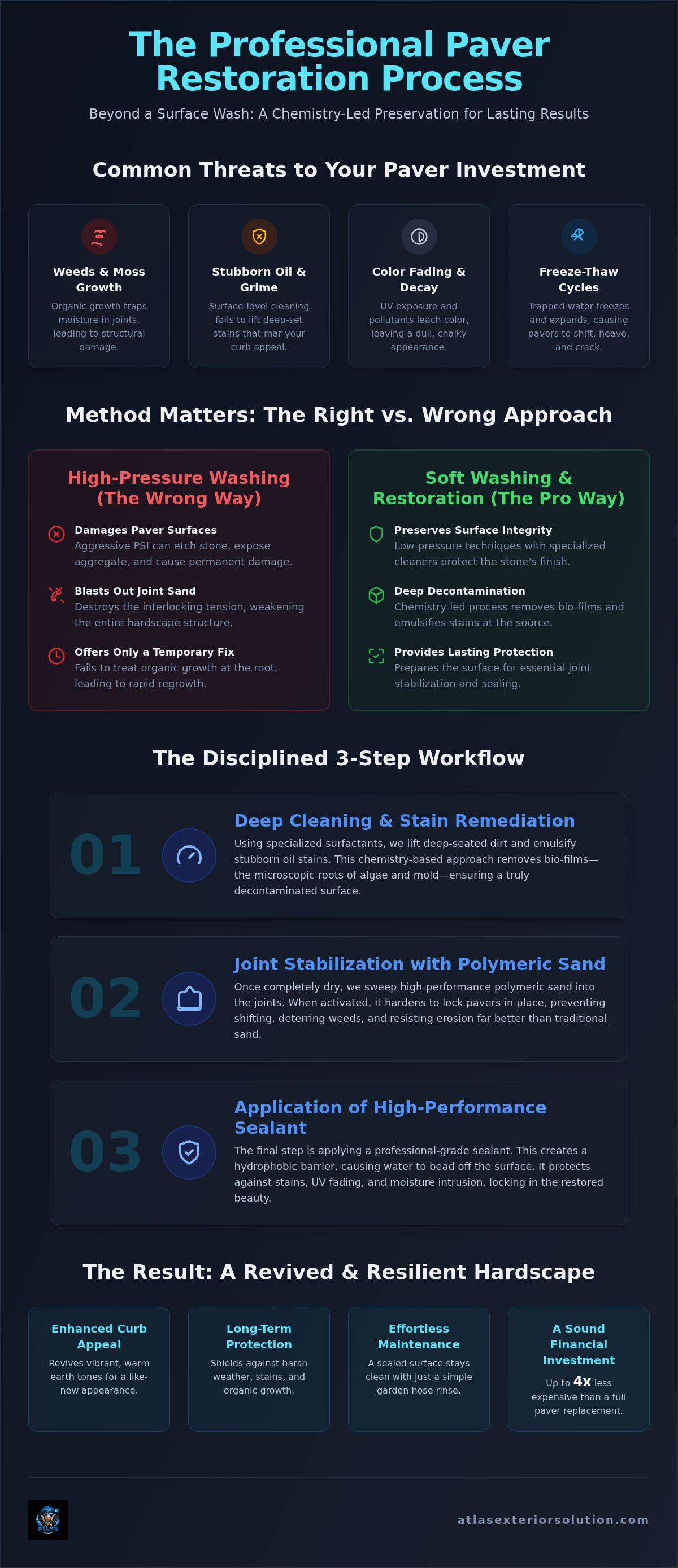
Homeowners often mistake a simple blast of water for a complete maintenance routine. True paver cleaning and restoration is a multi-stage preservation strategy that involves deep decontamination, joint stabilization, and the application of high-performance sealants. While a surface wash removes loose debris, restoration addresses the structural health of the hardscape. As a meticulous guardian of your property, we focus on reversing years of environmental wear to ensure your stone surfaces remain a permanent asset. This process is about more than aesthetics; it's a technical intervention that stops the clock on stone decay.
The Anatomy of a Paver System
To understand why surfaces fail, we must look at how they're built. What are pavers? Essentially, they're individual units that rely on interlocking tension provided by joint sand and a stable bedding layer. The bedding sand provides the foundation, while the joint sand creates the friction required for the pavers to support heavy loads without shifting. In regions like Bucks County, organic matter like moss and algae acts as a microscopic sponge. These organisms trap moisture within the joints. When the Pennsylvania winter hits, that trapped water freezes and expands. This cycle causes pavers to shift, heave, or crack. Additionally, pH-imbalanced rain and environmental pollutants gradually leach the color from the stone, leaving a dull, chalky appearance that masks the original beauty of the material.
Why Curb Appeal is a Financial Asset
Maintaining your hardscape is a direct investment in your home's equity. In local markets like Newtown and Yardley, a pristine exterior significantly boosts property valuation. Neglecting these surfaces leads to a steep financial penalty. Replacing a failed paver patio can be up to four times more expensive than investing in professional restoration. By choosing specialized driveway cleaning and sealing, you prevent the total structural collapse that requires a full excavation. Investing in professional paver cleaning and restoration ensures that your outdoor living spaces remain functional and beautiful for decades. Professional restoration creates a hydrophobic barrier, meaning water beads off the surface instead of soaking into the porous stone. This protection is vital for homeowners who want to avoid the stress of unexpected repairs. Paver restoration is a high-ROI home maintenance task for 2026 homeowners.
The 3-Step Paver Restoration Process: Clean, Sand, and Seal
Achieving a like-new finish that lasts for years isn't a matter of luck; it's the result of a disciplined, technical workflow. Professional paver cleaning and restoration requires patience, specifically regarding dry time between each phase. If you apply sealant to damp stone, you trap moisture within the pores, leading to a cloudy, white haze known as blushing. Skipping even one step, such as failing to remove every trace of organic matter or rushing the sanding process, leads to premature failure of the entire system. We use professional-grade materials that offer superior UV resistance and durability compared to the standard options found at big-box retailers.
Stage 1: Deep Cleaning and Stain Remediation
We don't rely on brute force to clean your stone. Instead, we use specialized surfactants to lift deep-seated dirt and emulsify stubborn oil stains from the surface. This process is essential for removing bio-films—the microscopic roots of algae and mold that thrive deep within the stone's pores. By treating the growth at its source, we ensure a truly decontaminated surface that is ready for the next stage. For homeowners looking to refresh all their hard surfaces, our driveway and concrete cleaning services utilize these same meticulous methods to ensure lasting cleanliness.
Stage 2: Joint Stabilization with Polymeric Sand
Once the pavers are surgically clean and completely dry, we focus on the structural joints. We use high-performance polymeric sand, which contains specialized polymers that harden when activated by water. This material is far superior to traditional play sand, which lacks the binding strength to stay in place during heavy rain. We utilize a technical process of vibrating the sand into the joints to achieve maximum density. This compaction prevents sand washout and creates a stabilized barrier that naturally resists future weed growth and insect infestations.
Stage 3: Protective Sealing for Color and Durability
The final stage involves applying a protective layer that suits your aesthetic preference, whether you choose a film-forming sealer for a vibrant wet look or a penetrating sealer for a natural finish. These sealants create a hydrophobic barrier, meaning water and contaminants bead off the surface instead of soaking in. Professional sealing is the critical top coat that locks in the entire restoration and shields the stone from oil, rust, and salt damage. If you're ready to preserve your home's exterior with a professional touch, you can explore our full range of exterior restoration services to find the right fit for your property.
Soft Washing vs. High-Pressure: Why Method Matters for Paver Longevity
Many homeowners assume that more pressure equals a deeper clean. However, applying 4000 PSI of mechanical force to a delicate stone surface is often a recipe for permanent damage. This aggressive approach can "etch" the pavers, effectively stripping away the smooth "cream top" finish and exposing the rough aggregate underneath. Once this protective layer is gone, the stone becomes more porous and susceptible to staining. Professional paver cleaning and restoration relies on chemical intelligence rather than raw power. By using soft washing techniques, we achieve a superior level of sanitation without risking the structural integrity of your hardscape.
A common concern is whether low pressure can truly handle years of grime and organic growth. The answer lies in the chemistry. While high pressure merely blasts the surface, soft washing uses specialized solutions to emulsify dirt and kill biological contaminants at the root. It's the difference between trying to scrub a burnt dish with sandpaper versus letting it soak in a powerful, surface-safe detergent. For Bucks County homes, this method ensures a deep clean that preserves the stone's original texture and color for the long term.
The Dangers of 'The Pressure Wash' Approach
Standard pressure washing carries significant risks that often go unnoticed until the damage is done. High-velocity water streams can easily "zap" the edges of individual stones, causing them to chip or wear unevenly. This creates unsightly gaps and potential tripping hazards across your patio or walkway. Perhaps more concerning is how excessive pressure forces water deep into the bedding layers beneath the pavers. This saturated base can lead to future sinking, shifting, or "heaving" as the ground settles. Understanding the benefits of professional soft washing is essential for any homeowner who wants to avoid these costly structural failures.
The Soft Wash Solution: Safety Through Chemistry
Our soft wash process utilizes a precise blend of sodium hypochlorite and professional surfactants to sanitize your outdoor surfaces. This combination breaks down the "bio-films" created by algae, mold, and mildew, ensuring they don't return just weeks after the service. This is the only safe way to treat delicate natural stone pavers, such as travertine or flagstone, which would be easily scarred by high-pressure equipment. Soft washing is like soaking a stubborn dish in a sink of warm water versus scrubbing it with heavy-duty sandpaper; it allows the cleaning agents to do the heavy lifting while the stone remains completely protected. This approach reflects our commitment as a meticulous guardian of your property, prioritizing safety and long-term preservation over a quick, aggressive fix.
Identifying Common Paver Stains and Seasonal Maintenance Needs in Bucks County
Bucks County homeowners in areas like Newtown, Yardley, and Langhorne face a unique set of environmental challenges that directly impact the longevity of their hardscapes. Between the humid summers and the intense freeze-thaw cycles of winter, your pavers act as a canvas for various stains. Distinguishing between organic growth, such as green algae or black mold, and mineral deposits is the first step in effective maintenance. While organic stains respond well to the soft wash chemistry discussed earlier, mineral deposits like orange rust or white salts require a more targeted approach.
Maintaining a consistent schedule is the best way to protect your investment. In the spring, your focus should be on removing the residues of winter salt and inspecting joints for any shifting caused by frost heave. Autumn, however, is the most critical season for preventative care. Leaf debris is more than just a mess; it's a source of concentrated tannins that can permanently dye your stone if left to sit in the rain. Making a habit of regular leaf blowing during the fall prevents these organic pigments from leaching into the pores of your pavers.
The Mystery of Efflorescence: What is that White Powder?
If you see a white, powdery substance on your pavers, you're likely looking at efflorescence. These are natural salt deposits that migrate to the surface of concrete as moisture evaporates. It's a common occurrence in newer installations, but it requires professional handling. You should never apply a sealer over efflorescence. Doing so traps the salt beneath the protective layer, creating a permanent white haze that is nearly impossible to remove. Professional paver cleaning and restoration involves a specialized acid-wash to neutralize these salts before any sealant is applied. If the stain is crusty and localized near a sprinkler head, it's likely calcium from hard water rather than salt.
Dealing with Oil, Rust, and Tannins
Outdoor living spaces are prone to specific lifestyle stains. BBQ grease on the patio and oil leaks on the driveway require heavy-duty degreasers to lift the residue from deep within the stone. Rust stains, often caused by metal patio furniture or fertilizer granules, need a pH-balanced rust remover to avoid damaging the paver's finish. For tannin stains from acorns or wet leaves, we utilize oxygen-based cleaners that break down the organic bond without harming your landscaping. Understanding these nuances is part of our role as the meticulous guardian of your property's value.
Schedule your professional stain remediation and paver inspection today
Choosing Atlas Exterior Solutions for Expert Paver Restoration in Bucks County
Choosing Atlas Exterior Solutions means partnering with a team that operates as the meticulous guardian of your property's value. We recognize that your outdoor surfaces represent a significant financial and emotional investment, which is why our approach to paver cleaning and restoration is rooted in long-term preservation rather than just a quick surface wash. We treat every walkway, patio, and driveway as if it were our own, ensuring that the technical methods we use are powerful enough to restore original beauty but gentle enough to protect the delicate composition of the stone. Our dedication to quality is backed by a sense of accountability that you only find with a service provider who is deeply invested in the local community.
Our Commitment to the Bucks County Community
Hiring a locally owned business means working with professionals who live and work in the same environment they treat. We are intimately familiar with the specific environmental challenges in Newtown, Yardley, and Richboro. We've seen firsthand how Pennsylvania's weather patterns, from humid summers that invite biological growth to the harsh freeze-thaw cycles of winter, can degrade even the highest quality stone. This local expertise allows us to select the precise sealants and biodegradable cleaning agents required for our specific climate. The Atlas Advantage lies in our combination of local ownership, comprehensive insurance coverage, and specialized soft wash technology. You can explore our full range of exterior cleaning services to see how we maintain every aspect of your home's curb appeal with the same level of care and precision.
Ready for a Transformation? Next Steps
Moving from the planning phase to the actual transformation is a steady, educational process designed to be transparent. When you're ready for a consultation, it's helpful to identify the primary issues you're seeing, whether it's faded color, joint sand washout, or stubborn organic stains. The Atlas process begins with a comprehensive site visit where we act as knowledgeable consultants. We walk the property with you, identifying the specific materials used in your hardscape and explaining the chemistry behind our restoration plan. Once the work begins, we follow our methodical sequence of cleaning, sanding, and sealing, concluding with a final walkthrough to ensure the results meet our rigorous standards. Your outdoor living space is an extension of your home, and it deserves the care of a specialist who takes visible pride in every result. Take the first step toward a revived exterior and get a free estimate for your paver cleaning project today.
Secure Your Home’s Beauty with Professional Preservation
Your outdoor living space should be a source of pride, not a list of maintenance headaches. By prioritizing chemical intelligence over raw pressure, you protect the delicate surfaces of your stone while eliminating the biological growth that leads to structural decay. A disciplined approach to cleaning, sanding, and sealing ensures that your hardscape remains a durable and vibrant asset for years to come. It's a high-ROI commitment to your property's long-term health and structural integrity.
Investing in professional paver cleaning and restoration provides the peace of mind that comes from knowing your home is in the hands of a meticulous guardian. As a locally owned team serving Newtown, Yardley, and Richboro, we understand the specific environmental pressures your property faces. We utilize specialized soft wash technology to deliver results that are both powerful and safe, ensuring your investment is shielded against the elements for the long term.
Don't let another season of Pennsylvania weather wear down your beautiful hardscape. We are ready to help you rediscover the original charm of your patio or driveway while providing the professional protection it deserves.
Frequently Asked Questions
How long does paver cleaning and sealing typically last?
A professional paver cleaning and restoration project typically lasts between three to five years before a maintenance coat is required. This duration depends heavily on the amount of foot or vehicle traffic the surface receives and its exposure to direct sunlight. In Bucks County, the intensity of our seasonal weather plays a major role. High-quality sealants act as a sacrificial barrier, protecting the stone from UV rays and preventing the penetration of moisture.
Can you clean pavers without removing the sand in the joints?
Surface-level cleaning might leave some joint sand intact, but a thorough restoration often requires the removal of old, contaminated material. When we find moss, weeds, or mold growing between the stones, we must clear those joints to treat the biological growth at its root. This allows us to install fresh polymeric sand, which hardens to provide superior structural stabilization. Leaving old sand behind often traps moisture and leads to rapid regrowth of organic matter.
Is it better to seal pavers with a 'wet look' or a 'natural look' finish?
The choice between a wet look and a natural look finish is entirely based on your personal aesthetic preference. A wet-look sealer utilizes film-forming resins to deepen the stone's color and provide a subtle gloss. A natural-look sealer is a penetrating product that protects the stone from within without changing its surface appearance. Both options provide the essential hydrophobic barrier needed to resist oil stains and prevent water absorption during Pennsylvania's freeze-thaw cycles.
How soon can I walk or drive on my pavers after they have been sealed?
You can typically walk on your newly sealed pavers within four to six hours after the application is complete. However, we recommend waiting at least 48 to 72 hours before driving vehicles onto the surface or replacing heavy patio furniture. These timeframes allow the sealant to cure fully and reach its maximum hardness. Rushing this process can lead to scuffing or tire marks that are difficult to remove once the product has set.
Will the chemicals used during paver cleaning damage my grass or landscape plants?
Our soft wash cleaning solutions are specifically designed to be safe for your surrounding environment when applied by a professional team. We take extensive precautions by pre-wetting all nearby grass and landscape plants before we begin the cleaning process. This ensures that the vegetation is hydrated and won't absorb the cleaning agents. We also perform a thorough post-rinse to neutralize any residue, leaving your landscaping as healthy as your restored pavers.
What happens if I don't seal my pavers after they have been professionally cleaned?
Leaving your pavers unsealed after a professional cleaning leaves the pores of the stone completely exposed to the elements. Without a protective barrier, stains from oil, rust, and tannins will soak deep into the material almost instantly. Unprotected joints also invite the return of weeds and moss within just a few months. Sealing is the final step that locks in the results of your paver cleaning and restoration, preventing the stone from becoming brittle or faded.
Can you restore pavers that have already started to shift or become uneven?
We specialize in surface restoration, which includes deep cleaning, joint stabilization, and sealing. If your pavers have minor shifting, our joint stabilization process can help firm up the structure. However, if the pavers are significantly uneven or have heaved due to a collapsed base, this usually indicates a structural issue with the original installation. While we can clean and seal the surface, we don't provide the heavy landscaping or excavation required to rebuild a failing foundation.
How often should I have my pavers professionally cleaned in Bucks County?
For homeowners in Bucks County cities like Newtown and Yardley, we recommend a full restoration every three to five years. This schedule ensures that your sealant remains effective and your joint sand stays compacted. In between these major services, a light annual cleaning with a simple garden hose is usually enough to keep the surface looking its best. Regular maintenance prevents the buildup of organic films and protects the stone from the damaging effects of winter road salt.
Disclaimer
The information on this blog is for general informational purposes only. Results may vary based on surface type, condition, and cleaning methods. Always follow manufacturer guidelines and use proper safety precautions. Atlas Exterior Solutions is not liable for any damages or losses resulting from the use of this information.


