

Those dark motor oil spots and tire marks across your commercial lot aren't just cosmetic eyesores; they actively dissolve the asphalt binders holding your pavement together. As a commercial property owner or facility manager in Bucks County, you already know that clean grounds drive positive customer impressions, while neglected grease slicks introduce severe slip-and-fall risks. Investing in a professional parking lot pressure washing service eliminates these hazards, yet valid concerns about runoff compliance and surface abrasion often cause property operators to hesitate.
You shouldn't have to risk damaged striping or regulatory fines under the Pennsylvania Clean Streams Law just to keep your asphalt clean. Discover how professional parking lot cleaning safeguards pavement integrity against seasonal freeze-thaw damage, ensures environmental compliance, and elevates commercial curb appeal without tenant disruption. This commercial property guide explains the specialized equipment, wastewater control protocols, and maintenance timing necessary to protect your paved surfaces for years to come.
Key Takeaways
- Routine removal of motor oil and fuel spills stops asphalt binder breakdown while eliminating dangerous slip-and-fall hazards for visitors and tenants.
- Material-specific cleaning techniques protect porous asphalt and commercial concrete from surface abrasion, preserving pavement integrity and line striping.
- Selecting an experienced parking lot pressure washing service guarantees compliance with the Pennsylvania Clean Streams Law through specialized wastewater recovery.
- Proactive seasonal washing removes winter deicing salts and autumn leaf tannins before local freeze-thaw damage weakens your pavement subbase.
- Verifying PWNA standards and dedicated commercial liability protection ensures expert property care without disrupting daily retail or office operations.
Why Commercial Facilities Require Dedicated Parking Lot Washing
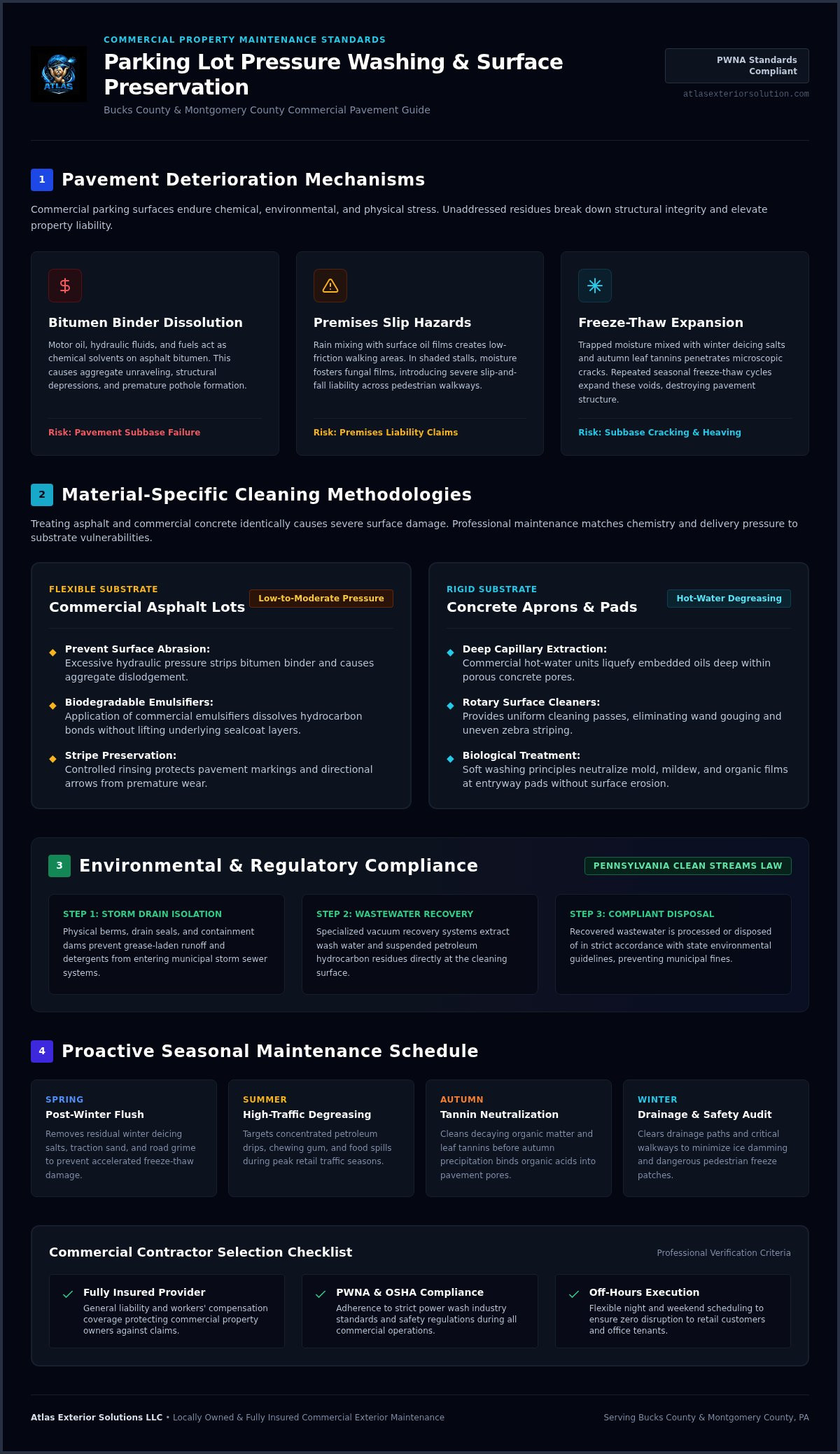
Maintaining a commercial parking area involves far more than sweeping away windblown trash. Daily vehicular traffic leaves behind motor oil, hydraulic fluids, antifreeze, and tire rubber. These contaminants do not merely sit on the surface; they initiate chemical reactions that soften asphalt binders and erode the surface paste of commercial concrete. Over time, unaddressed drips create structural depressions, aggregate unraveling, and costly pothole formations across high-traffic thoroughfares.
Routine surface sanitation also prevents interior tracking. When visitors and employees walk through grease residues and fine grit in the parking lot, they carry those soils directly onto interior flooring, accelerating carpet wear and degrading tile wax. Incorporating a routine commercial pressure washing routine protects both exterior asphalt and indoor investments while maintaining high aesthetic standards that support property values.
Mitigating Slip Hazards and Premature Surface Breakdown
Petroleum deposits pose immediate liability issues for commercial property managers. When rain mixes with engine grease, motor oil creates a frictionless film across walkways and stall spaces. In shaded areas, moisture fosters algae and fungal films that become invisible walking hazards. Removing these slicks through scheduled flatwork cleaning mitigates slip-and-fall claims while defending asphalt binders against chemical dissolution.
- Asphalt protection: Hydrocarbons dissolve bitumen binders, causing loose aggregate and early pavement failure.
- Premises liability defense: Eliminating wet grease deposits directly reduces pedestrian accident risks near main building entries.
- Algae eradication: Specialized detergents treat fungal micro-layers rather than relying solely on high pressure, drawing from principles where soft washing neutralizes organic growth at low pressure to prevent surface erosion.
Enhancing Tenant Satisfaction and Brand Perception
Your parking lot serves as the true front door to your property. Prospective retail shoppers, office tenants, and medical patients form their initial impression before ever stepping through the lobby doors. Visible fluid stains, tire marks, and grime convey deferred maintenance, which can depress commercial rental rates and hurt tenant retention. Investing in a professional parking lot pressure washing service shows pride of ownership and reassures visitors that safety and property standards remain top priorities throughout your facility.
Asphalt Versus Concrete: Selecting Material-Specific Cleaning Methods
Treating asphalt and poured concrete as identical surfaces is one of the most expensive mistakes a property manager can make. Poured concrete is a rigid composite that tolerates high pressure, while asphalt consists of aggregate stones bound together by a pliable petroleum bitumen. A professional parking lot pressure washing service tailors its pressure, water temperature, and chemistry to each specific surface rather than using a one-size-fits-all blasting method.
Managing Asphalt Porosity and Preventing Aggregate Stripping
Asphalt requires a delicate balance between cleaning efficacy and substrate preservation. Applying excessive hydraulic pressure directly onto asphalt causes surface abrasion, stripping away the bituminous binder and causing aggregate raveling. Once these small stones dislodge, vehicle tires grind them down, accelerating pothole formation and eroding line striping.
Experienced technicians rely on material-specific cleaning rather than raw force. They apply biodegradable, commercial-grade emulsifiers that break down embedded motor oils and fuel spills. Once the detergents dissolve the petroleum bond, moderate pressure rinses the residue clean without lifting existing sealcoat layers or damaging the underlying asphalt matrix.
Concrete Flatwork Restoration and Hot-Water Degreasing
Commercial concrete aprons, dumpster areas, and entrance pads demand an entirely different approach. Because concrete is dense and porous, engine fluids penetrate deeply into the capillaries. Cold water and standard nozzles cannot dissolve these settled oils; they only push them deeper into the slab or leave behind unsightly wand marks known as zebra striping.
Restoring commercial flatwork calls for commercial hot-water units operating alongside balanced rotary surface cleaners. The high-temperature water melts hardened chewing gum and mobilizes grease, while spinning spray bars distribute consistent water flow evenly across the slab. Because this process releases concentrated oils and heavy metals, cleaning plans must account for federal NPDES regulations to ensure wastewater never reaches local municipal storm sewers unchecked.
Partnering with a proven specialist in commercial pressure washing guarantees your facility benefits from appropriate temperatures and balanced pressures, extending pavement life across your entire commercial property.
Environmental Compliance and Wastewater Runoff Management
Washing a commercial lot generates runoff carrying far more than harmless mud. The spent wash water holds concentrated suspended solids, synthetic motor lubricants, antifreeze, and heavy metals like zinc and copper. Storm drains do not filter water; they discharge directly into local creeks and reservoirs. Directing chemical-laden wash water down these catch basins constitutes an illegal illicit discharge under federal regulations, leaving property owners vulnerable to substantial regulatory penalties.
Adhering to the Pennsylvania Clean Streams Law
In Pennsylvania, environmental compliance surrounding commercial washing is strictly regulated. The Pennsylvania Clean Streams Law alongside 25 Pa. Code Chapter 91.33 mandates that any unpermitted discharge that pollutes waterways must be reported immediately to the Pennsylvania Department of Environmental Protection (DEP). With local municipalities operating under regulated MS4 programs across Bucks County, property managers cannot afford careless contractors who rinse oils into storm sewers.
A reputable parking lot pressure washing service safeguards nearby waterways by sealing the area before water flows. Technicians deploy weighted containment berms, drain seals, and absorption booms around every catchment basin, ensuring no contaminated water escapes into municipal storm systems.
Wastewater Capture, Filtration, and Proper Disposal
Containing runoff is only half the battle; collecting and processing that wash water is equally critical. Professional operators deploy industrial vacuum recovery units directly behind surface cleaners to pump spent water away from the pavement before it can pool or seep into subgrades.
- Suction berm extraction: High-powered vacuum dams capture water along natural gradient low points and lot borders.
- Multi-stage filtration: Collected effluent moves through sediment traps and hydrocarbon-binding filters to separate sludge and oils.
- Permitted discharge: Filtered water is redirected to approved sanitary sewer access points with municipal permission, never into open creeks.
Working with a fully compliant exterior cleaning contractor provides the documented disposal procedures you need to satisfy township inspectors, keeping your facility completely shielded from environmental liability.
Essential Qualifications for Commercial Pressure Washing Contractors
Selecting an exterior maintenance partner requires vetting beyond general handyman qualifications. Commercial parking areas present distinct mechanical and legal obstacles that residential equipment simply cannot handle. Before hiring a parking lot pressure washing service, commercial facility managers must evaluate contractor capabilities across four non-negotiable criteria:
- Insurance validation: Verify commercial general liability and active workers compensation policies.
- Industrial equipment: Confirm dedicated high-flow hot water machines paired with integrated vacuum reclamation units.
- Industry standards: Ensure operational compliance with PWNA standards and OSHA safety guidelines.
- Operational flexibility: Secure tailored scheduling arrangements that prevent disruption to tenants, retail shoppers, and delivery fleets.
Insurance Coverage and Liability Safeguards
Never permit an underinsured vendor onto your commercial parcel. Standard residential coverage leaves gaping liabilities if heavy machinery damages pavement, or if wash water infiltrates an electrical vault. Reputable contractors carry dedicated commercial policies with substantial liability protection, ensuring your firm is fully protected against accidental property claims.
Workers compensation coverage is equally vital. Pressure washing involves slick surfaces, high hydraulic output, and industrial equipment. If a contractor's employee sustains an injury on your lot without coverage, premises liability laws can expose your management firm to severe financial claims. Choosing a qualified commercial pressure washing partner shields your balance sheet and guarantees vetted, properly trained technicians on your site.
Commercial Equipment and Off-Hours Logistics
Consumer pressure washers generate high pressure with minimal water volume, which causes aggregate etching without lifting stubborn oils. Professional commercial rigs deliver high water volume heated up to 200 degrees Fahrenheit. This intense thermal energy melts heavy grease slicks and loosens hardened gum deposits quickly, speeding up the process while protecting asphalt binders.
Commercial lots cannot afford closed lanes during standard retail or office hours. A dependable contractor executes operations during low-traffic windows, completing cleaning overnight or across weekends. Crews section off treatment areas methodically, enabling smooth traffic flow and dry parking stalls before morning foot traffic begins. Learn how Atlas Exterior Solutions delivers expert pressure washing across commercial facilities in Newtown and Yardley without disrupting daily commerce.
Request a free commercial pressure washing quote for your property
Developing a Proactive Commercial Pavement Maintenance Schedule
Waiting until pavement looks visibly neglected before scheduling cleaning significantly shortens asphalt lifespan. Commercial surfaces endure continuous mechanical friction and chemical exposure throughout the year. Establishing a proactive parking lot pressure washing service routine shifts your operation from reactive, costly repairs to predictable lifecycle preservation. High-volume drive lanes, loading areas, and dumpster pads benefit from quarterly spot treatments, while general parking stalls thrive under a structured semi-annual plan.
Combating Winter Salt Residue and Freeze-Thaw Damage
Southeastern Pennsylvania winters present harsh conditions for commercial flatwork. Liquid deicing brines and chemical salts penetrate microscopic surface fissures between December and March. When trapped moisture expands during freezing temperatures, this repetitive freeze-thaw damage fractures porous concrete and breaks apart asphalt binders from the inside out.
Once spring arrives, residual salt deposits accelerate chemical oxidation if left unwashed. An early spring deep clean strips away corrosive winter brine and abrasive traction grit before warmer temperatures bake them into the substrate. In the autumn, targeted maintenance removes organic debris and decaying leaf tannins before wet leaves freeze into the pavement texture.
- Spring salt extraction: Rinses chemical deicers and fine grit to halt subgrade deterioration.
- Autumn organic removal: Clears staining leaf tannins and wet compost layers before winter frost hits.
- Quarterly hot-spot maintenance: Cleans heavy oil drips along delivery docks and drive-thru lanes.
Custom Maintenance Plans for Bucks County Facilities
Every commercial facility operates under unique site conditions. A busy retail shopping center in Langhorne experiences continuous customer turnover, while an office park in Yardley demands discreet, off-hours care. Tailoring your cleaning frequency accounts for vehicle weights, pedestrian pathways, and shaded areas vulnerable to moss growth.
Coordinating washing alongside restriping projects also protects your capital investment. Washing pavement immediately before restriping removes fine soils and chalky residue, allowing marking paint to bond directly to clean aggregate for maximum longevity. To design a property-specific washing program that protects your pavement investment, contact Atlas Exterior Solutions LLC for a professional commercial maintenance assessment.
Protect Your Commercial Investment With Proactive Pavement Care
Maintaining a clean commercial parking area safeguards your business against asphalt degradation, premises liability claims, and environmental runoff penalties. By pairing material-specific cleaning methods with active wastewater reclamation, you defend your subbase against seasonal damage while providing tenants and visitors with an inviting first impression.
Partnering with a dedicated parking lot pressure washing service preserves your pavement value through every season. Atlas Exterior Solutions LLC serves commercial facilities across Bucks County with reliable, expert care. We operate as a fully insured provider with complete general liability protection and workers' compensation coverage. Our technicians strictly follow OSHA safety standards and PWNA flatwork protocols, earning over 45 five-star Google reviews from local business operators.
Request a free commercial property estimate
Take pride in your commercial grounds and protect your paved surfaces for years to come.
Frequently Asked Questions
How often should a commercial parking lot receive professional pressure washing?
Most commercial facilities in Bucks County schedule a professional parking lot pressure washing service once or twice per year, typically in spring and autumn. High-traffic properties, such as busy shopping centers in Bensalem or drive-thru lanes in Langhorne, often need quarterly maintenance for heavily soiled areas. Routine cleaning removes corrosive winter deicing salts and summer oil buildup before they degrade your pavement subbase.
Can commercial pressure washing damage asphalt surfaces or line striping?
Uncontrolled high pressure can strip painted stall lines and dislodge asphalt stone aggregates. Professional technicians prevent this damage by using calibrated, moderate pressure combined with specialized emulsifiers rather than raw force. This material-specific cleaning method dissolves stubborn oil deposits safely. It protects the bituminous binder matrix and keeps directional traffic markings intact across your Bucks County facility.
How do professional exterior cleaners manage environmental wastewater runoff?
Professional crews deploy storm drain seals, weighted containment berms, and vacuum recovery systems before washing begins. This equipment captures oily wash water directly from the pavement surface, preventing hazardous runoff from entering municipal storm sewers. The collected water is filtered to remove solids and hydrocarbons before proper disposal, ensuring full compliance with the Pennsylvania Clean Streams Law and local MS4 environmental mandates.
Can commercial washing be scheduled overnight to avoid disrupting customers?
Yes, reputable commercial contractors offer flexible off-hours and overnight scheduling specifically to avoid disrupting retail shoppers, office tenants, and delivery vehicles. Technicians arrive after business closing to wash, degrease, and vacuum the property in sections. By the time morning employees and patrons arrive, the parking lot is completely clean, dry, and fully open for regular traffic without operational downtime.
What is the primary difference between concrete and asphalt washing techniques?
The primary difference lies in surface density, pressure tolerance, and heat application. Dense concrete withstands high pressure and commercial hot water, making rotary surface cleaners ideal for dissolving gum and ground-in oil. Softer asphalt requires lower pressure and targeted chemical degreasers to prevent aggregate raveling, since excessive heat and pressure can soften or strip the pliable bitumen binder holding the stone aggregate together.
Does professional washing successfully remove long-standing oil and transmission fluid stains?
A professional parking lot pressure washing service dramatically fades and often eliminates old automotive stains using commercial hot water and industrial degreasers. While petroleum that sat for years may permanently etch the pavement subbase, deep hot-water extraction lifts embedded grease deposits. This treatment restores traction, removes slippery hazard films, and leaves the pavement surface clean and prepared for fresh sealcoating or restriping.
Disclaimer
The information on this blog is for general informational purposes only. Results may vary based on surface type, condition, and cleaning methods. Always follow manufacturer guidelines and use proper safety precautions. Atlas Exterior Solutions is not liable for any damages or losses resulting from the use of this information.


