

Clean paved areas shape visitors’ first impressions and help keep commercial grounds presentable. Commercial property washing in Horsham can refresh concrete sidewalks, walkways, parking areas, patios, and other hard surfaces by removing dirt, stains, and organic buildup. Grime and slippery growth can also affect how safely people move through these spaces.
Paving is a practical place to focus: entrances, paths, and parking areas see regular use and collect residue over time. The right method depends on the material and its condition. Pressure washing suits durable hard surfaces such as concrete, while soft washing uses low pressure for delicate areas, including siding and roofs.
This guide explains which commercial surfaces can be pressure washed and how regular exterior cleaning supports curb appeal and property maintenance. It also covers planning for storefronts, offices, parking areas, and outdoor gathering spaces, so the cleaning method suits each surface instead of treating every area alike.
Key Takeaways
- Identify the paving materials and their condition before deciding on a cleaning approach.
- Pay attention to forecourts, parking areas, and walkways where dirt and residue can build up.
- Plan regular exterior cleaning to help maintain a neat appearance and limit debris accumulation.
- Consider building exteriors and entryways alongside paved areas for a more consistent property presentation.
- Tailor commercial washing to the surfaces and condition of each site, including patios and outdoor gathering spaces.
Pressure washing for forecourts and paving
For commercial property washing in Horsham, durable paving can often be cleaned with pressure washing suited to its material and condition. Concrete forecourts, loading approaches, parking areas, and paved entrances collect tire marks, tracked-in soil, and spills. Cleaning can refresh a business’s approach and remove grime that makes busy paths look neglected.
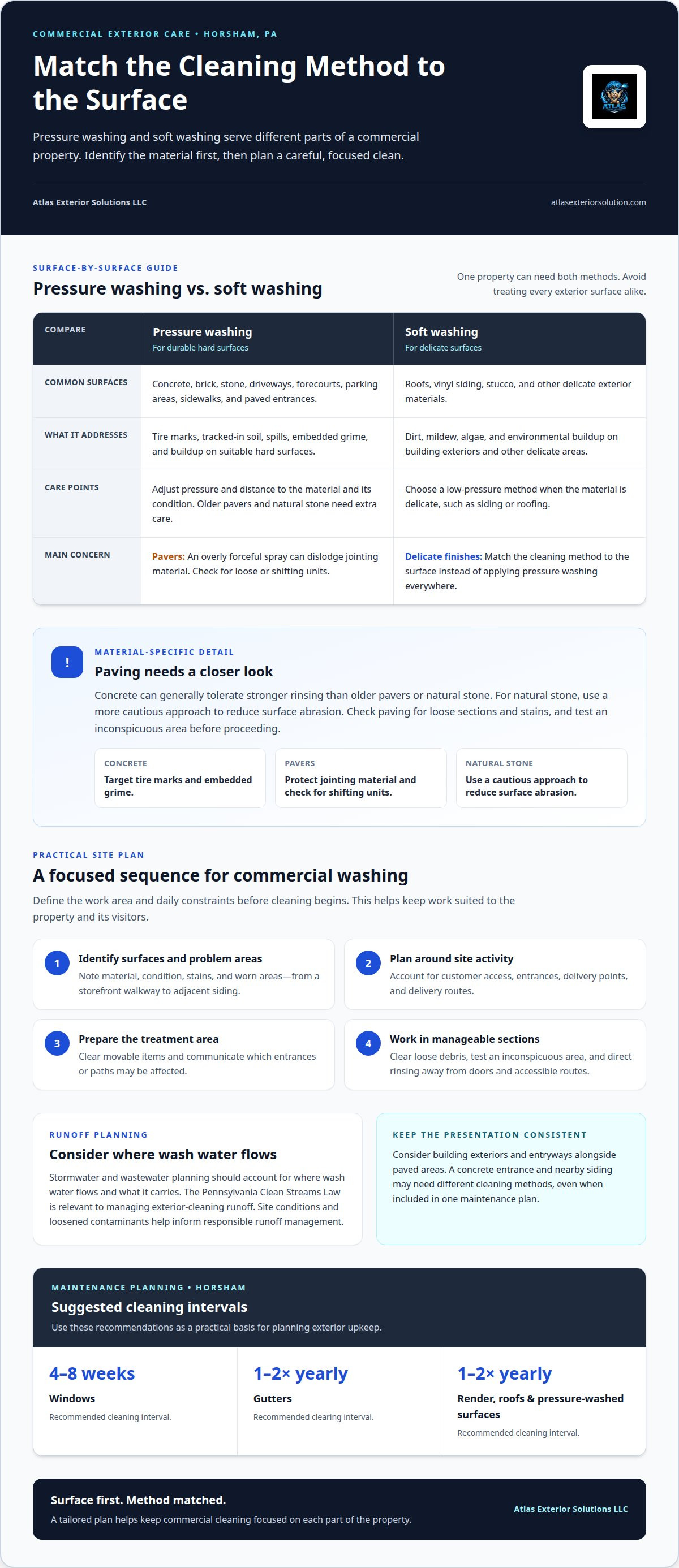
Surface type matters. Concrete can generally tolerate stronger rinsing than older pavers or natural stone, but pressure and distance still need adjustment. An overly forceful spray can dislodge jointing material between pavers. A careful process starts by identifying the surface, checking for loose sections and stains, and testing an inconspicuous area before proceeding.
Sidewalk and walkway pressure washing focuses on routes people use to reach entrances, cross forecourts, or move between buildings. A practical sequence is to clear loose debris, work in manageable sections, and direct rinsing away from doors and accessible routes. For example, a stained stretch near a storefront can be treated separately, avoiding unnecessary work across the entire walkway.
- Concrete: Match the spray to the surface and target tire marks or embedded grime.
- Pavers: Protect jointing material and watch for shifting or loose units.
- Natural stone: Use a more cautious approach to reduce surface abrasion.
Stormwater and wastewater planning in Horsham, PA, should account for where wash water flows and what it carries. The Pennsylvania Clean Streams Law is relevant to managing exterior-cleaning runoff. Site conditions and the contaminants loosened during cleaning help inform responsible runoff management.
Residential pressure washing in Horsham follows the same surface-first principle, though the work may focus on a driveway, front walk, or patio rather than a commercial forecourt. A concrete driveway with tire marks differs from a paver patio with leaf stains, so the method should suit the material and the specific buildup. Pressure washing is not appropriate for every exterior surface: siding and other delicate materials require soft washing.
Commercial pressure washing in Horsham, PA, can address paved areas such as sidewalks, parking zones, forecourts, and patios. For property managers, a useful first step is to define the surfaces, problem areas, and operational constraints, such as customer access or delivery routes. This information helps shape a site-specific cleaning plan and limit disruption to daily operations.
Building exteriors, sidewalks, and entryways
Commercial exterior cleaning can refresh building walls, sidewalks, entryways, and other surfaces visitors see first. The method should suit each material, from durable concrete to delicate siding.
Commercial Building Exterior Washing
Commercial building exterior washing removes dirt, mildew, algae, and environmental buildup from exterior surfaces. The material and condition of each area help determine whether pressure washing or soft washing is appropriate.
For example, concrete around a storefront can suit pressure washing, while siding requires soft washing. A surface-by-surface assessment helps identify stains, worn areas, and delicate details before cleaning begins. This tailored approach can refresh a building without treating every surface alike.
Commercial exterior washing can also cover sidewalks, entry pads, and driveways. Including these areas in one maintenance plan helps create a consistent appearance from the property boundary to the entrance.
Preparing for Exterior Washing
To prepare a commercial property, identify the surfaces to be cleaned, note problem areas, and plan around visitor access and daily operations. For example, list a stained entry walkway and a separate section of building siding so each receives the appropriate method.
Before work begins, clear movable items from the treatment area and communicate which entrances or paths may be affected. This helps keep people away from active cleaning zones and allows work to proceed in manageable sections. Include exterior windows, roofs, and gutters in the site plan when they need attention.
- Windows: Note exterior panes with visible dirt or hard water stains.
- Roofs: Identify areas where a low-pressure method is more suitable.
- Gutters: Include visible debris or overflow concerns in the maintenance plan.
These details define the work area and keep cleaning focused on actual needs. They also help limit disruption near customer doors, delivery points, and visitor routes.
Exterior washing can be coordinated across buildings, sidewalks, and entryways, but each surface still needs its own method. A concrete entrance may require a different approach than siding beside it. For a property with several exterior surfaces, commercial pressure washing can address suitable hard surfaces as part of a tailored cleaning plan.
Regular exterior cleaning helps prevent debris from accumulating on building materials. Matching the method to each surface supports a careful maintenance plan: pressure washing is reserved for durable materials such as concrete, brick, stone, and driveways, while soft washing is used for roofs, vinyl siding, stucco, and other delicate surfaces. This distinction keeps routine care suited to each part of the property instead of applying one approach everywhere.
For Horsham properties, the company recommends cleaning windows every 4 to 8 weeks and clearing gutters once or twice a year. It also recommends cleaning render, roofs, and pressure-washed surfaces in Horsham once or twice a year. These intervals offer a practical basis for planning exterior upkeep, while visible buildup, debris, or surface condition can help guide attention between scheduled visits. Keeping windows, gutters, walls, and hard surfaces in view can make it easier to coordinate care and maintain a consistent appearance around entrances and visitor routes. Regular checks can also help identify where a gentler method is appropriate and where durable paving can be treated with higher pressure.
Curb appeal and property maintenance
At a commercial property, visitors often notice the approach before the building itself. Stains on a front walk, grime near a doorway, or organic growth along a shaded path can make an otherwise maintained site look neglected. Regular cleaning refreshes the appearance and addresses buildup that can affect how safely people use walkways.
Maintenance works best when it responds to visible conditions across the property. For example, a manager can note where leaves collect, which entrances show recurring marks, and whether shaded paving stays damp. These observations help distinguish a localized cleaning need from a broader surface issue and make it easier to plan around customer entrances and busy operations.
Use a simple inspection routine after noticeable changes in use or weather. Walk the visitor route from the parking area to the entrance, then record specific concerns, such as staining beside a downspout or algae on a shaded path. Assess nearby delicate surfaces separately. A method suited to concrete may not be right for older paving or natural stone.
- Record locations: Note the exact walkway, entrance, or paved area needing attention.
- Describe the buildup: Distinguish dirt, stains, and organic growth where possible.
- Consider the material: Separate concrete from pavers and delicate surfaces.
- Plan around use: Identify visitor routes and operational areas affected by cleaning.
A scheduled maintenance plan turns those observations into repeatable decisions. Group surfaces by material and exposure rather than treating every area at once. A sheltered entrance, for example, may collect different buildup than an open forecourt. A property log can track completed cleaning, recurring stains, and areas requiring a gentler method, helping managers refine future plans.
Routine maintenance also makes changes easier to spot. If a cleaned section quickly develops new staining, the location may point to a nearby source, such as runoff from an adjoining surface. Addressing the pattern can help avoid repeatedly cleaning the same patch without considering its surroundings.
Cleaning is one part of maintaining commercial grounds, not a substitute for inspecting surfaces. Note loose pavers, worn joints, or damaged concrete before washing, since cleaning cannot repair them. A measured plan can prioritize visitor-facing areas, protect vulnerable materials, and refresh curb appeal without applying the same treatment everywhere.
Dirt, stains, and organic growth on commercial surfaces can affect appearance and create safety hazards. Inspection notes should record where buildup appears and whether it lies along a visitor route. This gives managers a practical basis for prioritizing areas while keeping the cleaning method suited to each surface and its condition.
After work is complete, compare the treated area with the earlier notes and record any remaining buildup or visible changes. If a concern persists, reassess the location and surrounding conditions before repeating the same work. Focusing on observed conditions helps teams address concerns consistently and maintain a useful record of decisions across the property.
Benefits of regular commercial power washing
Regular cleaning helps commercial surfaces stay presentable as daily traffic brings dirt, stains, and environmental buildup. A clean exterior can create a welcoming first impression at a Horsham storefront, office entrance, or shared property. Removing grime from concrete and other suitable hard surfaces also makes existing wear easier to see, so maintenance decisions can respond to actual conditions.
There is a maintenance benefit beyond appearance. Debris can accumulate on exterior materials, while routine removal helps protect them. For example, cleaning a paved entrance can clear embedded soil before it obscures cracks or worn joints. Washing does not repair defects, but a clean surface can make them easier to identify and address.
Surface-specific methods matter. Pressure washing removes stubborn buildup from durable concrete, while soft washing is used for delicate exterior materials. Choosing the right method helps limit abrasion and protect finishes during cleaning. The surface condition, type of buildup, and location all inform the approach; pressure should not be applied uniformly across every area.
- Entry concrete: Remove dirt and stains where customers approach a storefront.
- Parking areas: Address tire marks and oil residue on suitable paved surfaces.
- Walkways: Clear organic buildup that can affect how visitors use a route.
- Exterior walls: Select a gentler method for materials that cannot withstand direct pressure.
Removing slippery buildup can also support safer movement around entrances and walkways. Dirt and organic growth can create hazards, particularly where visitors turn from a parking area onto a shaded path. Cleaning addresses that buildup, while surface condition and water flow remain important to planning the work. Keeping routes clear during operations helps reduce disruption as people use the property.
A maintenance record makes each cleaning more useful. Note the areas treated, the buildup present, and visible changes, such as recurring stains beside a doorway. These details help identify patterns and refine future plans for different surfaces. A high-traffic storefront may need attention for tracked-in grime, while a less-used exterior wall may mainly collect environmental residue.
Power washing is one part of ongoing property care, not a replacement for repairs. If cleaning reveals loose joints, damaged concrete, or a failing finish, record the issue separately. This helps property managers distinguish dirt removal from restoration work, protect vulnerable surfaces, and base maintenance decisions on what each area actually needs.
Commercial pressure washing for storefronts, offices, parking lots, and patios
Commercial properties bring different cleaning needs together on one site. A retail storefront may have a marked entrance, an office may have stained concrete near its main doors, and a shared patio may collect mildew and food residue. Planning by surface and use helps target cleaning while limiting disruption to businesses and visitors.
For storefronts, focus on the customer route from parking to the door. Pressure wash suitable hard paving where tire marks, tracked soil, and stains are visible; use soft washing on delicate finishes beside the entrance. At an office, access points and walkways may need attention alongside the building exterior. A site plan can separate areas by material.
Parking areas need a different sequence from patios. Pressure washing can address dirt, tire marks, and oil residue on durable concrete. Divide the work into sections and account for vehicle and pedestrian movement around each one. At retail centers, planning around entrances and active areas helps reduce disruption to normal operations.
Patios and courtyards often serve as outdoor gathering spaces, so surface condition and residue both matter. Concrete patios can suit pressure washing, while natural stone or older paving calls for a cautious, material-specific approach. Mildew, food marks, and leaf stains may require different treatments; do not assume one method suits every stain.
What surfaces can be safely pressure washed at commercial properties? Durable hard surfaces such as concrete parking areas, sidewalks, and patios are common candidates. The material, its condition, and the buildup determine the appropriate pressure. Siding, roofs, and other delicate finishes require soft washing.
What are the insurance and licensing requirements in Pennsylvania? Before commercial work, establish what documentation applies to the job and property. Request proof of general liability and workers’ compensation coverage, and identify any applicable local license or permit requirements for the specific site.
What environmental and surface-damage risks should be considered? Runoff can carry loosened grime or cleaning residue toward drains, while excessive pressure can abrade surfaces or disturb paving joints. Plan water flow and choose a method suited to the surface, taking the Pennsylvania Clean Streams Law into account when managing runoff.
A practical plan lists each area, its material, the buildup to remove, and any access constraints. This helps businesses coordinate storefronts, offices, parking zones, and patios without treating the whole property alike. The key is to match the method to the surface, then schedule work around how people use the site.
Request a commercial pressure washing estimate
Atlas Exterior Solutions: Commercial Pressure Washing
Atlas Exterior Solutions serves Horsham property managers with commercial pressure washing for parking areas, paved routes, and other durable surfaces. Soft washing is used for delicate exterior materials, while Paver Restoration can suit worn or weathered pavers that need more than routine cleaning.
Consider commercial cleaning when visible buildup affects a storefront entrance, shared walkway, or outdoor area, or when a maintenance plan needs surface-specific care. The approach can account for the material, its condition, and how the property operates, protecting delicate areas while addressing grime on durable surfaces.
Contact Atlas Exterior Solutions about commercial pressure washing
Set a Practical Cleaning Plan for Your Property
A thoughtful plan for commercial property washing in Horsham starts with the areas that shape daily access and the materials that need care. Decide which surfaces to maintain together, then consider which cleaning method suits each one. Durable paving may call for pressure washing, while delicate exterior surfaces require soft washing.
Atlas Exterior Solutions offers Commercial Pressure Washing, Soft Washing, and Paver Restoration for different exterior needs. Property managers can consider routine cleaning for suitable hard surfaces and restoration when paving needs more than washing. A clear scope also helps align the work with visitor routes and normal property operations.
For a practical next step, identify the areas needing attention and the outcome you want to achieve. Atlas Exterior Solutions provides free, no-obligation estimates to help you plan work that fits your site.
With the right method for each surface, your property can welcome visitors with confidence.
Frequently Asked Questions
What commercial property washing services are available in Horsham, Pennsylvania?
In Horsham, Atlas Exterior Solutions LLC provides commercial pressure washing, soft washing, and paver restoration. These options can serve different needs across facilities such as medical properties, schools, industrial buildings, and multi-tenant sites. For a property manager, defining the intended result, such as refreshing a shared exterior or restoring worn paving, helps distinguish a washing project from restoration work.
Commercial property washing vs. soft washing: which is best?
Neither method is right for every surface across a property; a mixed-use site may need separate approaches in different areas. Consider the material and buildup, then plan by treatment zone. For example, a building with several exterior finishes can have its cleaning scope divided by material instead of applying one method to the entire facility.
How often should a commercial property be washed?
There is no single cleaning interval that suits every commercial property. Set timing by evaluating each area’s role: customer-facing surfaces may need a more consistent appearance than less visible sections. Use that distinction to prioritize work rather than applying a residential cleaning recommendation or assuming every part of a commercial site needs the same schedule.
Disclaimer
The information on this blog is for general informational purposes only. Results may vary based on surface type, condition, and cleaning methods. Always follow manufacturer guidelines and use proper safety precautions. Atlas Exterior Solutions is not liable for any damages or losses resulting from the use of this information.


