

The darkest roof stains don’t call for the strongest spray. For homeowners seeking roof stain removal in Horsham, the right approach to asphalt shingles is a gentle, surface-conscious clean rather than aggressive pressure that could harm roofing materials.
It’s understandable to want dark streaks, moss, and other visible buildup removed without harming the roof beneath them. Moss can hold moisture against roofing materials, contributing to deterioration and leaks, so cleaning can matter beyond curb appeal. Soft washing uses cleaning solutions and low-pressure water; pressure washing relies on greater force and is not suitable for delicate roof surfaces.
This guide explains what causes roof stains, why asphalt shingles need careful treatment, and how soft washing addresses buildup without high pressure. You’ll also learn what affects the cleaning approach and what to expect when arranging roof stain removal in Horsham, so you can make an informed decision for your property.
Key Takeaways
- Differentiate algae streaks, moss, and other discoloration to understand what kind of roof treatment may be needed.
- Soft washing uses low-pressure water and cleaning solutions, making it a gentler approach for delicate roofing than forceful pressure washing.
- Moss can hold moisture against roofing materials; treatment may slow regrowth, but it cannot prevent moss from returning permanently.
- Asphalt shingles need material-specific cleaning to address stains while protecting the roof surface.
- A professional cleaning plan should account for the roof material, its condition, and the type and extent of buildup.
Why Roof Cleaning Matters?
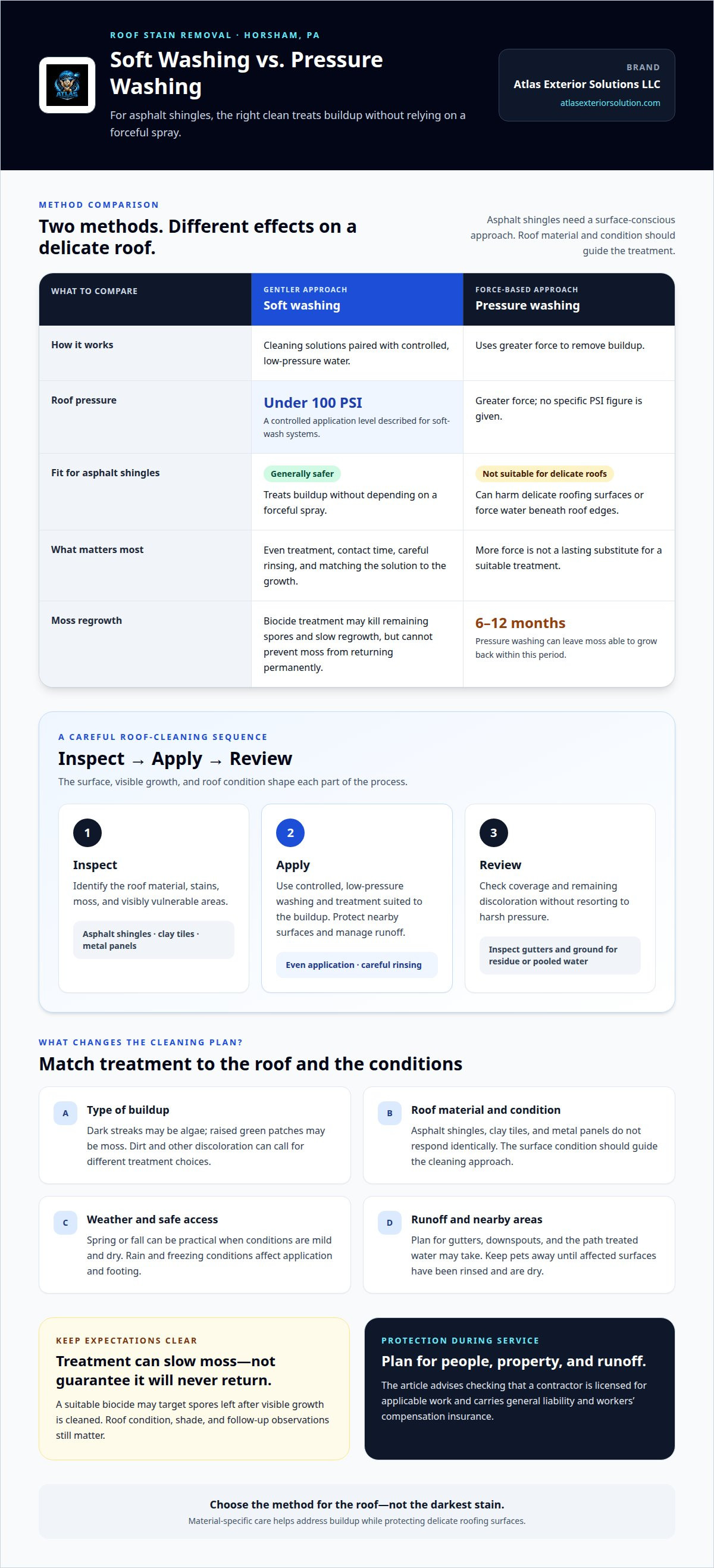
For roof stain removal in Horsham, dark streaks, moss, and surface grime call for different treatment choices. The aim is to address organic buildup without scouring shingles, loosening roofing materials, or forcing water beneath roof edges. Soft washing uses cleaning solutions with controlled, low-pressure water. Pressure washing uses greater force and can harm delicate surfaces.
Soft washing is generally the safer method for asphalt shingles because it treats buildup without relying on a forceful spray. Soft-wash systems can deliver water at under 100 PSI, a pressure level suited to controlled application rather than blasting the roof. Cleaning solution, contact time, and careful rinsing matter more than increasing pressure. For roof stain removal in Horsham, the shingles’ condition and the type of staining should guide the treatment.
A careful roof-cleaning process starts by identifying the roofing material and visible growth. Asphalt shingles, clay tiles, and metal panels do not respond identically to washing. The appropriate cleaning treatment is then applied evenly, with nearby surfaces protected. A final inspection helps identify missed areas or places needing further attention. Matching the method to the surface helps avoid abrasion and produce a more consistent result.
- Inspect: Identify the roof material, stains, moss, and any visibly vulnerable areas.
- Apply: Use controlled, low-pressure washing and a treatment suited to the buildup.
- Review: Assess coverage and remaining discoloration without resorting to harsh pressure.
Biocide treatments may be used after cleaning to kill moss spores and slow regrowth. They don’t stop moss from returning permanently. The treatment choice should match the roof material and the visible growth, rather than treating every stain as the same problem. Pressure washing a roof can leave moss able to grow back within 6-12 months, so force alone isn’t a lasting solution.
A roof-cleaning contractor in Pennsylvania should be licensed for applicable work and carry general liability and workers’ compensation insurance. Those protections address property damage and worker injuries during service, while the cleaning method should suit your roof material.
Spring or fall can be practical seasons for roof cleaning in Horsham when conditions are mild and dry. Scheduling should account for rain, freezing conditions, and safe access, since wet weather affects application and footing. The roof’s condition and the weather window matter more than a particular calendar date.
For Horsham homes, a roof-cleaning plan should account for the roof surface, visible growth, and nearby areas exposed to runoff. A treatment suited to asphalt shingles may not suit clay tiles or metal roofing. Matching the method to the material helps address buildup while protecting the surface. A clear estimate should reflect the roof’s actual cleaning needs.
Biocide treatment and moss regrowth prevention
A roof treatment can address moss and its spores, but it cannot make a roof permanently immune to regrowth. The result depends on treating affected areas without damaging pressure.
Biocide and Chemical Treatments
Biocide treatment targets moss spores that remain after visible growth is cleaned. It can kill spores and slow new growth, but cannot prevent moss from returning permanently. The treatment should suit the roof material and the growth present, rather than replace careful cleaning.
Chemical treatments work through contact with the targeted buildup, so even coverage matters. A professional process considers where moss is concentrated, how solution may flow across the roof, and where runoff will travel. This focuses treatment on affected areas and limits unnecessary exposure elsewhere.
Pressure washing can leave moss able to return within 6-12 months. That makes the cleaning method an important part of the result: force may remove visible growth, but it doesn’t replace a suitable treatment. A roof’s finish and condition also matter when deciding how to address remaining stains.
Preventative care starts with observing changes after treatment. New green patches or moss along shaded roof sections, for example, can signal renewed growth. Keeping gutters clear supports water flow away from the roof edge; blocked gutters can overflow and contribute to water damage. A follow-up assessment can help determine whether the roof needs further attention.
Safety for Gutters, Runoff, and Pets
Roof stain removal can protect nearby areas when the work includes controlled application and runoff management. The cleaning team should account for gutters and where treated water may drain. Keep pets away from the work area during treatment and until affected surfaces have been rinsed and are dry.
Before treatment, the work plan should identify downspouts. During application, limiting overspray and controlling runoff helps reduce contact with those areas. Afterward, the team can inspect gutters and the ground around the home for residue or pooled water.
These precautions matter because runoff follows the roofline through gutters and downspouts. Planned application, careful rinsing, and a final site review help keep treatment focused on roof growth while protecting the surrounding property.
Roof algae, moss, and discoloration
Dark streaks, green patches, and loose debris can have different causes on Horsham roofs. Identifying what is visible helps determine whether cleaning should address algae, moss, dirt, or a mix of buildup. A thorough assessment also considers roofing material and condition, since a treatment suited to one surface may not suit another.
Algae often appears as dark streaks, while moss forms raised patches that can hold moisture against roofing materials. Trapped moisture can contribute to deterioration and leaks. Dirt and leaves may collect near roof valleys or gutters and interfere with water flow. These signs call for different responses, so the cleaning plan should match the buildup rather than treat every discoloration alike.
A useful roof assessment follows a clear sequence. First, the cleaning professional identifies the roof material and maps visible growth. Next, they distinguish surface staining from moss or accumulated debris, then select an appropriate treatment and controlled washing method. After cleaning, they review the roof for remaining growth and check that runoff has not left debris in gutters or along roof edges.
- Dark streaks: Record where staining appears and whether it follows a consistent path.
- Moss patches: Note areas where growth holds moisture against the roofing.
- Debris: Look for leaves or other material gathered in roof valleys and gutters.
A cleaning plan should explain what the treatment targets and how the method suits the roof surface. Removing visible moss is different from treating spores that may remain afterward. A suitable plan addresses present growth and possible regrowth without using harsh pressure that could damage roofing materials. Dead growth may loosen gradually, so the roof may not look entirely clear immediately after treatment.
A three-year moss regrowth guarantee is a service promise, not proof that moss cannot return. Moss can regrow after cleaning, and biocide treatment may slow that process without preventing it permanently. Any guarantee should explain what it covers and the conditions attached. Atlas Exterior Solutions LLC does not claim a three-year guarantee.
For roof cleaning in Horsham, the outcome depends on the roof material, the type and location of growth, and the treatment used. A thorough inspection can distinguish algae staining from moss buildup and identify debris that needs attention. That assessment helps set appropriate expectations and focuses care on the roof’s condition, not appearance alone.
On metal roofs, dirt, mildew, and oxidation buildup can lead to rust and corrosion if left untreated. When assessing discoloration, it matters what kind of buildup is present. The concern is not only appearance: untreated buildup can result in rust and corrosion. Considering the metal and visible buildup helps distinguish this issue from algae staining, moss growth, or accumulated debris, which call for a different assessment. Metal-roof discoloration should be evaluated according to its specific cause, not treated as interchangeable with other roof growth.
Asphalt shingle stain removal
Asphalt shingles need a cleaning approach that addresses stains without treating the roof like a hard, washable floor. Dark streaks, moss patches, and dirt can look similar from the ground, but each points to a different cleaning need. A professional assessment identifies the visible buildup, checks the shingle surface, and selects a treatment suited to the roof.
Soft washing is the appropriate method for delicate asphalt shingles because it uses cleaning solution and low-pressure water rather than forceful spray. The aim is to treat organic staining and loosen buildup without aggressive pressure. Pressure washing can be too harsh for a roof, especially when spray is directed close to the shingles or used to force off stubborn growth.
Timing also matters. According to the Asphalt Shingle Manufacturers Association, soft washing an asphalt shingle roof every 3 to 5 years is recommended to preserve its look and functionality. That interval is a maintenance recommendation, not a reason to clean automatically on a fixed date. Visible streaking, moss, roof condition, and the amount of buildup all help determine whether cleaning is appropriate.
A professional cleaning plan for a Horsham home should follow a few practical steps:
- Identify the issue: Distinguish dark staining from raised moss or loose debris.
- Assess the shingles: Note visible wear or areas needing more careful treatment.
- Choose the method: Match the cleaning solution and water pressure to the roof surface.
- Review the result: Inspect treated areas without using force to chase every remaining mark.
A roof may not look uniformly clean immediately after treatment. Organic buildup can loosen over time, so an instant, scrubbed appearance is not the only measure of a thorough result. A treated patch of moss, for example, may take time to release from the surface. A clear explanation of expected results helps set realistic expectations before work begins.
Cleaning too aggressively can cause avoidable wear, while untreated moss can hold moisture against roofing materials and contribute to deterioration and leaks. The right approach balances stain removal with shingle protection, rather than using pressure to make the roof look clean as quickly as possible.
For roof stain removal in Horsham, a sound recommendation should reflect the shingle condition, the type of staining, and the treatment plan. Ask what the process targets and how it protects delicate areas. A method matched to the roof can refresh its appearance while helping avoid damage that could shorten its useful life.
Which Horsham companies offer roof cleaning and stain removal?
Horsham homeowners can look for exterior-cleaning companies that specifically clean roofs, not just ground-level surfaces. Roof work involves different materials, access conditions, runoff paths, and cleaning methods. A company should explain how its approach treats asphalt shingles, rather than suggest one method suits every roof. A shingle roof with dark streaks, for example, needs a different assessment from a tile roof with moss.
The cleaning method is a useful point of comparison. Soft washing applies cleaning solution with low-pressure water, while pressure washing relies on greater force. Asphalt shingles are delicate, so forceful washing can harm them. A clear explanation should identify the treatment, why it suits the roofing material, and what results to expect. The company should describe these steps in plain language.
Ask for a written estimate that describes the work planned for your roof. It should identify visible staining or growth, the surface being treated, and whether gutters or nearby areas need protection. A proposal for dark streaks, for instance, should distinguish them from raised moss. A clear scope helps you understand what the cleaning covers and what the final inspection will review.
Useful points to assess in a roof-cleaning proposal include:
- Roof material: The method should account for asphalt shingles, metal, or tile.
- Stain type: The treatment should address the visible algae, moss, or dirt.
- Water pressure: The plan should explain why the chosen pressure suits the surface.
- Property protection: The work should account for gutters, runoff, and nearby surfaces.
- Insurance: Confirm that the company carries appropriate liability and workers’ compensation coverage.
- After-treatment expectations: The explanation should cover how treated growth may change after washing.
Insurance and safety practices matter because roof cleaning takes place above the home and may affect surrounding property. A company’s coverage and approach to access, runoff, and work-area protection help clarify how these risks are managed. The estimate should also explain what happens if the roof’s condition calls for a different treatment than expected.
For a Horsham roof with stains and moss, choose a service plan based on the roof material and actual buildup. A careful assessment, suitable washing method, and clear scope provide a more useful basis for the work than a promise of instant results. These details help homeowners understand how cleaning can protect roofing while addressing visible discoloration.
Request a roof cleaning estimate
Most roof cleans take 1 - 2 days. Regular cleaning to remove debris helps seamless gutters function throughout the year. Gutter overflow during rain can be a sign that the gutters need cleaning.
Roof cleaning generally does not require planning permission, except that owners of listed buildings or properties in conservation areas should check with their local authority. Cleaning dumpster areas helps eliminate potential food sources for pests, and professional trash can cleaning eliminates potential pest problems.
Atlas Exterior Solutions LLC: Roof Cleaning
Atlas Exterior Solutions LLC provides roof cleaning and roof stain removal in Horsham for property owners dealing with dark streaks, moss, or visible buildup. Its soft washing uses low-pressure water and cleaning solutions, not forceful pressure washing, to address roof stains while protecting delicate shingles. It is a practical next step when you want a professional to assess the roof and select an appropriate cleaning method.
For asphalt shingles, the cleaning plan should account for the material, stain type, and roof condition. Atlas Exterior Solutions LLC also provides commercial pressure washing and paver restoration for those separate exterior-cleaning needs.
Contact Atlas Exterior Solutions LLC about roof cleaning
Plan the Next Step for Your Roof
A simple record can make future roof-care decisions clearer. Note where discoloration appears and when you first noticed it, then share those observations when discussing the roof. This helps focus the conversation on your property’s needs.
Atlas Exterior Solutions LLC can discuss your Horsham roof and the cleaning work that may suit it. Sharing the roof material and visible areas of concern gives the team a useful starting point.
A thoughtful next step starts with clear information about your roof, not pressure to decide immediately.
With your observations ready, you can approach roof care with greater clarity.
Frequently Asked Questions
What causes black roof stains in Horsham, Pennsylvania?
Black roof stains commonly result from algae on shingles. A professional can assess the pattern and check whether discoloration appears on one slope or across several roof areas. That context helps distinguish a surface stain from other changes in the roofing material. When arranging an assessment, mention when you first noticed the marks and whether they have changed over time.
How do professionals remove moss, algae, and lichen from a roof?
Professionals first identify the roof covering and the type and location of growth, then plan treatment and site protection around those conditions. They also account for runoff paths, gutters, and nearby surfaces during the work. After treatment, an inspection helps assess coverage and note any remaining growth. Ask what the process includes and how the roof’s appearance may change after the service.
Can pressure washing damage roof shingles or void a warranty?
Pressure washing can damage shingles, while warranty coverage depends on the manufacturer’s specific terms. Before authorizing roof work, review any cleaning or maintenance conditions in your warranty documents. Ask for the proposed method and scope in writing, then keep the estimate and service record with your home-maintenance paperwork. These records can help explain what work was performed if you later discuss coverage with the manufacturer.
How long does professional roof stain removal take, and how long do results last?
Completion time varies with roof size, access, weather, material, and the amount of buildup, so the work plan is the best guide to timing. Atlas Exterior Solutions LLC states that roof-cleaning results typically last 2-4 years, depending on conditions. Tree cover and recurring growth can affect how soon stains return. Ask how the team will communicate progress and what to expect after the treatment.
Disclaimer
The information on this blog is for general informational purposes only. Results may vary based on surface type, condition, and cleaning methods. Always follow manufacturer guidelines and use proper safety precautions. Atlas Exterior Solutions is not liable for any damages or losses resulting from the use of this information.


