

A square-foot estimate is only a starting point. The estimate for soft washing depends on more than a home’s footprint: siding material, roof area, buildup, and access all affect the work involved.
It makes sense to want a clear estimate before arranging exterior cleaning. This guide explains how house and roof soft-washing estimates are assessed per square foot, and why similarly sized properties can require different scopes of work.
You’ll also learn how siding type and algae buildup can affect the work, and how soft washing differs from pressure washing. This context helps you understand what an estimate covers and how choosing the right method for each surface can remove buildup while protecting your property.
Key Takeaways
- Roof material, condition, and buildup influence which cleaning method best protects roofing.
- Soft washing uses low-pressure water and cleaning solutions for suitable exterior surfaces.
- Pressure washing may suit durable surfaces, while siding and other delicate materials call for a gentler approach.
- Identifying siding type and the extent of algae, moss, or lichen helps shape a surface-appropriate cleaning plan.
- Atlas Exterior Solutions offers soft washing and house washing for homes, alongside commercial pressure washing and paver restoration.
Roof Washing for Bucks County Properties
In Bucks County, roof cleaning should account for the roofing material, visible growth, and access. These details shape the appropriate cleaning method and the work involved.
Asphalt shingles need a gentler approach than durable concrete surfaces because forceful water can dislodge granules or damage roofing. A soft wash applies a cleaning solution at controlled pressure, helping address algae, moss, and lichen without relying on a forceful spray. The Asphalt Roofing Manufacturers Association advises against using a power washer to remove algae from asphalt roofs. A roof’s pitch, height, and buildup also affect safe access and the time required. A surface-specific roof cleaning method helps protect shingles and other roofing materials.
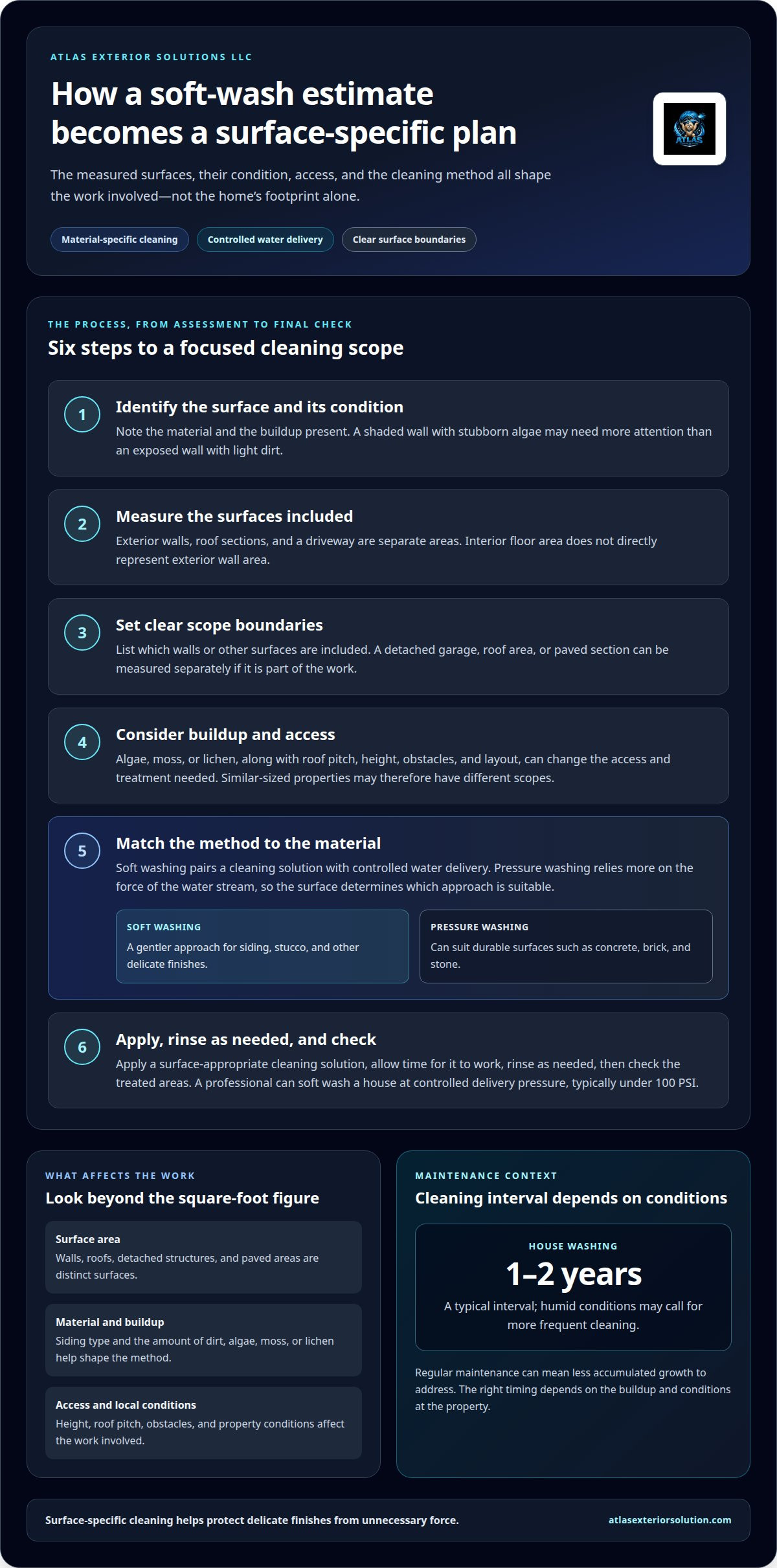
A professional can soft wash a house using controlled delivery pressure, typically under 100 PSI. Equipment may include low-pressure pumps, application hoses, cleaning solutions selected for the surface, and rinse water.
Exterior cleaning estimate factors
An exterior-cleaning estimate reflects the surfaces being cleaned, their condition, access, and the method required. For a Bucks County home, a steep roof with heavy moss involves different access and treatment needs from a lightly soiled, single-story exterior. Siding material and the area to be cleaned matter, too. These factors explain why two homes with similar footprints may need different scopes of work.
Driveway and concrete cleaning depends on the area, stains, and buildup, while commercial exterior cleaning may cover larger or varied surfaces. A concrete driveway with embedded grime needs a different plan from a building façade with algae. Bundling exterior work can coordinate cleaning across surfaces, but the method must still suit each material.
Cleaning frequency and maintenance needs
A house typically needs soft washing every one to two years, with humid conditions potentially calling for more frequent cleaning. The interval affects how much algae, dirt, and other buildup can accumulate between visits. Regular maintenance can mean less accumulated growth to address, while a longer gap may require more attention to heavily soiled areas. This helps homeowners plan upkeep over time without treating every season as a reason to wash.
House washing and gutter condition can be considered together when planning exterior maintenance. Debris near roof edges or shaded siding, for example, can point to areas needing attention, while a driveway remains a separate surface with its own cleaning needs. Considering these observations together helps keep the maintenance plan focused and suited to each material.
How Soft Washing Works
Soft washing combines a cleaning solution with controlled water delivery to clean suitable exterior surfaces. The measured surface and local conditions help determine the service scope, not a home’s floor plan.
A professional first identifies the material and buildup, then selects an appropriate cleaning method. The cleaning solution is applied to the surfaces included in the scope, allowed time to work, and rinsed as needed. The operator then checks the treated areas. This planned sequence helps prevent missed sections and keeps the process focused on the surface being cleaned.
Square footage can refer to different areas across one property. A home’s interior floor area does not directly represent its exterior walls, and roof sections have separate dimensions. A driveway is measured as its own paved surface. For example, the scope for cleaning house siding should distinguish wall surfaces from a detached garage or roof area if those areas are not included.
How the service scope is determined
The service scope connects the measured surface to the work involved, helping you understand what the cleaning covers. The professional identifies the included walls or other surfaces, then considers material, buildup, and access. A home with several exterior sections may need separate measurements rather than one figure based only on its footprint.
Clear boundaries matter. The scope can list siding separately from a detached structure or paved area, so you can see exactly which surfaces are included.
How local conditions shape the work
Local conditions can affect the work involved in soft washing. An estimate from another state may not reflect the surfaces, access, or conditions a professional encounters in Bucks County.
Property conditions also affect the work involved in each measured area. A shaded wall with stubborn buildup may need more attention than an exposed wall with light dirt. When reviewing the proposed scope, check that it identifies the surfaces, access, and cleaning method rather than treating every square foot as identical.
Soft Washing vs. Pressure Washing
Soft washing and pressure washing remove exterior buildup in different ways. Soft washing uses a cleaning solution applied with controlled water pressure, while pressure washing relies more on the force of the water stream. The material determines which method is appropriate: a technique suited to concrete may be too forceful for a painted or delicate surface.
For siding, stucco, and other delicate finishes, soft washing cleans without directing a forceful stream at the surface. The cleaning solution and application are suited to the material and buildup. This matters around seams, trim, and older finishes, where high pressure can drive moisture into gaps or wear a coating. Careful rinsing clears loosened residue without unnecessary force.
Pressure washing can be appropriate for durable surfaces such as concrete, brick, and stone. A driveway with ground-in dirt, for example, can require a different approach from a house wall with organic film. The operator adjusts the equipment and technique for the surface, rather than using one setting across the property. Keeping these methods distinct helps avoid surface abrasion or damage to delicate finishes.
Access and setup also shape how the work is done. Upper siding may require different access than a wide paved area, which calls for a different working pattern. Obstacles, surface layout, and stain locations affect preparation and time on site. These practical details influence the work involved, whether a surface calls for soft washing or pressure washing.
The work scope and surface determine the cleaning method. Using stronger pressure just to speed up work on painted wood, for example, could put the finish at risk. The cleaning plan should prioritize protecting the material over speed.
When several surfaces need attention, consider each one separately. A property might have concrete steps, brick edging, and painted siding, each requiring a different approach. The estimate and work scope should identify which areas receive soft washing and which receive pressure washing. That distinction clarifies the planned work and how it suits the materials around your home.
Cleaning Siding and Removing Algae
Vinyl, fiber cement, painted wood, and stucco each respond differently to water and cleaning solutions. Matching the method to the siding helps remove organic growth without forcing water behind panels or wearing the finish. Soft washing typically uses delivery pressure under 100 PSI, while the cleaning solution does much of the work on algae and mildew.
Algae often appears as a green film on shaded siding, while mold and mildew can form dark or blotchy patches. Moss and lichen are more common on roofs, where they attach to shingles or other roofing surfaces. The extent and location of growth, and how firmly it clings, affect the work required. Heavy growth may call for careful, targeted treatment rather than a forceful spray that could damage siding or loosen roofing material.
For siding, a professional considers the material, finish, age, and condition before choosing a cleaning solution. Stucco’s texture can hold residue, while seams in vinyl panels call for controlled rinsing. Painted wood also needs care suited to its coating and any worn areas. These differences help determine the preparation, treatment, and rinsing the cleaning plan requires.
Roof cleaning uses soft washing, not power washing asphalt shingles. The Asphalt Roofing Manufacturers Association advises against using a power washer to remove algae from asphalt roofs because high-pressure systems can damage roofing. Moss and lichen may need more targeted treatment than surface algae. Roof pitch and the location of growth also affect access and safe application.
Zinc strips near a roof ridge can help slow algae regrowth as rain runs across the roofing. They are preventive, not a substitute for cleaning existing growth. Their placement and compatibility with the roof material matter, particularly if the roof warranty specifies approved methods. Account for these conditions before adding preventive measures.
An estimate for removing algae, moss, or lichen reflects the surface, extent of growth, access, and treatment needed. A small patch on accessible siding differs from widespread growth across a steep roof. This helps explain why the treatment scope can vary between properties, even when the visible problem seems similar. A surface-specific approach protects finishes while addressing buildup.
Residential Soft Washing Services
Residential soft washing is planned around the exterior areas that need attention, not simply the home’s floor plan. A house wash may include siding, trim, soffits, and other suitable surfaces. The scope can distinguish attached features, such as a porch ceiling, from a detached garage. Clear boundaries help you understand which parts of the property are included and how the cleaning plan fits your home.
Before work begins, the professional reviews the surface condition and access. Loose trim, damaged caulking, or an existing finish issue can affect how an area should be cleaned. A faded section of painted wood, for example, may need different care from intact vinyl siding. Identifying these differences early helps protect vulnerable areas and avoids applying the same treatment indiscriminately.
House washing also involves practical preparation around the property. Close windows and doors, move vehicles, and secure loose items before cleaning. Exterior outlets, light fixtures, and doors are considered during application and rinsing. These details matter because water can reach seams and openings, particularly around older windows or areas with worn seals.
Roof cleaning has its own scope and is not automatically part of every house wash. Roofing material, visible growth, access, and any warranty considerations inform the plan. A home with shingles and a separate metal porch roof, for example, has surfaces that should be assessed independently. Keeping roof and wall work distinct makes the planned treatment easier to understand.
Property owners can also clarify whether a detached structure, deck, or fence belongs in the requested scope. A house wash focused on siding does not automatically include those separate surfaces. Identifying priorities helps the professional allocate attention to the areas you want cleaned, while keeping each surface’s needs in view. Insurance documentation and a clearly described work area provide added clarity before the service begins.
A professional house washing plan should describe the included surfaces and account for their condition, access, and surrounding fixtures. For example, a home with a porch, decorative trim, and a detached garage benefits from a scope that names each area. This makes it easier to understand how the exterior will be treated and what falls outside the planned work.
Atlas Exterior Solutions LLC
Atlas Exterior Solutions LLC helps homeowners and property managers in Bucks County choose exterior cleaning suited to their surfaces and goals. If siding, roofing, or outdoor areas need attention, start by identifying what needs cleaning and which method suits each material. A house exterior, paved area, and commercial property each require an approach suited to the surface.
For homes in Newtown, Yardley, Richboro, Langhorne, Levittown, and nearby Bucks County communities, Atlas Exterior Solutions provides Soft Washing and House Washing for suitable exterior surfaces. The scope can account for siding material, visible buildup, access, and the areas you want included. Separating these details clarifies the work and keeps the cleaning plan focused on your property rather than a generic square-foot assumption.
Commercial Pressure Washing serves businesses that need to maintain exterior areas. Surface type and the areas in scope guide the approach, so durable pavement and building exteriors can be considered separately. For pavers, Paver Restoration treats the outdoor surface as its own maintenance project. Considering related needs together can help property owners plan exterior work while keeping the method for each surface clear.
Atlas Exterior Solutions LLC can help you identify the service suited to your property’s condition. A homeowner with algae on siding may need house washing, while a property manager with worn pavers may need restoration. If a project includes several exterior surfaces, describe their materials and condition to establish a useful scope. The goal is to match the work to each surface, protect the property, and avoid treating every area alike.
To get started, note the areas needing attention, such as siding, pavers, or commercial exterior surfaces, and describe any visible buildup or access concerns. This helps focus the conversation on your property’s needs. Contact Atlas Exterior Solutions LLC to discuss your exterior cleaning project and request a free, no-obligation estimate.
Frequently Asked Questions
Which areas are included in a house soft wash?
The work depends on the exterior surfaces and their condition. A home with vinyl siding and light dirt needs a different scope from a property with several siding types and heavy organic buildup. Ask which areas are included and how the cleaning plan accounts for the home’s materials and buildup.
Which surfaces are suitable for soft washing?
Soft washing is a suitable choice when delicate exteriors need cleaning without forceful water pressure. Vinyl siding, stucco, and roofing are cleaned with soft washing, not pressure washing. The right method depends on the surface and the buildup you want removed. A suitable method helps protect the finish, while an unsuitable one may cause damage instead of solving the problem.
How does house size affect the soft-washing scope?
A larger home can have more exterior wall area to clean, even if its footprint looks similar to that of a smaller home. Architectural features matter, too: gables, dormers, porches, and attached garages add surfaces and can affect access. Two houses with the same number of floors may still need different scopes if one has more exterior detail or harder-to-reach sections.
Does soft washing damage shingles?
Soft washing is the appropriate method for roof shingles; high-pressure washing can damage them. The Asphalt Roofing Manufacturers Association advises against using a power washer to remove algae from asphalt roofs. A professional considers shingle condition, visible growth, and access before cleaning. This surface-specific approach avoids directing forceful spray at the roofing, which can dislodge granules or harm shingles.
How can a two-story house affect the soft-washing scope?
A two-story layout can affect access to upper siding, gables, and roof edges. An exterior with steeply placed dormers, for example, may require more setup and careful positioning than a simple wall. The professional considers reach, safe equipment placement, and the surfaces included in the work. The number of stories is one factor; the home’s shape and access conditions also influence the scope.
What details determine the soft-washing scope for a house?
The home’s stated square footage alone does not establish the scope of a soft wash. Homes of the same size can have different siding materials, exterior layouts, or levels of buildup. A one-story home with simple walls differs from a two-story home with dormers and a covered porch. The cleaning plan should reflect the surfaces being cleaned, their condition, and access requirements.
How is exterior area considered when planning a soft wash?
Measured area is only one part of the cleaning plan. Exterior wall area differs from interior floor area, and roofs or detached structures may be considered separately. Material, access, and buildup can also change the work required for each surface. Ask for the scope to distinguish walls, roof sections, and other included areas.
What should a soft-washing plan cover for a 1,500- to 2,500-square-foot house?
The home’s stated square footage alone does not establish the scope of a soft wash. Homes of the same size can have different siding materials, exterior layouts, or levels of buildup. A one-story home with simple walls differs from a two-story home with dormers and a covered porch. The cleaning plan should reflect the surfaces being cleaned, their condition, and access requirements.
Disclaimer
The information on this blog is for general informational purposes only. Results may vary based on surface type, condition, and cleaning methods. Always follow manufacturer guidelines and use proper safety precautions. Atlas Exterior Solutions is not liable for any damages or losses resulting from the use of this information.


