

Need a free estimate for paver sealing in Bucks County? A paver sealing company in Bucks County should assess the pavers’ condition, cleaning and preparation needs, and suitable treatment before outlining the work. A clear estimate helps you understand what the project includes and whether restoration suits your hardscape.
It’s reasonable to want refreshed-looking pavers without overlooking stability or future upkeep. Sealing isn’t the right step for every surface, so the pavers’ material, condition, and jointing all matter when choosing a service.
This guide explains how to compare paver sealing services, what to expect when requesting an estimate, and which details can shape the recommended work. You’ll also learn how paver restoration can renew existing hardscape and how routine cleaning and maintenance can help preserve its appearance after sealing.
Key Takeaways
- Learn how cleaning, repairs, jointing material, and sealing work together to restore existing pavers.
- See what a clear estimate should explain about surface condition, preparation, and the recommended service.
- Understand why sealed pavers need ongoing care and what routine maintenance can help preserve their appearance.
- Explore how sealing considerations differ for driveways, patios, and commercial paved areas.
- Find out what to look for in a local service and when paver restoration may be a practical next step.
Paver maintenance and repair resources
Good paver maintenance starts with identifying the surface problem before choosing a repair or treatment. Cleaning, resetting loose units, and addressing cracks can help restore existing hardscape without replacing it.
Restoration can revive the color, stability, and appearance of existing pavers, making it an alternative to replacing an entire hardscape. Inspect for faded areas, loose units, weeds, stains, and low spots. For example, a patio with intact stones but uneven sections may need targeted resetting rather than full replacement. Match each repair to the material and its condition.
Sunken or shifted pavers need attention before sealing because a coating won’t correct an uneven base. A repair typically involves lifting affected units, examining the base, correcting and compacting it, then resetting the pavers evenly. Refill the joints with suitable jointing material to help hold the stones in place. A low edge beside a driveway, for example, may indicate movement that needs resetting before surface treatment.
Distinguish paver sealing from asphalt sealcoating. Pavers are individual units with joints, while sealcoating is a treatment for asphalt. For cracked pavers, assess whether a unit needs resetting or replacement; sealant alone won’t repair a structural crack. Some paver manufacturers state that sealing can void a paver warranty, so review the applicable terms before choosing a coating.
Cleaning and Drying Before Sealing
Preparation includes removing dirt, organic debris, and stains, then cleaning without dislodging jointing material or scuffing the pavers. After cleaning, let the paving and joints dry fully before applying sealant, since trapped moisture can affect the finish. A shaded patio, for example, may need longer to dry than a sunny driveway. Surface condition, shade, and recent rain all affect readiness.
Avoiding Improper Sealing Risks
Haze can appear when sealant is applied unevenly, over residue, or before pavers are fully dry. Excess product may leave a slick surface, while unsuitable cleaning or application methods can abrade the surface or disturb jointing material. A glossy patch beside a dull area, for example, can signal uneven coverage. Assessing the paver material, cleanliness, and joints helps reduce these risks.
Choosing Suitable Weather Conditions
In Bucks County, choose a mild, dry period with stable conditions rather than a rainy day or one when the paving is damp. The surface must be fully dry, and conditions must suit the sealant as it sets. Check the forecast and shade across the work area before scheduling. For example, postpone work if rain is expected before the cleaned pavers can dry.
rather than attempting work in unsuitable conditions. For asphalt walkways, annual power washing is recommended, and professional sealcoating is a regular maintenance service. These asphalt measures are separate from paver care.
Customer reviews and estimates
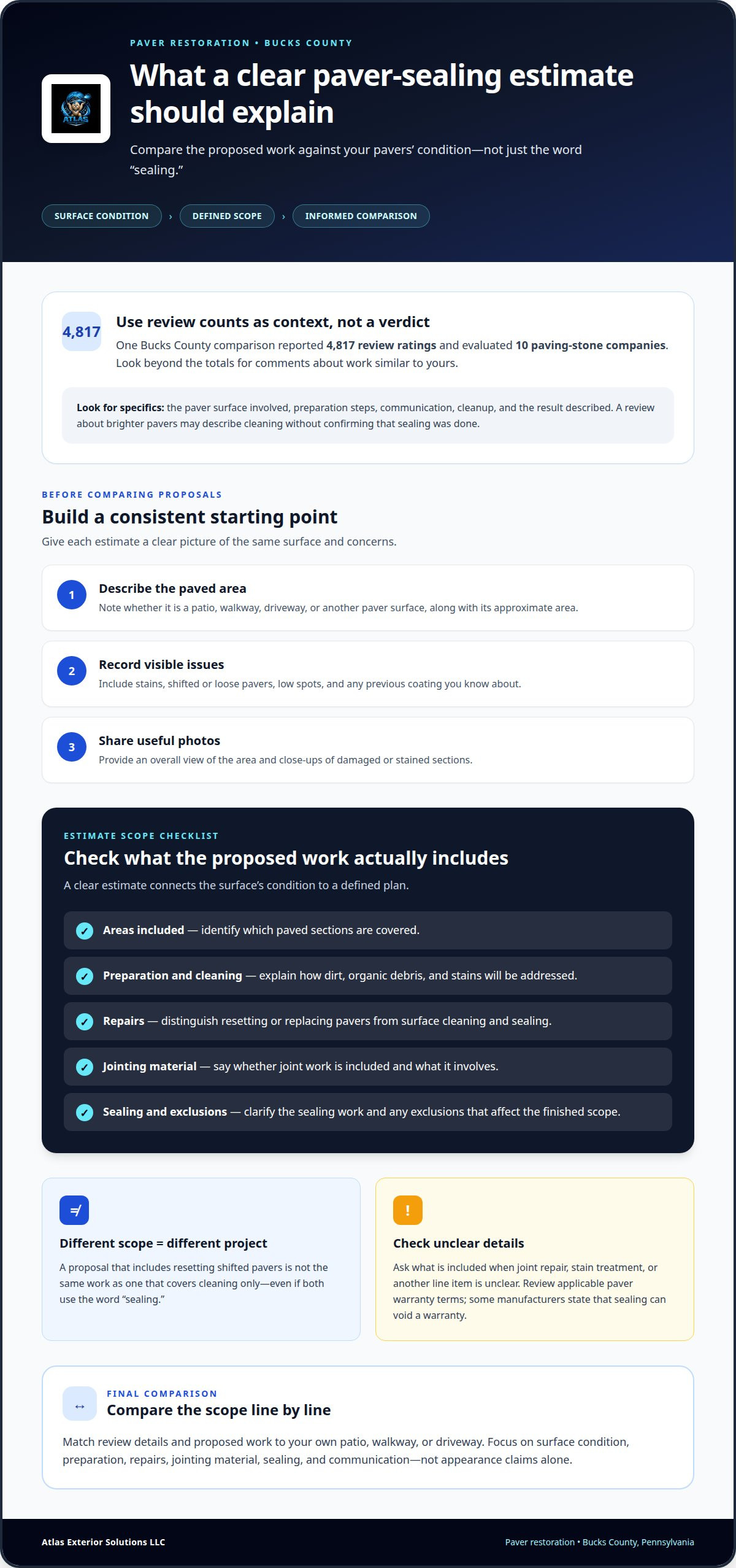
Customer reviews can reveal how a paving project was handled, while a written estimate shows what the proposed work covers. One Bucks County comparison reported 4,817 review ratings and evaluated 10 paving-stone companies. Use those figures as context, then focus on comments and estimate details that match your own pavers and project.
Read reviews for specific descriptions, not praise alone. A useful review might explain how a crew handled a stained patio, protected nearby surfaces, or communicated preparation steps. Look for recurring themes, such as careful cleanup or clear updates. One detailed account can help, but it doesn’t establish that every project followed the same process.
Separate feedback about cleaning from feedback about sealing. A reviewer may describe brighter pavers without saying whether the surface was sealed, while another may mention joint repairs or lingering haze. A driveway review that identifies the surface, work performed, and final result, for example, gives more context than general praise. Note whether the project resembles your patio, walkway, or driveway.
A useful estimate turns the site condition into a defined scope. It should describe the areas included, preparation, cleaning, repairs, jointing material, sealing, and any exclusions that affect the finished work. If a low section needs resetting, the estimate should distinguish that repair from surface cleaning. Ask for clarification if an item such as joint repair or stain treatment is unclear.
Before comparing estimates, organize the project details in one place. Record the surface type, approximate area, visible stains, shifted pavers, and any prior coating you know about. Share clear photos of the whole area and close-ups of damaged sections. This gives each estimate a more consistent starting point and helps explain why recommendations may differ.
- Review relevance: Compare comments about similar paver surfaces and work.
- Scope clarity: Identify which preparation, repairs, and sealing steps are included.
- Communication: Note whether reviews describe timely explanations and a clear process.
- Project fit: Match the estimate to your surface condition, not just its final appearance.
Keep the estimate and review notes together, then compare each scope line by line. If one proposal includes resetting shifted pavers and another covers cleaning only, they’re different projects, even if both use the word “sealing.” A clear comparison helps you understand the planned work before choosing a next step.
Ongoing maintenance after sealing
Sealing doesn’t remove the need for routine care. Sealed pavers need regular ongoing sealing to maintain their appearance, while sweeping and prompt cleanup help limit buildup between treatments. Track the surface’s condition over time instead of relying on a fixed schedule. Paving material, foot traffic, shade, drainage, and weather exposure all affect how quickly its appearance changes.
Start with a visual inspection after removing leaves, soil, and other debris. Look for uneven color, worn-looking areas, weeds in joints, and shifted pavers. Compare high-traffic sections, such as a driveway entrance, with less-used edges. Differences in appearance can help show where routine cleaning or a closer assessment is needed.
Sweep with a soft-bristle broom to clear grit before it accumulates between pavers. For routine dirt, rinse with water and avoid directing force into the joints. Strong pressure can disturb jointing material or abrade the surface, especially on delicate paving. Follow the sealant’s care directions for cleaning products and curing restrictions, which depend on the product used.
Clean spills and organic stains promptly. Fallen leaves, for example, can leave tannins on paving, while soil tracked onto a patio can settle into textured surfaces. Lift debris rather than scraping it across the stones. Use a surface-appropriate cleaner and test it in a discreet area first. Avoid mixing cleaning products, which can damage the finish or change the pavers’ appearance.
Check joints and drainage after heavy rain or routine outdoor use. Missing jointing material, standing water, or a newly uneven section can signal that the paving needs more than surface cleaning. Address the underlying issue before applying more sealant. A coating can’t reset a shifted paver or correct water collecting in a low spot.
Plan maintenance around actual wear, not a promised number of seasons. Sun exposure, vehicle use, shade, and repeated wetting can affect how a sealed surface looks. When the finish appears uneven or no longer meets your upkeep goals, assess whether cleaning, repair, or resealing is appropriate. Don’t add a fresh coat over trapped dirt or moisture.
A simple seasonal routine makes changes easier to spot: clear debris, rinse gently, inspect joints, and note stains or movement. In Bucks County, pay particular attention after wet weather and periods of falling leaves. Keep a brief record of care and visible changes. These observations help distinguish ordinary dirt from wear or a repair need, so maintenance addresses the cause rather than masking it.
Paver driveway, patio, and parking lot sealing
Driveways, patios, and parking areas face different traffic, drainage, and maintenance demands. A suitable sealing plan starts by identifying the paving material, its condition, and how people or vehicles use it. For a property in Bucks County, also consider which areas need to remain accessible during the work.
For a residential or commercial project, make sure the written proposal describes the work and who will perform it. Request details about the areas included, preparation method, repairs, and sealant application. A shared parking area, for example, may need a sequence that keeps some access open while another section is treated. Clear documentation helps everyone understand the scope.
Paver sealing services may include surface cleaning, joint maintenance, paver resetting, and sealant application. The scope depends on the site: a patio may need stain treatment, while a driveway may need shifted units addressed before coating. A parking area may also require planning around vehicle access and foot traffic during the work.
For a paver driveway, inspect turning areas, entrances, and places where tires repeatedly pass. These zones may show wear or movement sooner than protected edges. The work plan should address pavers and joints as a system, not just apply a finish over visible dirt. A coating can’t correct a low spot or replace damaged units.
Patios need a different assessment. Food spills, leaf tannins, shade, and furniture movement can affect their appearance. Identify natural stone or manufactured pavers before choosing a cleaning approach, since material-specific cleaning helps avoid abrasion. A shaded patio with organic staining, for example, may need different preparation from a sunny, lightly soiled walkway.
Commercial parking areas have additional access needs. Mark the section to be treated, account for entrances and pedestrian routes, and plan how vehicles will stay off the surface during application and setting. Depending on the layout and scope, a phased work plan may help keep access available.
- Driveway: Assess tire paths, entrance areas, joints, and movement.
- Patio: Identify the material and note shade, stains, and furniture use.
- Parking area: Plan treated zones, vehicle access, and pedestrian routes.
Keep paver sealing distinct from asphalt sealcoating. Pavers are separate units with joints; asphalt is a continuous surface. A cracked asphalt walkway or parking lot needs an asphalt-specific repair plan, not paver sealant. For any paved area, compare the proposed cleaning, repairs, and finish with the surface type and its daily use.
Before work begins, the written scope should identify the areas included, preparation method, repairs, sealant application, and access arrangements. This detail helps homeowners, property managers, and business operators understand how the driveway, patio, or parking surface will be handled.
Finding paver sealing companies in Bucks County
The right company for your property is one whose documented work matches your surface and project needs. Reviews can help you assess a company, but a rating alone doesn’t show whether it handles your paver material, repairs, and preparation carefully. A paver sealing company in Bucks County should explain how its proposed work fits your paving.
Look for reviews describing work in communities such as Newtown, Yardley, Richboro, or Langhorne. A homeowner’s account of patio work may be more relevant than a review about an unrelated exterior service. Read for details about communication, preparation, cleanup, and how concerns were handled, rather than relying on context-free praise.
To compare estimates, share the same project details with each company. Include the surface type, approximate area, visible stains, loose or sunken pavers, and any previous sealing. A Yardley driveway with shifting units, for example, needs a different scope from a level patio that needs cleaning. Consistent details make estimates easier to assess.
Review each written scope for the actual work, not just the word “sealing.” It should explain whether cleaning, repairs, jointing material, and sealant application are included. Note exclusions and access limits. If one estimate includes resetting uneven pavers and another covers surface treatment only, they describe different outcomes. A paver sealing company in Bucks County should make those distinctions clear in its proposal.
Check whether the company explains how its cleaning approach suits the paving material. Soft washing uses low-pressure water with cleaning solutions, while pressure washing uses pressurized water to remove buildup. Neither method suits every surface. Delicate natural stone or loose jointing material calls for careful, material-specific cleaning rather than aggressive pressure.
- Relevant experience: Look for examples involving your surface type and similar repairs.
- Clear scope: Compare preparation, cleaning, repairs, sealing, and exclusions.
- Review detail: Prioritize specific customer experiences over a rating alone.
- Communication: Notice whether explanations address your property’s concerns.
A sound choice balances relevant feedback with a clear plan for your pavers. If your project centers on restoring existing paving, compare the proposed preparation and repair steps before deciding. A local estimate should describe your property’s needs, not rely on a generic description that could apply anywhere in Bucks County.
The best-rated choice is not necessarily the one with the highest score; favor contractors with detailed local reviews for similar paver work and a proposal that clearly defines the work.
Atlas Exterior Solutions LLC: Paver Restoration
Atlas Exterior Solutions LLC provides Paver Restoration for property owners in Bucks County. Consider the service when a patio, walkway, or driveway has weathered, lost visual appeal, or needs a restoration plan suited to its condition.
Restoration works with the hardscape already in place rather than assuming replacement is necessary. The right approach depends on the paver material, visible wear, and any areas needing repair. For commercial properties, restoration can also help address paved areas that affect the site’s appearance and upkeep.
If you’re considering sealing, discuss how it fits into restoration and ongoing maintenance. Contact Atlas Exterior Solutions LLC to talk about your pavers and request a free estimate.
Take the Next Step Toward Restored Pavers
Choosing a paver sealing company in Bucks County involves more than appearance. Describe what you want to improve, whether that means refreshing worn pavers, addressing a problem area, or planning care for a paved space. Clear details about the surface and its condition can help shape a useful project discussion.
Atlas Exterior Solutions LLC offers Paver Restoration, Soft Washing, and Commercial Pressure Washing. The right approach depends on the material and project. If your pavers need attention, share what you’ve noticed and which outcome matters most to you.
A thoughtful plan can help you move forward with confidence and care for the paved areas you value.
Frequently Asked Questions
NEED A FREE ESTIMATE?
Yes. Atlas Exterior Solutions LLC provides free, no-obligation estimates. To make the estimate useful, describe whether the surface is a driveway, patio, or walkway, and mention access limits, existing coatings, and areas needing special attention. Photos can provide context, but note whether the paving was wet when you took them. This helps focus the discussion on the property’s condition without treating photos as a substitute for an assessment.
So How Do You Find The Good Ones?
Look for clear explanations connecting the proposed method to your pavers. A useful response should address how the surface material, existing finish, and intended use affect the work. For example, a company should explain why a natural-stone entry needs a different approach from a concrete parking area. Specific, understandable answers help you judge whether the recommendation fits your property.
How to Choose Among Paver Sealing Companies in Bucks County PA
Atlas Exterior Solutions LLC provides Paver Restoration for residential and commercial properties in Bucks County. The service may suit a homeowner with weathered patio pavers or a property manager maintaining a paved common area. Share the property location and hardscape type so the project discussion reflects the actual site. Recommended restoration work depends on the paving and its condition.
How to Compare Paver Sealing Contractors and Warranties
Read warranty language for its coverage, exclusions, duration, and required care. A product warranty and a contractor’s workmanship coverage address different responsibilities, so keep their terms separate. Note, for example, whether coverage applies to peeling, uneven appearance, or application defects, and what maintenance could affect it. Save the written terms and product information with your project records for future reference.
How Long Does Paver Sealer Last and When to Reseal?
Sealer longevity varies with the product, paver material, exposure, and use, so there’s no reliable interval for every surface. Watch for changes such as inconsistent appearance or areas that no longer look protected, then assess the finish before adding another coat. A covered patio and a driveway exposed to regular traffic can age differently. Follow the product’s care guidance when planning maintenance.
Questions to Ask Before Hiring a Paver Sealing Company
Ask who will move patio furniture or vehicles, what access the crew needs, and how nearby doors, drains, and walls will be protected. Clarify how the work area will be left and what conditions must be met before normal use resumes. For a shared property, ask how residents or customers will be informed about temporary access changes. These details help prevent avoidable disruption during the project.
Disclaimer
The information on this blog is for general informational purposes only. Results may vary based on surface type, condition, and cleaning methods. Always follow manufacturer guidelines and use proper safety precautions. Atlas Exterior Solutions is not liable for any damages or losses resulting from the use of this information.


