

Failing sand between pavers (jointing material) allows weeds to invade and stones to shift across Bucks County patios. Prompt Paver Resanding paired with paver restoration (material-specific cleaning) stabilizes your hardscape and prevents freeze-thaw damage during harsh Pennsylvania winters.
Key Takeaways: Effective paver resanding requires completely removing old joint material and applying polymeric sand to a dry surface to prevent structural shifting and weed growth.
- Maintain your hardscape on a 3 to 5 year cycle to prevent freeze-thaw damage.
- Avoid simple resanding if pavers are rocking or sunken because the sub-base requires re-leveling.
- Use polymeric sand for high-traffic driveways and main patios to ensure maximum joint durability.
- The article's four-step process emphasizes that joints must be totally dry before sweeping in sand.
Spot These 3 Signs Before Your Bucks County Patio Shifts
You face a clear choice on a Bucks County patio: refresh failing joints in time, or watch freeze-thaw open deeper gaps each winter. Here is a short guide for three common situations you may already recognize:
- Deep empty joints after a heavy storm: clear the seams fully, then install fresh jointing material rather than topping off what washed out.
- Weeds returning in the same cracks: the old barrier has failed, so remove decayed filler before any new sand between pavers goes in.
- Stones that rock underfoot: stop surface-only fixes and have the joints (and base, if needed) restored so the hardscape can lock again.
Homeowners often hesitate, wondering if they can dump fresh sand over an old foundation. Pouring new material over compromised, washing-out joints only traps organic debris and accelerates freeze-thaw damage.
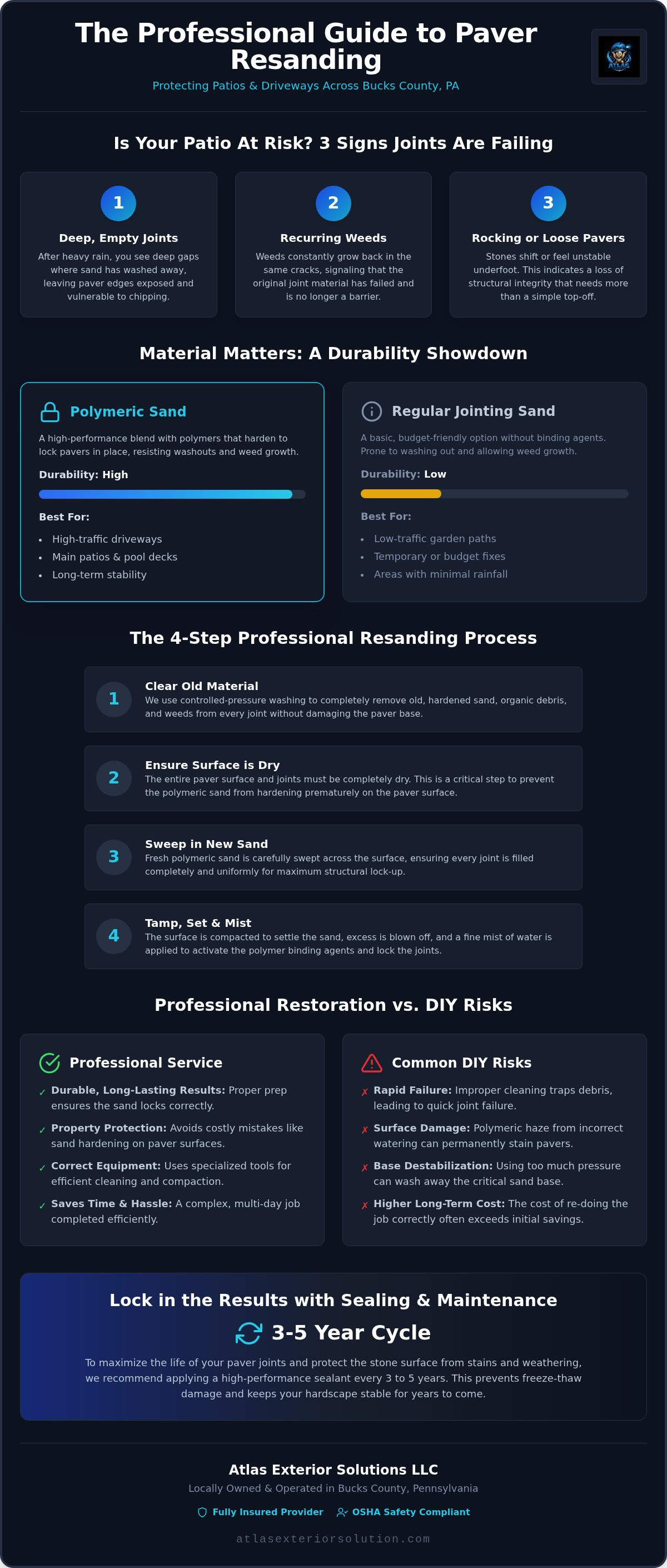
First, look for deep gaps between stones after severe rainstorms. Second, watch for recurring weeds, which signal that the original barrier has failed. Third, notice any loose or rocking pavers underfoot.
Tossing raw material onto a failing patio is like painting over active rust. You must remove the decayed foundation completely before adding new material. A professional paver restoration service cleans the joints out fully to protect your hardscape investment.
Tip: Check for washouts after heavy rainstorms; empty joints leave stone edges vulnerable to chipping.
Polymeric Sand Locks Joints Longer Than Regular Jointing Sand
If your driveway sheds sand after every downpour, the joint product itself may be the weak link. Polymeric sand holds up longer than regular jointing sand on a driveway or patio. Standard sand between pavers washes away quickly during heavy rainfall. Specialized polymer formulas bind sand particles together through additive technology; the compounds form long molecular chains that harden upon hydration. Polymeric options lock joints tightly to resist washouts and prevent weed growth.
Polymeric blends suit high-traffic driveways that need strong, stable joints. Regular jointing sand works best for budget-conscious homeowners tackling low-traffic garden paths.
| Sand Type | Durability Level | Best Application |
|---|---|---|
| Regular Jointing Sand | Low to Moderate | Low-traffic walkways |
| Polymeric Sand | High | Driveways and main patios |
Choosing polymeric sand protects your investment by cutting how often you repeat maintenance. Locked joints stop structural shift and protect against freeze-thaw damage throughout Bucks County winters. Proper installation demands thorough surface prep first. Schedule a professional pressure washing visit to clear old debris before adding fresh jointing material. Quality materials now support longer-lasting results for your outdoor living space. Reach out for a complimentary home estimate when you are ready to compare options.
How Paver Resanding Works When You Prep the Joints Right
Skipping prep is the fastest way to watch new joint sand fail before the season ends. Removing old sand between pavers requires controlled pressure washing to clear stubborn, hardened debris without shifting the underlying base.
High pressure can blast away the stabilizing base beneath your hardscape. Gentle soft washing removes organic growth safely before joint installation.
- Clear old material: Wash out hardened jointing material completely from every seam.
- Dry the surface: Allow the entire patio to dry totally to prevent premature hardening.
- Sweep in sand: Spread fresh polymer mix across the stones until joints fill.
- Tamp and set: Compact the surface, sweep away excess, and mist with water.
Hard material left behind caused new sand to fail quickly in past jobs. On one property, exterior cleaning on roof sections, fencing, siding, and house surfaces came first so joints could be set on a clean, stable hardscape; the siding read as evenly clean, and full cleanup followed at once. That same discipline (clear the failure, then rebuild the joint) is what makes Paver Resanding hold through Bucks County weather.
If you notice shifting blocks, professional paver restoration help prevents major structural repairs later. Ask for a free paver restoration quote when loose stones show up underfoot.
Why Professional Restoration Outweighs DIY Sanding Costs
A weekend bag of sand looks cheap until a poor bond forces you to strip the surface and start over. Choosing between a weekend project and hiring experts comes down to total project value.
Homeowners often underestimate the technical steps required to lock jointing material into place. Skipping proper cleaning before applying sand between pavers leads to rapid weed growth and early failure.
DIY attempts usually require renting heavy equipment and buying specialized sand. If application goes wrong, removing hard sand from the top of your patio requires costly fixes. Hiring an expert removes those structural risks. Homeowners who need reliable paver restoration in Bucks County get durable results without giving up their weekends.
For steadier long-term protection, this restoration Overview covers full surface care backed by real warranties. Gary noted his house siding looked clean, the work was completed professionally, and it came with a solid warranty. That same standard of finish and warranty-backed work is what you want on paver joints, not only on siding.
Among Atlas Exterior Solutions LLC's Google reviews, one homeowner (5★) wrote:
"I live in Marlboro NJ and I was recommended by Atlas Exterior Solutions to clean my siding and the experience was amazing because they walked me through step by step and the service was professional and they far exceeded my expectations! Thank you Atlas"
The walkthrough, professional finish, and clear communication in that exterior cleaning job mirror the process you should expect when joints are opened, cleaned, and reset the right way.
When DIY Resanding Fails: Structural Re-Leveling Comes First
Fresh sand cannot rescue a patio that has already sunk. Pouring fresh sand between pavers fails when the underlying sub-base settles unevenly. Sunken blocks and deep dips require full sub-base reconstruction before sweeping in new joint filler.
Sunken blocks often get treated like surface issues. Adding joint filler over a shifting sub-base will not hold. Winter moisture enters the gaps, expands during severe frosts, and accelerates structural sinking.
Uneven surfaces create tripping hazards that simple joint maintenance cannot fix. Pouring new material into low spots wastes your money because loose grains wash away during the next heavy storm. When base layers shift, lifting the affected sections and rebuilding the gravel foundation remains the only lasting fix.
Atlas Exterior Solutions LLC restores patios and driveways for homeowners throughout Bucks County, including Newtown and Yardley. Base-layer inspection helps prevent recurring structural failure and freeze-thaw damage. Contact the team for a free estimate on complete paver restoration and repair when dips and rocking stones point past the joints alone.
Seal on a 3–5 Year Cycle to Hold Your Joints
Open joints and bare sand invite the next weed cycle; a timed seal is how you close that door. You should reapply fresh sand between pavers and apply a protective sealer every three to five years.
Heavy rains and winter freeze-thaw cycles in Bucks County constantly wash away unsealed joint sand. On one project the crew power washed a house and stone patio, explained the full process, and coordinated timing with the homeowner. A specialist washed the stone patio thoroughly, kept communication clear, and restored the outdoor area safely. Properly setting joint sand before sealing limits weed growth and protects your investment.
As a locally owned and operated small business, Atlas Exterior Solutions LLC offers complete paver restoration for homeowners in Yardley and nearby communities. Request a free estimate from the fully insured local specialist team when your three-to-five-year window is due.
Tip: Always ensure jointing material cures fully for 24 hours before applying a breathable sealant.
Frequently asked questions
Can I put new polymeric sand over old polymeric sand?
You should never place new sand between pavers directly over old, compromised material. Proper paver resanding requires clearing out the deteriorated joints first so the new product can bond securely and block deep weed growth. Skipping this step leads to rapid joint failure, flaking, and severe washouts during hard rainstorms. A locally owned and fully insured specialist will clean the joints completely before reset so your Bucks County hardscape gains dependable structural strength.
How often do pavers need to be resanded?
Most hardscape surfaces need fresh joint installation every three to five years depending on local weather. Paver restoration restores stability before shifting stones cause permanent structural damage across your walkway or patio. Freeze-thaw damage during harsh Pennsylvania winters often speeds up joint breakdown, so routine checks matter for long-term safety. Ask for a free estimate when you want the joints inspected and your investment kept protected.
Can I Use Regular Sand Between Pavers?
Standard play sand or beach sand lacks the binding polymers that lock patio units together. Unbound particles wash away easily under heavy rain, leaving deep gaps that invite weed seeds and insect infestations. High-quality joint compounds cure firmly to resist washouts while staying flexible enough to handle ground movement. Professional-grade materials keep outdoor spaces safe, stable, and visually consistent for years.
How much does it cost to re-level a paver patio?
The total investment depends on project size, total square footage, necessary ground preparation, and how many hardscape units have sunk. Surface repairs need varying labor and material, so a personalized consultation is the practical way to plan your budget. LLC to request a free quote matched to your property.
When Should You Resand Your Patio Pavers?
Schedule service when you notice empty joints, severe weed growth, or loose stones moving underfoot. Addressing failing joints early prevents costly shifting, surface erosion, and unsafe tripping hazards across your driveway or back patio. Applying a high-performance sealant after filling the gaps seals out moisture and preserves the look of your stone. Request a free quote from the experienced Bucks County team when those warning signs appear.
Protecting Your Hardscape Investment
Your decision path stays the same from the first gap you spot to the last sealed joint: clear failed material, rebuild only on a sound base, then lock the surface on a maintenance cycle. Proper Paver Resanding protects your outdoor space from structural shifts and weed growth. Over time, erosion removes the essential sand between pavers, leaving your hardscape vulnerable to moisture damage.
The Atlas Exterior Solutions LLC team provides professional paver restoration to restore stability and lock individual stones in place. The company is a locally owned and operated specialist serving residential homeowners across Bucks County in 2026. Book a professional consultation at atlasexteriorsolution.com/contact when you are ready for a free quote and a clear plan for your home.
Disclaimer
The information on this blog is for general informational purposes only. Results may vary based on surface type, condition, and cleaning methods. Always follow manufacturer guidelines and use proper safety precautions. Atlas Exterior Solutions is not liable for any damages or losses resulting from the use of this information.


