

The strongest spray isn’t automatically the best way to clean a patio. For patio power washing in Langhorne, Atlas Exterior Solutions offers a free estimate and matches the cleaning method to the surface, whether it’s stone or concrete.
A clean, welcoming outdoor space shouldn’t come at the cost of damaging the materials beneath the grime. This guide explains what to expect from a free estimate and how surface-specific cleaning can help protect patios, decks, driveways, and walkways.
Learn why stone and concrete need different pressure settings, when soft washing is a better fit than pressure washing, and which property details shape the cleaning plan. This will help you make a confident decision about refreshing your Langhorne property.
Key Takeaways
- A free estimate helps clarify the cleaning plan for your patio and nearby hardscapes before work begins.
- Concrete and natural stone call for surface-specific pressure choices to clean effectively while reducing the risk of damage.
- Patios, driveways, and walkways can need different cleaning approaches based on their material and condition.
- Deck cleaning requires care with the surface, so the cleaning method matters as much as the equipment.
- Learn what to consider when comparing local providers and when soft washing may suit your property’s cleaning needs.
Free estimates
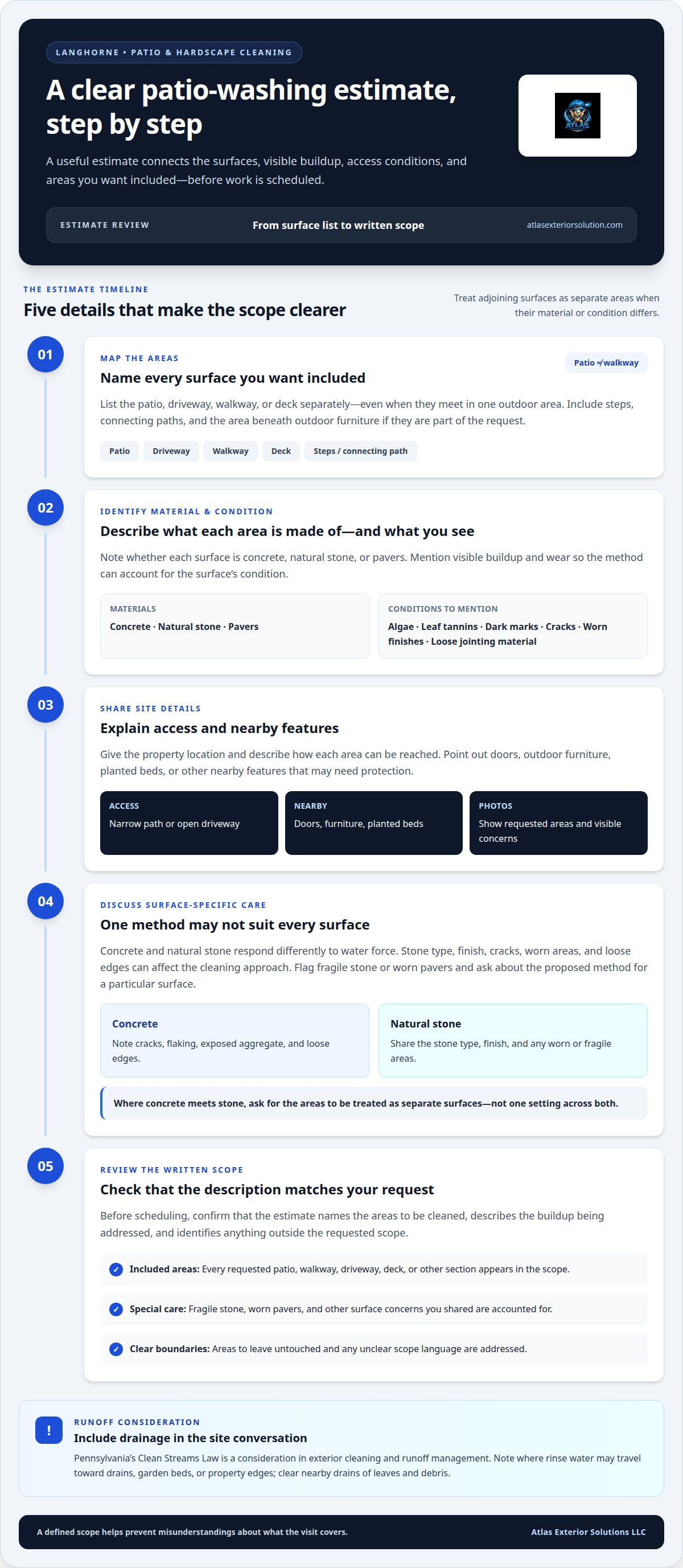
A free estimate helps you understand the proposed work before scheduling patio power washing in Langhorne. It should connect the requested cleaning to the surfaces, visible buildup, and access conditions. For example, a stone patio beside a concrete walkway may need separate method notes rather than one broad description. Review the proposed scope and discuss any areas that need special care.
Start by identifying each surface you want included. List the patio, driveway, walkway, or deck separately, even when they meet in one outdoor area. Note whether each is concrete, natural stone, or pavers, and mention concerns such as dark marks near a downspout, leaf tannins beneath a tree, or loose jointing material. These details clarify the work you’re requesting.
Next, share useful site information. Give the Langhorne property location, describe access to each cleaning area, and point out nearby features such as doors, outdoor furniture, or planted beds. A narrow path beside a home presents different access conditions from an open driveway. Photos can also show the areas you want included and any visible surface concerns.
A useful estimate breaks the work into clear parts. Check that it describes the included surfaces, the buildup being addressed, and any areas outside the requested scope. If you asked about both a patio and walkway, make sure both appear. Mention fragile stone or worn pavers before agreeing to the plan. A clear scope helps prevent misunderstandings about what the visit covers.
- Identify each surface and its material.
- Describe visible stains or buildup, such as algae or leaf tannins.
- Share access details and nearby features that may need protection.
- Review included areas and ask about unclear scope language.
When requesting an estimate, describe the work you want considered, not just the goal of a cleaner patio. Specify whether the request includes steps, a connecting path, or the area beneath outdoor furniture. Mention any sections you want left untouched, and raise questions about the proposed method for a particular surface while reviewing the scope.
A free estimate gives you a defined outline to review before scheduling. Check that the written description matches your request, names the areas to be cleaned, and accounts for any special surface concerns you shared. If a patio connects to a walkway, make sure the plan distinguishes between them. Once the scope reflects the work you want, you can decide whether to proceed.
Adjusting pressure for concrete and natural stone
Concrete and natural stone need different cleaning approaches because they respond differently to water force. Concrete may look dense, but worn areas, cracks, and exposed aggregate can be vulnerable to abrasion. Natural stone varies by type and finish, so a setting suitable for one patio may mark another. Identify the material first, then choose a method suited to its condition.
For concrete, check the slab for cracks, flaking, and loose edges before cleaning. A cracked walkway beside a Langhorne home needs careful treatment around weakened sections. The aim is to remove grime without stripping the surface or forcing water into existing damage. A test area can help show whether the method is lifting dirt or roughening the concrete.
Natural stone calls for attention to its type, finish, and condition. Slate, limestone, and sandstone differ in porosity and surface strength. A textured stone patio may hold algae in crevices, while a smoother paver can show scuffing more readily. Don’t assume stronger pressure will improve the result. A suitable method prioritizes the surface’s limits while targeting buildup.
For an existing patio in Langhorne or Middletown Township, distinguish routine cleaning from construction or property changes. Washing a surface is different from rebuilding a patio or changing drainage, which may involve municipal review. Keep the work focused on cleaning unless you intend to alter the hardscape.
Pennsylvania’s Clean Streams Law is a consideration in exterior cleaning and runoff management. Plan the wash so loosened dirt and runoff don’t flow toward storm drains, neighboring properties, or planted areas. Before starting, identify where water will travel, clear leaves and debris from nearby drains, and avoid washing contaminants into the street. These steps help keep the work area controlled.
A careful surface check can guide the cleaning plan:
- Identify whether the area is concrete, natural stone, or paving units.
- Look for cracks, loose edges, worn finishes, and missing jointing material.
- Test a less visible area before treating the full patio or walkway.
- Watch how rinse water moves toward drains, garden beds, and property edges.
Pressure is only one part of the process. Nozzle distance, water flow, cleaning solution, and the operator’s movement also affect the result. Lingering over a stained patch, for example, can create uneven cleaning or surface wear. A steady pass and suitable method address buildup without concentrating force in one place.
Where concrete meets stone, treat them as separate surfaces rather than using one setting across both. This helps protect a concrete path beside a stone patio, especially where joints or edges are already worn.
Patio, driveway, and walkway power washing
Patio, driveway, and walkway cleaning works best when the plan accounts for surface material, stains, and drainage. The following steps can help you prepare and understand the work.
Choosing a Langhorne Patio Washing Company
For a Langhorne patio, choose a cleaning plan that identifies the surface before selecting a method. Concrete, pavers, and natural stone have different vulnerabilities, so one pressure setting may not suit every area. A careful assessment notes cracks, worn finishes, algae, and leaf tannins, then explains how those conditions affect cleaning.
Ask for a clear scope showing which sections are included and how nearby surfaces will be protected. For example, distinguish a patio adjoining a walkway from the driveway if you want all three cleaned. The description should also separate washing from sealing, so you know whether jointing material, stains, or a protective coating are part of the requested service.
Look for practical details, not broad promises: the surface material, the buildup being treated, the cleaning method, and the path of rinse water. These details help you judge whether the plan addresses your property rather than treating every hardscape alike.
Patio Washing Frequency in Pennsylvania
There’s no single cleaning schedule for every Pennsylvania patio. Use visible buildup and the patio’s setting to decide when cleaning is needed. A shaded stone sitting area beneath trees may collect algae and leaf tannins sooner than an open concrete patio with little nearby vegetation.
Check the surface if it becomes slippery, visibly discolored, or difficult to maintain with routine sweeping. Foot traffic, nearby trees, drainage, and moisture affect how quickly grime returns. For example, inspect a path beside a downspout if runoff leaves recurring marks, then address the source of staining as part of your maintenance plan.
Cleaning when buildup is visible avoids treating an arbitrary calendar interval as a rule. It also gives you a chance to notice loose pavers or worn joints before washing, so those conditions can be considered in the plan.
Preparing a Patio for Professional Washing
Before the visit, move chairs, planters, grills, and toys off the patio. Sweep away loose leaves and branches, then point out delicate stone, cracked concrete, or loose jointing material. Clear access along the adjoining walkway and driveway so the work area can be assessed without obstacles.
Close nearby doors and windows, and move items that could be affected by water. Point out outdoor outlets, nearby drains, garden beds, and areas where rinse water may travel. These steps make it easier to protect the home and surrounding surfaces during cleaning.
Patio washing addresses surface dirt and buildup using a suitable cleaning method and rinsing. Sealing is a separate step: the surface needs appropriate preparation, and the scope should state whether a sealant is included. For work near Langhorne, ask that the description name the patio, driveway, or walkway areas, the cleaning steps, and any sealing separately. This makes clear what the service covers.
Residential patio and deck power washing
A residential outdoor area may combine stone pavers, concrete, and a wood or composite deck. Each surface collects different debris and responds differently to water and cleaning agents. A practical plan treats them separately rather than applying one method across the backyard. Algae on a shaded patio, for instance, may need a different approach from dirt on a deck railing.
Patio cleaning starts with a surface check. Note whether the patio is natural stone, concrete, or pavers, then look for loose joints, cracks, and stains. Leaf tannins beneath a tree can leave marks, while algae may cling to damp, shaded areas. Removing loose debris first reveals the underlying surface and makes it easier to target the buildup.
Deck boards need particular care because wood grain, age, and existing finish affect how they tolerate cleaning. A forceful spray held close can roughen a board or leave visible lines. Composite boards also vary in texture and condition, so consult the manufacturer’s care guidance when available. Use a method suited to the boards, not one intended for a concrete slab.
Soft washing uses cleaning solutions and low-pressure water to loosen certain types of buildup. Pressure washing relies more directly on water force to remove surface grime. On a residential deck, a gentler approach may suit areas where strong pressure risks abrasion. Concrete or durable paving calls for a different balance, selected according to the material and its condition.
- Move furniture, cushions, grills, and planters away from the work area.
- Identify wood, composite, concrete, stone, and paver sections separately.
- Point out loose boards, cracked areas, peeling finish, or open joints.
- Keep nearby doors and windows closed during exterior cleaning.
- Consider how rinse water will move around steps, drains, and garden edges.
After cleaning, let the surface dry before replacing outdoor furniture or applying a coating. A deck’s finish may need attention, while pavers may need their jointing material reviewed. Sealing is separate from washing, and the right choice depends on the surface and its condition. A worn wood finish and an unsealed stone patio, for example, call for different follow-up decisions.
For a home in Langhorne, include connected spaces in the plan when they share access or visible buildup. A patio beside a deck can be assessed together, but the work should still name each material and method. This distinction supports a careful clean while helping protect boards, joints, and the surrounding outdoor living space.
Best-rated patio power washing companies in Langhorne PA
A high rating can help you compare patio cleaners, but the work plan matters too. For a Langhorne property, compare how each company describes the material, cleaning method, and included areas. A review mentioning a stone patio is more relevant to your project than one describing unrelated exterior work.
Read recent customer feedback for specific details, not just star totals. Look for examples involving patios, decks, concrete, pavers, or natural stone. Comments about preparation, communication, and cleanup can help you understand the customer experience. “The patio looks clean” offers less detail than a review explaining how workers handled delicate pavers or protected nearby surfaces.
Compare estimates by scope. One proposal may cover only the patio, while another includes a connecting walkway or driveway. Check that each description identifies the surfaces and separates washing from sealing. If one estimate includes attention to jointing material and another doesn’t, they don’t describe the same work.
- Check whether reviews discuss the same surface as yours.
- Compare the included areas, such as patio, steps, and walkway.
- Look for a method suited to the material and visible condition.
- Review how the plan addresses nearby doors, drains, and garden edges.
- Confirm whether washing and any sealing are described separately.
Ask how the cleaning approach changes between materials. Concrete and natural stone, for example, shouldn’t automatically receive the same pressure treatment. A clear explanation connects the method to the surface condition instead of treating high pressure as the answer to every stain. If pavers have loose joints or a deck has worn boards, include those conditions in the discussion.
Treat photos as supporting evidence, not a substitute for a written scope. Before-and-after images of a similar patio can show the kind of work a company has handled. Look for comparable materials and stains: a heavily stained concrete slab isn’t a direct comparison for a shaded natural-stone patio.
For a fair comparison in Langhorne, provide the same project details with each estimate request. Describe the patio material, note any adjoining deck or walkway, and identify visible buildup. Then compare the scope, surface-specific methods, and attention to property protection. This helps you choose based on fit and clarity, not a rating alone.
Request a free estimate for patio power washing
Atlas Exterior Solutions: Soft Washing
Atlas Exterior Solutions cleans patios and outdoor surfaces using methods suited to their material and condition. Soft washing combines cleaning solutions with low-pressure water, while pressure washing is reserved for durable surfaces such as concrete, brick, stone, and driveways. A stone patio, deck, or concrete section should be assessed individually.
For pavers affected by staining or worn joints, Paver Restoration can address needs beyond routine washing. House Washing can also refresh exterior surfaces around your outdoor living area. These services support a coordinated maintenance plan without treating every material the same way.
Contact Atlas Exterior Solutions for a free estimate for your Langhorne patio, and discuss the cleaning method suited to your property.
Plan Your Patio’s Next Refresh
Choosing patio power washing in Langhorne is an opportunity to plan beyond the immediate cleanup. Consider how you use the outdoor space and what you want it ready for, whether you’re hosting guests, clearing a walkway, or caring for pavers before stains become harder to address. Sharing these priorities helps shape a practical scope for your property.
Atlas Exterior Solutions offers Soft Washing, Commercial Pressure Washing, and Paver Restoration. These services address different exterior-cleaning needs, from low-pressure treatment for delicate surfaces to paver restoration. Describe the areas you want cleaned and any material concerns when you reach out, so the conversation can focus on your property and its goals.
A well-planned cleaning project can make your outdoor space feel ready for its next season of use. Take the next step when it works for you.
Frequently Asked Questions
What patio power washing services are available in Langhorne, PA?
Patio, deck, paver, concrete, and walkway cleaning are available for Langhorne properties. Atlas Exterior Solutions LLC also offers Paver Restoration for paving that needs more than routine surface cleaning. Mention retaining edges or steps when describing the project. That helps clarify the requested work and keeps connected areas from being overlooked.
What does patio power washing cost in Langhorne, PA?
Request a free estimate to define the work for your Langhorne patio. The estimate clarifies which surfaces and sections you want included, along with concerns that may affect the cleaning plan. Mention, for example, if the patio connects to a raised landing or has a narrow entrance. Reviewing the scope before scheduling helps ensure it reflects your project.
What is the average price per square foot for patio pressure washing near Langhorne?
For a Langhorne patio estimate, describe the layout rather than relying on a square-foot figure. Note whether the surface has separate levels, built-in seating, or tight areas around posts and railings. These details explain the work area and access needs, helping the free estimate outline a cleaning scope for your outdoor space.
Should pavers and concrete be pressure washed or soft washed?
Pressure washing is reserved for durable surfaces, including concrete, brick, stone, and driveways. Soft washing uses low pressure with specialized cleaning solutions for delicate surfaces such as roofs, vinyl siding, and stucco. Pavers need an approach suited to their material and condition, including the state of their joints. Loose jointing material calls for care during cleaning, not an assumption that stronger pressure is better.
What are the risks of pressure washing patio pavers, stone, and concrete?
Unsuitable pressure can wear a finish, roughen a surface, or disturb material between pavers. Stone can show marks if the method doesn’t suit its composition. On concrete, forceful spraying may worsen existing cracks or flaking. A concentrated stream directed at a worn paver joint, for example, can dislodge jointing material. Identifying vulnerable areas beforehand helps guide careful cleaning.
Disclaimer
The information on this blog is for general informational purposes only. Results may vary based on surface type, condition, and cleaning methods. Always follow manufacturer guidelines and use proper safety precautions. Atlas Exterior Solutions is not liable for any damages or losses resulting from the use of this information.


