

Those unsightly black streaks on your shingles aren't actually dirt or soot; they're a living organism called Gloeocapsa magma that's slowly consuming your roof's limestone filler. You've likely looked up at your home and felt a sense of frustration, wondering how to remove black streaks from roof surfaces without causing permanent damage to your shingles. It's a common concern for homeowners who want to maintain their property's value but fear that aggressive cleaning might blast away the protective granules that keep your home dry and secure.
The secret to a clean roof lies in specialized chemistry rather than physical force. We understand the hesitation that comes with choosing cleaning agents, especially when you're worried about the health of your lawn and expensive landscaping. This guide reveals the professional soft-washing methods designed to neutralize algae at the root while preserving the integrity of your home's exterior. You'll discover how a methodical, low-pressure approach can restore your home's curb appeal, protect your investment, and extend the lifespan of your shingles without the risks associated with traditional power washing.
Key Takeaways
- Identify the biological culprit behind roof stains and why these streaks are actually living organisms feeding on your shingles.
- Understand why high-pressure washing is fundamentally the wrong approach and how it can prematurely strip away your roof's vital UV protection.
- Master the industry-standard soft washing process to learn exactly how to remove black streaks from roof shingles safely and effectively.
- Evaluate the safety risks and technical requirements of professional-grade cleaning versus the hazards of a DIY approach.
- Discover proactive maintenance strategies, including the use of metal strips and landscape management, to prevent future algae growth.
What Are the Black Streaks on Your Roof? (It’s Not Just Dirt)
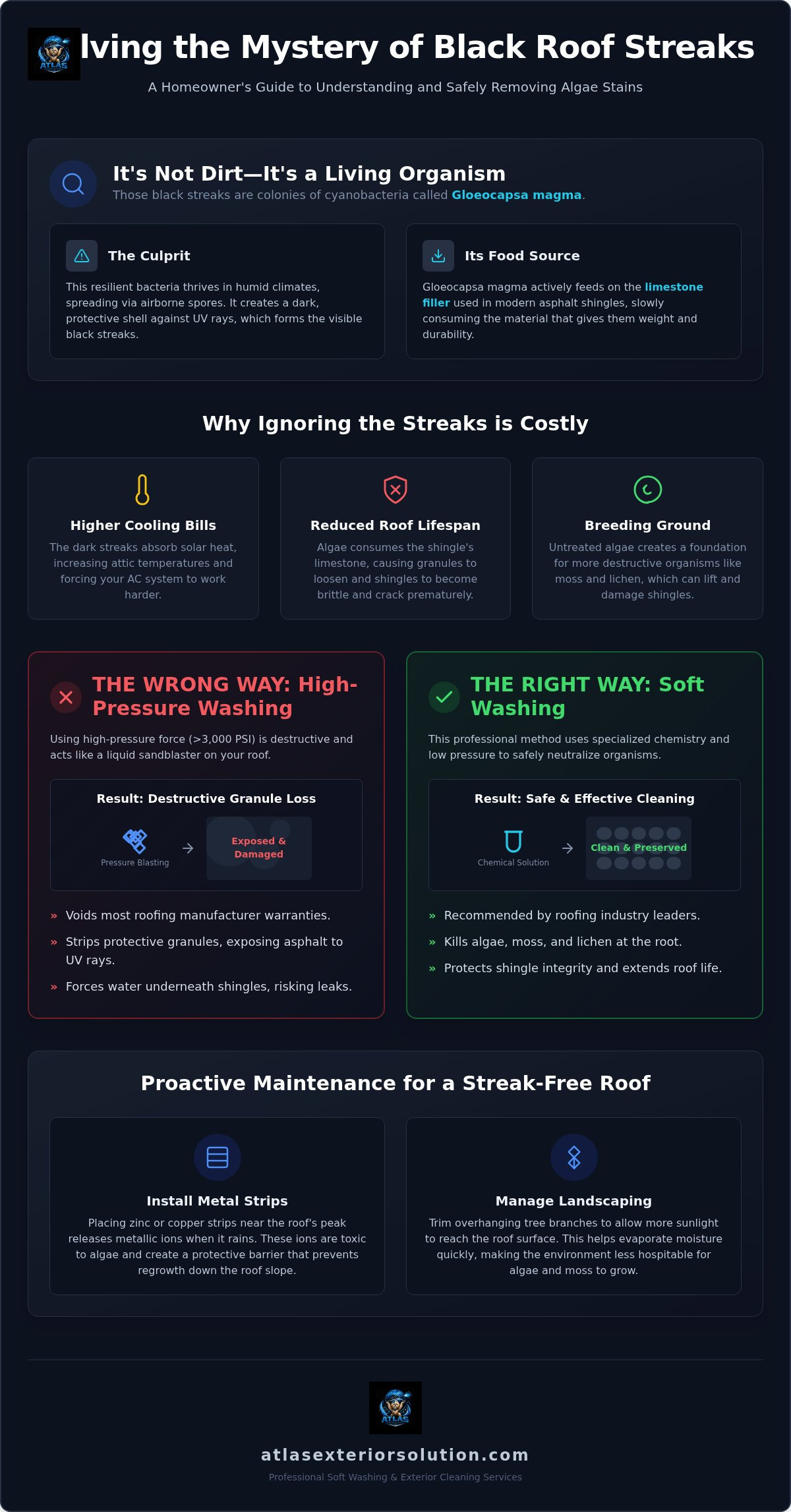
Many homeowners in Bucks County look up and assume their roof is just dirty from nearby traffic or overhanging trees. However, those dark, vertical marks are rarely soot or pollution. They are actually a colony of Gloeocapsa magma, a resilient type of cyanobacteria that has adapted to thrive on residential structures. Gloeocapsa magma is a species of cyanobacteria that creates a dark, protective pigment to shield itself from UV rays, and it primarily feeds on the limestone filler used in modern asphalt shingles. While it looks like a simple stain, it's a biological growth that is actively consuming your home's first line of defense.
Our local Pennsylvania climate provides the perfect breeding ground for this organism. With our high humidity levels and frequent seasonal shifts, moisture often lingers on roof surfaces long after the rain stops. This damp environment, combined with the abundance of limestone filler in modern asphalt shingles, creates a literal buffet for algae. Unlike older shingles, today's materials use limestone to add weight and durability, but this mineral is the primary food source for these bacteria. Understanding this biological reality is the first step in learning how to remove black streaks from roof shingles without causing unnecessary damage.
The Lifecycle of Roof Algae
Algae doesn't appear by accident. It travels through suburban neighborhoods as microscopic spores carried by the wind. Once a single spore lands on a hospitable surface, it begins to multiply and spread. You'll usually notice these streaks first on northern-facing slopes or areas heavily shaded by trees, where the sun cannot quickly evaporate morning dew or rainwater. If left untreated, this bacteria creates a foundation for more complex organisms. What starts as a black streak can quickly transition into green moss or lichen, which possess root-like structures that can physically lift and crack your shingles.
Why Ignoring the Streaks Costs You Money
While the aesthetic impact lowers your home's curb appeal, the financial consequences are more significant. These black streaks act like a dark heat sink on your roof. By absorbing thermal energy instead of reflecting it, they can significantly increase the temperature of your attic, leading to higher cooling bills during our humid Pennsylvania summers. Additionally, as the algae consumes the limestone filler, the shingles become brittle and lose their protective granules. This biological decay shortens the lifespan of your roof, often forcing a premature replacement that could have been avoided with proper maintenance. Knowing how to remove black streaks from roof surfaces safely is an investment in your home's structural integrity.
Why High-Pressure Washing is the Wrong Way to Remove Stains
When homeowners first research how to remove black streaks from roof shingles, the most common tool they reach for is a pressure washer. It's a logical instinct; if something is dirty, we want to blast the grime away. However, applying high-pressure water to an asphalt shingle is one of the most destructive things you can do to your home's exterior. Standard pressure washers often operate at 3,000 PSI or higher, which is more than enough force to strip away the protective layers that keep your home dry and secure.
Roofing manufacturers design shingles with a specific architecture. A fiberglass or organic mat is coated in asphalt and then covered with a layer of ceramic-coated granules. These granules aren't just for color; they are the roof's primary defense against the sun. High-pressure water acts like a liquid sandblaster, dislodging these granules and leaving the underlying asphalt exposed to the elements. While the roof might look clean immediately after a high-pressure session, the structural integrity has been compromised. In fact, most major roofing manufacturers explicitly state that pressure washing will void your warranty because of this predictable damage.
The Danger of Granule Loss
Granules serve three critical purposes: they protect the asphalt from UV degradation, provide fire resistance, and help shed water efficiently. When you lose these granules, you're essentially creating bald spots on your roof. You can often see the evidence of this damage by checking your downspouts or gutters; if they're filled with a thick layer of sand-like sediment after a cleaning, your roof has just lost years of its life. Without that protective layer, the exposed asphalt mat will bake in the sun, become brittle, and eventually crack or curl, leading to leaks and expensive repairs.
Water Intrusion Risks
Beyond surface damage, high-pressure streams can force water upward under the laps of your shingles. Roofing is designed to shed water downward with the flow of gravity, not to withstand a pressurized blast from below or the side. This forced moisture can saturate your wooden decking and seep into your attic insulation. Once moisture is trapped in these dark, unventilated spaces, it becomes a breeding ground for biological growth. If you're concerned about moisture issues inside your home, the EPA guide to mold cleanup provides excellent insights into the long-term risks of water intrusion. Even if you use what you consider safe pressure, aged shingles are often too fragile to handle anything more than a gentle, low-pressure flow.
Instead of risking permanent structural damage, it's better to choose a method that treats the biological cause of the stains without the physical force. If you're unsure about the current state of your shingles, consulting with a professional roof cleaning service can help you determine the safest path forward. Protecting your investment requires a balance of effectiveness and gentleness that high-pressure equipment simply cannot provide.
The Professional Soft Wash Method: How to Safely Clean Shingles
Soft washing is the industry-standard alternative to destructive high-pressure methods. This process relies on a low-pressure application, typically under 100 PSI, which is comparable to the force of a garden hose. Instead of using raw power to blast away growth, soft washing uses a specialized chemical solution to neutralize the algae at its source. This approach follows the Asphalt Roofing Manufacturers Association (ARMA) guidelines, which recommend a specific blend of cleaning agents to treat biological infestations without compromising the shingle's structural integrity. By treating the roof as a delicate surface rather than a durable slab of concrete, we ensure the biological roots are destroyed while the protective granules remain intact.
The success of this method depends on the "Kill and Rinse" cycle. When homeowners ask how to remove black streaks from roof shingles, they often overlook the importance of dwell time. The cleaning solution must sit on the surface long enough to penetrate the protective outer shell of the Gloeocapsa magma. Once the solution has effectively neutralized the bacteria, the dead organic matter is gently rinsed away, leaving the roof looking like new. This process doesn't just hide the stains; it sanitizes the surface to prevent the rapid return of new spores.
The Chemistry of a Clean Roof
The primary active ingredient in professional soft washing is sodium hypochlorite, which is the only chemical proven to effectively kill resilient cyanobacteria. While some homeowners prefer "oxygen bleach" or eco-friendly alternatives, these products often fail to penetrate the hardy, UV-resistant coating of stubborn roof algae. Achieving the right result requires precise dilution ratios based on the severity of the infestation and the ambient temperature. Professional-grade surfactants are superior to dish soap because they are chemically engineered to withstand the high pH of cleaning solutions while providing a thicker, even coating that prevents rapid evaporation on a hot roof. These surfactants help the solution "cling" to the steep slopes of your home, ensuring the chemicals stay where they are needed most.
The Professional Equipment Advantage
True soft washing requires dedicated equipment that is separate from a standard pressure washer. Professionals use specialized pumps that are designed to handle corrosive chemicals without the need for high-pressure bypass systems. These pumps allow for a "rain-like" application pattern, using wide-bore tips that distribute the cleaning solution evenly across the shingles. This is a significant upgrade from the downstream injectors found on consumer pressure washers, which often provide inconsistent chemical mixtures and still rely on too much pressure. Using the right equipment ensures a uniform clean that protects your landscaping and preserves your roof's lifespan.
DIY Roof Cleaning vs. Professional Services: Risks and Realities
Many homeowners view a weekend project as the most cost-effective way to handle how to remove black streaks from roof shingles. However, the reality of working with high concentrations of cleaning agents on a steep, slippery slope introduces risks that go far beyond simple labor. If you aren't sure how to remove black streaks from roof surfaces safely, you might end up causing more harm than good to your property. Professional roof cleaning is a specialized trade for a reason. It requires specific safety gear, chemical knowledge, and a commitment to protecting the surrounding property that is difficult to replicate with consumer-grade tools.
The "Ladder Factor" is the most immediate danger. Roofing is statistically one of the deadliest occupations in the U.S., with over 80% of fatalities resulting from falls according to Bureau of Labor Statistics data. When you add a soapy, biocidal solution to an already angled surface, the shingles become as slick as ice. Professionals use fall-arrest systems and specialized footwear to mitigate these risks. Beyond physical safety, managing chemical runoff is a technical challenge. Without proper personal protective equipment (PPE), the sodium hypochlorite used to kill algae can cause severe skin and eye irritation, making it a hazardous undertaking for an untrained individual.
Liability is another critical distinction. If a homeowner or an uninsured worker is injured on your property, you could be held responsible for medical costs and damages. A professional service like Atlas Exterior Solutions LLC is a fully insured local provider. This status provides peace of mind, ensuring that both the workers and your most valuable asset are protected under a comprehensive policy. It's a layer of security that a DIY attempt simply cannot offer.
How Professionals Protect Your Landscape
One of the biggest concerns homeowners have is that roof cleaning chemicals will kill their lawn or garden. Professionals use a strict "Pre-Wet, Rinse, Repeat" protocol to prevent this. By saturating the foliage with fresh water before, during, and after the cleaning process, we ensure that the plant cells are too full of water to absorb any stray cleaning solution. We also pay special attention to sensitive local species common in Bucks County gardens, such as Japanese Maples, Dogwoods, and Azaleas, which are particularly susceptible to chemical stress. Using gutter bags to collect concentrated runoff ensures that the chemicals never even touch your soil.
The Value of a Professional Guarantee
DIY attempts often fail because the cleaning agents aren't applied at the correct concentration or dwell time. While the roof might look better initially, the microscopic roots of the algae often survive, leading to the return of black streaks within just six months. A professional soft wash is designed to be a total kill of the organism. This efficacy allows us to offer a multi-year streak-free warranty, something no DIY kit can provide. If you want the job done right the first time, investing in Professional Roof Cleaning in Bucks County PA is the most reliable way to preserve your home's value.
Ready to restore your home's curb appeal without the risk? Contact the experts at Atlas Exterior Solutions LLC for a safe and effective roof cleaning today.
Long-Term Prevention: Keeping Your Roof Streak-Free
Once you've invested in the professional restoration of your home and understand how to remove black streaks from roof shingles, the focus shifts to preservation. Prevention is a continuous process of managing the environmental factors that allowed Gloeocapsa magma to thrive in the first place. By taking a proactive approach, you can protect your shingles from biological decay and ensure that your home's curb appeal remains intact for years to come. Maintaining a clean roof isn't just about aesthetics; it's a commitment to the structural longevity of your property.
A consistent maintenance schedule is the most effective way to avoid the return of heavy infestations. We recommend a professional assessment every 2 to 3 years to catch early signs of growth before they become visible from the street. During these check-ups, small localized treatments can be applied to prevent spores from colonizing the entire surface. This methodical approach is far more cost-effective than waiting for the entire roof to turn black again, as it minimizes the chemical concentration needed for future cleanings and preserves the integrity of the protective granules.
Tree Trimming and Airflow
Overhanging branches are essentially an "algae highway" for your home. Trees that stand too close to the structure drop organic debris, such as leaves, twigs, and sap, which trap moisture against the shingles and provide a supplementary food source for bacteria. In the wooded neighborhoods of Bucks County, dense canopies often create persistent shade that prevents the sun from drying the roof after a rainstorm. By trimming branches back at least 6 to 10 feet from the roofline, you increase UV exposure and improve airflow across the shingles. Sunlight is a natural disinfectant, and a dry roof is a hostile environment for algae spores.
Metallic Algaecides
The use of copper or zinc strips is a traditional method for preventing new growth, though it has specific operational limits. These strips are typically installed along the ridge of the roof. When rainwater passes over copper or zinc strips, it picks up metallic ions that act as a natural biocide, coating the shingles below and preventing algae spores from establishing a foothold. While this is an effective supplemental tool, these ions usually only travel 10 to 15 feet down a slope. For many large residential roofs in Pennsylvania, these strips may leave the lower half of the shingles unprotected. For comprehensive protection, regular soft wash maintenance remains the most reliable method for keeping the entire surface clear of biological organisms.
Finally, don't overlook the importance of your drainage system. Clogged gutters cause water to back up under the bottom edge of your shingles, creating damp zones that are perfect for algae and moss. Ensuring your gutters are clear allows the roof to shed water efficiently, keeping the entire system dry and secure. If you're ready to start a preventative maintenance plan or need assistance with how to remove black streaks from roof surfaces, a professional consultation can provide the specific roadmap your home needs.
Protecting Your Investment for the Long Term
Understanding how to remove black streaks from roof shingles is about more than just aesthetics; it's a vital part of structural preservation. By identifying the biological cause and choosing the ARMA-approved soft wash method, you avoid the permanent damage and granule loss caused by high-pressure cleaning. This gentle, chemical-based approach ensures that the algae is neutralized at the root while your shingles remain intact and your home's energy efficiency is restored. Maintaining your roof through proper debris management and professional sanitization keeps your property secure and your curb appeal high.
At Atlas Exterior Solutions LLC, we're proud to be a locally owned and operated provider based in Newtown, PA. Our expert soft-wash technicians are fully insured for both residential and commercial work, offering the meticulous care and peace of mind you expect from a local neighbor. We treat every home with the same dedication we'd give our own. Don't let biological growth compromise your home's value or your safety on a ladder. Get a Free Roof Cleaning Quote for Your Bucks County Home Today. Your roof is your home's primary defense, and with professional care, it will protect your family for years to come.
Frequently Asked Questions
Will the black streaks on my roof go away on their own?
No, black streaks will not disappear without intervention. Because these marks are a living cyanobacteria called Gloeocapsa magma, they'll continue to spread as long as they have a food source like the limestone filler in your shingles. Ignoring the growth allows it to transition into moss or lichen, which possess root-like structures that can cause permanent structural damage.
Can I use a regular pressure washer on my roof if I turn the power down?
We advise against using standard pressure washers for this task. Even at lower settings, these machines often deliver inconsistent pressure that can strip away protective granules. Professional soft washing uses dedicated pumps designed to deliver a high volume of cleaning solution at very low pressure, ensuring a safe and uniform result that a pressure washer cannot replicate.
Is roof cleaning safe for my pets and my garden plants?
Professional roof cleaning is safe for your landscape when proper protocols are followed. We use a meticulous process of pre-wetting all surrounding greenery and rinsing plants throughout the service to prevent chemical absorption. This protective approach ensures your garden and pets remain safe while we address how to remove black streaks from roof shingles.
How much does it cost to have black streaks removed from a roof in PA?
The investment for a professional cleaning depends on several factors specific to your home. We evaluate the total square footage, the steepness of the roof pitch, and the current density of the algae growth to provide an accurate estimate. Since every property in Pennsylvania is unique, a personalized assessment is the best way to determine the specific scope of work required for your roof.
How long does a professional roof cleaning service take to complete?
Most residential roof cleaning projects are completed within 2 to 5 hours. The exact timeframe depends on the size of your home and the severity of the biological growth. Our technicians work efficiently to ensure a thorough clean while minimizing any disruption to your daily routine, allowing the cleaning solution the necessary time to neutralize the algae completely.
Will cleaning my roof cause it to leak or damage the shingles?
A professional soft wash will not cause leaks or shingle damage. In fact, it's the only method recommended by major roofing manufacturers to maintain your warranty. While high-pressure washing can force water under shingles and into your decking, our low-pressure system gently sanitizes the surface without compromising the roof's structural integrity.
How often should I have my roof professionally cleaned?
We generally recommend a professional cleaning every 3 to 5 years. Homes in Bucks County with heavy tree cover or northern-facing slopes might require more frequent attention due to increased shade and moisture. Regular maintenance prevents algae from becoming deeply rooted, which helps you avoid the costs associated with premature shingle failure.
Does the black algae on my roof mean I need a brand-new roof?
Black streaks are a maintenance issue, not necessarily a sign that you need a new roof. In many cases, a professional soft wash can restore the appearance and function of your shingles for a fraction of the cost of a full replacement. If your shingles are still structurally sound, a thorough cleaning is often all that's required to regain your home's curb appeal and extend the roof's lifespan.
Disclaimer
The information on this blog is for general informational purposes only. Results may vary based on surface type, condition, and cleaning methods. Always follow manufacturer guidelines and use proper safety precautions. Atlas Exterior Solutions is not liable for any damages or losses resulting from the use of this information.


