

A fixed yearly date isn’t always the safest or most useful way to plan exterior cleaning. If you’re wondering how often should you pressure wash your house, the answer depends on what has built up, what your exterior is made of, and how local conditions affect it. You want a clean home, but you also want to protect siding, paint, and other finishes from damage.
Start with regular visual checks, then arrange cleaning when grime, algae, pollen, or other buildup calls for attention. In Bucks and Montgomery Counties, seasonal pollen, summer humidity, shade, and leaf debris can affect how quickly surfaces get dirty. This guide explains how to inspect your home, recognize stains that need attention, and understand why the cleaning method matters as much as the timing. Pressure washing uses water force to remove buildup. Soft washing applies cleaning solutions with low-pressure water, making it a surface-conscious option for more delicate materials. Professional house washing should account for the exterior rather than treating every surface the same way.
Key Takeaways
- There’s no single calendar that suits every home. The answer to “how often should you pressure wash your house” depends on visible buildup, exterior materials, and local exposure.
- Inspect the exterior regularly, but schedule washing when the condition of the surfaces calls for it.
- Check each side of your home for shade, nearby trees, damp areas, and signs of grime or organic growth that may affect cleaning needs.
- Pressure washing and soft washing use different methods. Match the approach to the surface to help protect siding and finishes.
- Use a simple inspection-to-action routine to decide when professional house washing can refresh your exterior with a surface-conscious method.
How Often Should You Pressure Wash a House in Bucks County?
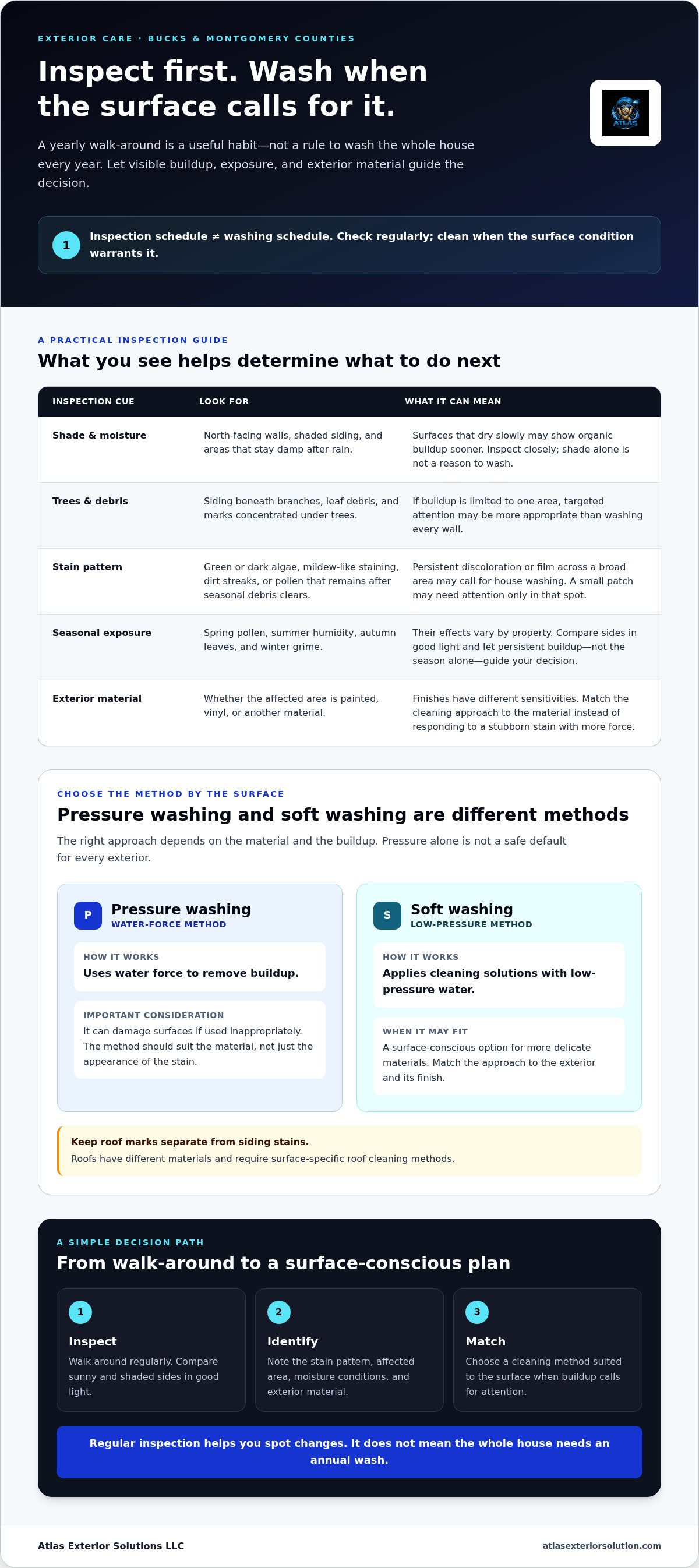
There’s no single washing interval that fits every Bucks County home. If you’re asking how often should you pressure wash your house, start with the exterior’s condition rather than an automatic calendar reminder. Siding material, exposure to trees and shade, moisture, and visible buildup all affect when cleaning makes sense. A yearly exterior inspection can help you spot changes, but it doesn’t mean the whole house needs to be washed every year.
An inspection schedule and a washing schedule serve different purposes. Inspecting helps you notice new staining, dirt, or areas that stay damp. Washing is the step you take when the surface condition warrants it. This distinction helps you avoid both neglecting persistent buildup and cleaning sound, relatively clean surfaces without a clear need. Pressure washing can remove buildup, but it can also damage surfaces if used inappropriately. The method should suit the material, not just the appearance of the stain.
Is annual house washing necessary?
An annual walk-around is a useful maintenance habit, not a rule to schedule a full wash. Spring pollen, summer humidity, autumn leaves, and winter grime can leave different marks around the home, but their effect varies with the property’s setting and exterior. Look at each side in good light and compare areas with different exposure. Let visible buildup and surface condition guide your decision instead of treating a yearly wash as a Bucks County standard.
What signs mean the exterior needs attention?
Look for green or dark algae, mildew-like staining, dirt streaks, and pollen that remains on siding after seasonal debris has cleared. Persistent discoloration or a film across a broad area may indicate that house washing is needed. A small patch, however, may call for targeted attention rather than cleaning every wall. Don’t confuse roof streaks with siding stains. Roofs have different materials and require surface-specific roof cleaning methods.
Pay attention to where marks appear. A shaded wall beneath trees may stay damp longer and show organic growth sooner than a sunny, open side. If only one section is affected, note its location and material before deciding what to clean. Don’t respond to a stain by automatically applying more force. The wrong approach can wear or damage an exterior finish. Pressure washing uses water force, while soft washing relies on cleaning solutions applied with low pressure. Atlas Exterior Solutions LLC tailors professional house washing to exterior surfaces to address buildup while helping protect your home.
The basics of pressure washing include understanding that it can damage surfaces if applied inappropriately. For homeowners in Newtown, Yardley, and nearby Bucks County communities, a measured approach is straightforward: inspect regularly, identify what has accumulated, and choose a surface-appropriate cleaning method when the condition calls for a wash.
What Changes How Often a Home Needs Exterior Washing?
Exposure and surface condition help explain why one home may need attention sooner than another. A wall protected by sun and open air may stay cleaner than one beneath overhanging branches or beside an area that remains damp. Nearby trees, seasonal pollen, airborne dirt, and leaf debris all affect what you see on the exterior, but their presence alone doesn’t mean it’s time to wash.
Two homes on the same street can need different washing schedules because shade, moisture, nearby vegetation, and exterior materials create different conditions on each property. Use those conditions as inspection cues. Pollen after spring may fade or rinse away with weather, while grime that persists or staining that spreads deserves closer attention. Check whether buildup is limited to one area or appears across multiple sides. Before planning a cleaning, consider whether the surface is painted, vinyl, or another material.
How do shade, trees, and damp areas affect buildup?
Shaded surfaces tend to dry more slowly than sunny ones, so visible organic buildup may develop sooner where moisture lingers. Check the north-facing side, siding beneath trees, and walls near areas that stay damp after rain. Branches can also leave leaves or other debris against the exterior. These are useful places to inspect closely, not proof that every shaded wall needs immediate washing.
Compare those spots with more exposed areas. If a mark appears only beneath a tree, it may call for attention in that location rather than a full-home wash. If staining is spreading across a wall or returning in a persistently damp area, note the pattern and the surface material. That information helps guide a method that addresses buildup without applying unnecessary force.
Does siding material change the cleaning schedule?
Yes. Vinyl siding and painted surfaces can show dirt or staining differently, and their finishes have different sensitivities. A painted exterior may need particular care to avoid surface abrasion. Vinyl also needs a suitable cleaning approach rather than force alone. Don’t choose a method based only on how stubborn a stain looks. Material-specific cleaning helps protect the finish while addressing what has accumulated.
For house-washing considerations in the area, see Atlas Exterior Solutions LLC’s house-washing service in Bucks County. Atlas serves homeowners throughout Bucks and Montgomery Counties with professional house washing tailored to exterior surfaces. If your inspection shows persistent staining or buildup, note the material and condition of the affected area. Those details help determine an appropriate cleaning approach.
Pressure Washing or Soft Washing: Which Method Fits Your House?
The right cleaning method affects how safely you can respond to buildup, but it doesn’t set a universal washing schedule. Pressure washing and soft washing are different approaches, not interchangeable names. Pressure washing uses water force to remove dirt. Soft washing uses cleaning agents delivered with low-pressure water. Atlas Exterior Solutions LLC’s soft-washing delivery pressure is typically under 100 PSI.
For timing decisions, consider both what you see and how sensitive the surface is. A stain doesn’t automatically call for stronger pressure. Delicate siding or a finish vulnerable to surface abrasion may need a gentler method, even when buildup is noticeable. A suitable approach addresses the cleaning need while helping protect the exterior.
| Method | Suitable context | Surface sensitivity | Purpose |
|---|---|---|---|
| Pressure washing | Surfaces suited to cleaning by water force | Requires care around delicate finishes | Remove dirt through controlled water force |
| Soft washing | Exterior surfaces where a low-pressure approach is appropriate | Can suit more delicate siding and finishes | Use cleaning agents with low-pressure water to address buildup |
When is low-pressure soft washing the better fit?
Soft washing can be a better fit when you want to clean siding without relying on force that may scuff or disturb a vulnerable finish. Professional house washing pairs cleaning agents with low-pressure water, allowing the cleaning process to address surface buildup without treating every stain as a reason to increase pressure. The method should still be selected for the particular siding and its condition.
For delicate exterior surfaces, Atlas provides professional soft-washing services using a surface-conscious approach. This helps address visible buildup while keeping the cleaning method aligned with the material.
When should high pressure be avoided?
Don’t assume high pressure is suitable for painted surfaces, delicate siding, or finishes that could be marked by force. A stubborn-looking stain doesn’t tell you whether the surface can tolerate aggressive cleaning. Pressure applied inappropriately may contribute to surface abrasion or damage, so the material’s condition and composition should guide the method.
Material-specific cleaning means matching the approach to the exterior’s composition and vulnerabilities. In practical terms, inspect the affected area, identify the surface, and consider whether a low-pressure method is the safer fit before deciding to wash. If buildup is limited to one section, the method and scope can be tailored to that area instead of assuming the entire home needs the same treatment. That distinction helps answer how often should you pressure wash your house without putting the finish at risk.
How to Set a Safe House-Washing Schedule for Your Property
A practical schedule doesn’t require you to wash on the same date every year. It gives you a repeatable way to notice changes, judge whether cleaning is warranted, and choose a method that suits the exterior. If you’re deciding how often should you pressure wash your house, use these steps to turn general upkeep into a plan for your property.
A simple inspection checklist for homeowners
- Walk around each side of the home. Look at siding, trim, and other exterior surfaces in good light. Note recurring dirt, algae, mildew-like stains, or areas where buildup appears to be spreading.
- Record the surface and its exposure. Write down the siding or finish material, shaded sections, nearby trees, and places that remain damp after rain. This helps distinguish one isolated problem from widespread buildup.
- Reassess seasonal residue. Pollen and fallen leaves can make the exterior look dirty without meaning it needs an immediate wash. Check again after loose seasonal debris has cleared, then decide whether staining remains.
- Choose an action based on what persists. If the surface looks sound and residue has faded, continue observing. If staining remains, spreads, or affects a delicate finish, plan appropriate cleaning rather than reaching for more pressure.
Keep brief notes or photos from each walk-around. Comparing the same sections over time can help you see whether a mark is stable, fading, or becoming more pronounced. That record makes the next decision less dependent on guesswork and helps you avoid treating a calendar reminder as an automatic wash trigger.
Think about runoff before cleaning, too. Plan the work so wash water and loosened debris are handled responsibly instead of simply directing them toward a storm drain. This is part of protecting your property and its surroundings while cleaning.
When should you bring in a professional?
Consider professional help if staining persists after loose debris clears, buildup covers a broad area, or you’re unsure how a finish will respond to cleaning. Delicate or aging surfaces call for care. The goal is to address buildup without causing surface abrasion or other damage. Atlas Exterior Solutions LLC’s professional house washing uses methods selected with exterior surfaces in mind.
Atlas Exterior Solutions LLC serves residential properties throughout Bucks and Montgomery Counties. Its house-washing services address buildup with an approach tailored to the exterior. A clear record of the affected areas, materials, and visible buildup helps make the next step more informed.
Learn about Atlas Exterior Solutions LLC’s house-washing services.
Keep Your Home Clean with Surface-Safe House Washing
A sensible washing decision brings three observations together: what buildup you can see, what material it’s on, and which cleaning method suits that surface. You don’t need to wash every exterior wall just because one area looks dirty. If a stain persists or spreads, your inspection notes can help clarify whether the whole home needs attention or a more focused cleaning is appropriate.
That’s a more useful way to decide how often should you pressure wash your house than following a rigid calendar. The aim is to address grime before it becomes a persistent eyesore while avoiding unnecessary force on siding and finishes. For some exteriors, soft washing, which pairs cleaning agents with low-pressure water, may be more suitable than cleaning by pressure alone.
What to expect from professional house washing
Professional house washing uses cleaning agents and low-pressure water selected for exterior surfaces. The method addresses buildup without relying on high pressure across every part of the home. A surface-aware approach helps limit the risk of damage from an unsuitable cleaning method, though the right process depends on the material and its condition.
Atlas Exterior Solutions LLC is a locally owned, fully insured exterior-cleaning provider serving Bucks and Montgomery Counties. Its house-washing service is for homeowners who want buildup addressed with the exterior surface in mind.
Plan the next step for your home
Before arranging a wash, note which side of the home is affected, what the surface is made of, and whether the buildup is isolated or recurring. These details help focus attention on the areas that concern you and support a cleaning approach suited to the exterior, rather than assuming every surface needs identical treatment.
Atlas serves Newtown, Yardley, and surrounding Bucks County communities, as well as homeowners throughout Montgomery County. Whether you’ve noticed staining on shaded siding or general dirt across an exposed wall, make a note of what you observed and where it appears. That gives the conversation a practical starting point without requiring you to decide on a fixed washing schedule in advance.
Regular observation can help you recognize when cleaning is warranted. The surface and buildup then guide the method. A clear description of the materials and visible concerns helps focus the discussion on caring for your home.
Make Your Next Exterior-Care Decision with Confidence
Your home’s exterior doesn’t need to follow a rigid washing calendar. Let its condition guide your next step, and keep a simple record of areas you want to watch. If you’re still weighing how often should you pressure wash your house, focus on what you can see and choose a cleaning approach that respects the surfaces involved.
Atlas Exterior Solutions LLC has earned 45+ five-star Google reviews from customers. If you’re considering professional house washing, note the buildup you’ve noticed and the parts of your exterior you want addressed. Those details provide a practical starting point for a conversation about a surface-conscious approach.
A thoughtful maintenance plan can help you care for your home without cleaning more often or forcefully than its exterior requires.
Frequently Asked Questions
How often should you pressure wash a house with vinyl siding?
Wash vinyl siding when persistent grime or staining remains after loose debris has cleared, rather than relying on a fixed interval. Check areas beneath eaves, near downspouts, and behind outdoor fixtures, where dirt may collect unevenly. Vinyl can be damaged by an unsuitable cleaning approach, so don’t treat stubborn marks as a reason to increase force. A surface-conscious method can address buildup while helping protect the siding’s finish.
Does a house need to be pressure washed every year?
No, a house doesn’t automatically need a full wash every year. An annual look around can help you notice changes, but the decision to clean should depend on persistent dirt, staining, and the condition of the exterior. For example, if pollen clears and a wall looks clean, washing may not be needed just because a year has passed. If discoloration remains or spreads, assess the material and choose an appropriate method.
Is it safe to pressure wash painted siding?
High pressure can be risky on painted siding because force may wear or disturb the finish. If the paint is peeling, cracked, or already worn, cleaning could worsen those areas. Check the condition first, and don’t aim a concentrated stream at damaged paint or seams. A gentler cleaning approach may be more suitable, especially when the goal is to prepare a sound surface for maintenance.
Can rain wash away pollen and dirt from house siding?
Rain may rinse some loose pollen or dust from siding, but it won’t reliably remove stuck-on grime, algae, or persistent stains. After a shower, check a few representative areas, such as a sheltered wall and an exposed one. If the residue has disappeared, there may be no immediate reason to wash. If marks remain, identify whether they’re isolated or widespread before deciding on cleaning.
What is the best time of year to wash a house in Pennsylvania?
Choose a period with mild conditions and enough time for the exterior to dry, rather than a single “best” month. In Newtown, Yardley, Richboro, Bensalem, Langhorne, Levittown, Fairless Hills, Horsham, and Montgomery County, weather and property exposure can vary, so use the condition of the siding as your guide. Avoid scheduling around fresh pollen or leaf debris if it will quickly coat the surfaces again.
Should you wash a house before painting it?
Yes, cleaning before painting can remove dirt and residue that may interfere with a fresh coat. Start by checking the siding and trim for peeling paint, soft areas, or other damage that cleaning could aggravate. Use a method suited to the surface, then let it dry fully before painting. Follow the paint manufacturer’s preparation guidance, since the required surface condition can vary by product and substrate.
Can you pressure wash a house after it rains?
Rain alone doesn’t rule out washing, but wait until the work area is safe to access and surfaces have drained enough to assess. Wet siding can make existing stains harder to judge, and slick walkways or steps can create a hazard. Check for continuing rain that could interfere with the cleaning process, then choose a method based on the siding and its condition rather than assuming the recent rainfall has cleaned it for you.
For surface-conscious house washing in Newtown, Yardley, Bucks County, Richboro, Bensalem, Langhorne, Levittown, Horsham, Fairless Hills, or Montgomery County, request a free estimate from Atlas Exterior Solutions LLC.
Disclaimer
The information on this blog is for general informational purposes only. Results may vary based on surface type, condition, and cleaning methods. Always follow manufacturer guidelines and use proper safety precautions. Atlas Exterior Solutions is not liable for any damages or losses resulting from the use of this information.


