

Black streaks and moss don’t mean a roof needs aggressive pressure washing. For roof cleaning in Levittown, PA, asphalt shingles should be cleaned with a soft-wash method, not high pressure, which can damage the roofing surface. The right approach depends on the roof material and the type of buildup.
It’s understandable to want stains gone while protecting your roof, landscaping, and pets. This guide explains what causes black streaks, how soft washing differs from pressure washing, and how to account for plants and pets during roof cleaning. You’ll also learn how moss and trapped debris can hold moisture, affect drainage, and contribute to roof wear, plus what to consider when arranging residential roof and exterior cleaning in Levittown.
Key Takeaways
- Learn why do-it-yourself roof washing can put both the roof surface and your safety at risk.
- See how cleaning methods address algae, moss, dirt, and debris without treating every roof material the same way.
- Understand practical steps that help protect plants and pets around the home during roof cleaning.
- Recognize how roof buildup can affect drainage and contribute to wear over time.
- Find out when professional roof and exterior cleaning can help maintain your home’s surfaces.
Do You Offer Roof Cleaning Services?
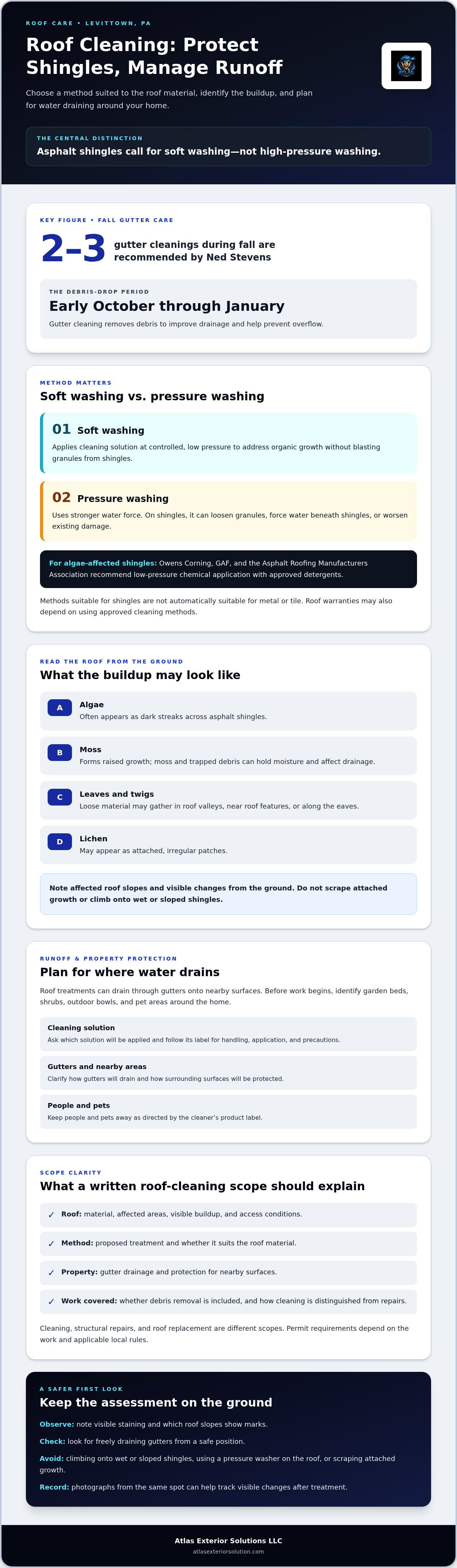
Professional roof cleaning is available for Levittown homes with algae, moss, or surface stains. Asphalt shingles should be cleaned with a soft-wash method, not high pressure. Owens Corning, GAF, and the Asphalt Roofing Manufacturers Association recommend low-pressure chemical application with approved detergents for algae-affected shingles.
Soft washing applies cleaning solution at controlled, low pressure. It addresses organic growth without blasting granules from shingles. Pressure washing uses stronger water force and can loosen granules, force water beneath shingles, or worsen existing damage. Roof warranties may also depend on using approved cleaning methods. The roof material matters because methods suitable for shingles aren’t automatically suitable for metal or tile.
When choosing a licensed and insured roof-cleaning company in Pennsylvania, review its current licensing and insurance documentation. Ask for a written scope identifying the roof material, proposed method, and protection for nearby property. These details clarify what the work covers before it begins.
Permit requirements depend on the work and applicable local rules. Cleaning, structural repairs, and roof replacement are different scopes, so don’t assume the same requirements apply to each. If planned work includes structural changes, ask Levittown’s local permitting office which requirements apply.
Residential exterior-cleaning companies serving Levittown and nearby Bucks County communities may offer roof washing. Compare written scopes to see whether they identify your roof material and explain the cleaning method. Cleaning frequency depends on visible algae or moss, nearby trees, shade, and debris; no single schedule suits every roof.
A useful roof-cleaning estimate identifies the roof material, affected areas, buildup, and access conditions. It should also explain the proposed treatment, how gutters will drain, and how surrounding surfaces will be protected. Ask whether the scope includes debris removal or addresses only visible staining. It should distinguish cleaning from repairs so you know what work is covered.
For a DIY algae project, don’t climb onto wet or sloped shingles or use a pressure washer. From the ground, inspect visible staining and check whether gutters drain freely. Follow the cleaner’s label when applying any ground-level treatment, and keep people and pets away as directed. Roof access and chemical handling add avoidable risks.
Soft washing suits delicate exterior surfaces, while driveway and concrete cleaning calls for a method matched to the material and its condition. Concrete may tolerate more pressure than shingles, but excessive force can still abrade the surface. Treating these surfaces separately helps protect each one while addressing its specific buildup.
What Are Those Black Streaks On Your Roof?
Black streaks on asphalt shingles are usually caused by algae. Their location and appearance can help distinguish algae from other roof buildup.
Roof Algae and Black Streaks
Algae staining often appears as dark streaks across asphalt shingles. From the ground, note which roof slopes show marks and whether discoloration is even or concentrated in patches. Compare affected sections with nearby areas that look clearer. This simple observation helps describe the visible condition without climbing onto the roof or disturbing the shingles.
Dark marks can affect curb appeal, but their appearance alone doesn’t establish the roof’s condition. Note whether streaks occur alongside lifted edges, missing shingle pieces, or other visible changes. Those signs may need attention beyond cleaning. A photograph taken from the same spot can help track changes in the marked area after treatment.
Removing Dirt, Moss, and Debris
Different types of buildup have distinct visible clues. Loose leaves and twigs sit on top of the roof, while moss forms raised growth and algae typically appears as discoloration. Lichen may appear as attached, irregular patches. From the ground, note whether material gathers in valleys, near roof features, or along the eaves. These observations clarify what is collecting on the roof.
Keep the assessment focused on what’s visible. A handful of leaves in one valley differs from staining spread across several shingle sections. Note nearby tree cover and recurring debris after storms. Don’t pull attached growth or scrape marks to test them; those actions can alter the surface before its condition is assessed.
Algae and Black Streak Treatment
Treatment planning starts with identifying the roof material and visible buildup. A slope with dark discoloration, for example, differs from one with loose branches or raised moss. Describe those areas separately when discussing service. This helps clarify whether the work targets staining, organic growth, loose debris, or several concerns.
Some visible changes may occur gradually after treatment, so record affected areas before work begins. Keep the original photographs for comparison, especially if marks appear on several roof slopes. If a stain remains, its location and appearance can help distinguish lingering discoloration from a separate roofing concern.
For context on the service scope, the roof cleaning information can help you identify the surfaces addressed. Clear notes about stains, debris, and visible shingle changes make it easier to discuss what your roof needs.
Gutter cleaning removes debris to improve drainage and prevent overflow. Ned Stevens recommends 2-3 gutter cleanings during fall, when debris drop continues from early October through January.
Cleaning chemicals and plant and pet safety
Roof treatments can drain through gutters onto nearby surfaces. Before work begins, identify garden beds, shrubs, outdoor bowls, and pet areas around the home. Planning for runoff helps protect these areas while removing roof growth. Treatment and precautions should suit the roofing material, product directions, and property layout.
Ask which cleaning solution will be applied and how its label directs its use. The label provides instructions for handling, application, and precautions; those directions should guide the work. A garden bed beneath a roof edge, for example, may need different protection from a paved walkway. Don’t assume every roof treatment uses the same product or requires identical precautions.
Gutters are part of the safety plan. They need to drain freely during roof cleaning so runoff doesn’t overflow into unintended areas. Before treatment, note clogged downspouts, leaking joints, or outlets that discharge beside plants. A clear route for water helps direct runoff away from sensitive spots. Address drainage problems before washing begins.
- Identify sensitive areas: Mark vegetable beds, ornamental plants, and outdoor pet spaces beneath roof edges.
- Review product directions: Follow label instructions for application, handling, and when people or pets may return.
- Trace runoff: Note where each gutter outlet sends water, especially near planted areas or animal bowls.
- Plan access: Move bowls and pet supplies away from the work area before cleaning starts.
Keep pets away from active work areas and treated surfaces until product directions allow access. Bring outdoor bowls inside, and keep dogs or cats indoors during application. If a pet uses a fenced yard, arrange another safe area before the cleaning appointment. These steps reduce the chance of contact with wet surfaces or runoff.
Plant protection also depends on location and conditions. A shrub directly beneath a roof edge faces different runoff exposure from a tree farther from the house. Point out delicate plants and recently planted beds before work starts. Any rinsing or covering should follow the cleaning product’s directions, rather than a one-size-fits-all routine.
After treatment, check gutter outlets and nearby paved areas for unexpected overflow or residue. Keep pets away until the label’s re-entry instructions are met, and follow any cleanup directions provided. If runoff reaches a sensitive area, respond according to the product label. Clear communication about plants, pets, gutters, and access helps make roof cleaning safer for the whole property.
Moss and debris-related roof damage
Moss and piled debris can affect a roof beyond its appearance. In Levittown, nearly 48 inches of rain falls annually, so clear drainage matters. Leaves and branches can collect in roof valleys, behind vents, and along eaves. When buildup obstructs water’s path, moisture may linger against shingles and nearby roof components.
Moss holds moisture against roofing surfaces and can work into gaps between shingles. As it grows, its roots may lift shingle edges, creating openings where water can enter. Repeated wetting and drying can add stress to materials that are already worn. Look for raised green patches, lifted shingle edges, or debris packed tightly into roof valleys.
Water intrusion may affect the roof deck and interior finishes, making a small maintenance issue more involved. Watch for water marks on ceilings, damp attic areas, or peeling paint beneath a roof section. These signs don’t identify the cause by themselves, but they help pinpoint where a closer roof inspection may be useful. A stain near a ceiling corner, for example, may correspond with a roof valley above.
Debris can also block gutters and downspouts. Overflow then runs over the gutter edge instead of following its intended route. Water repeatedly landing beside a home can affect siding and other exterior surfaces. Check for visible leaves at gutter openings and note where water spills during rain. Cleaning the roof without considering drainage can leave the original runoff problem unresolved.
Removing moss requires care. Walking on shingles can loosen granules or tear shingles, so avoid climbing up to pull growth by hand. Granules help protect the shingle surface; bare or heavily worn patches deserve attention during a roof assessment. From the ground, use binoculars to note the location of moss, fallen branches, or uneven roof lines.
Power washing can damage shingles by directing force at them and pushing water beneath their edges. Roof surfaces need cleaning methods suited to their material, not the same approach used on durable paving. Exterior cleaning should address buildup while protecting the roofing surface. A concrete walkway, for example, may tolerate a different cleaning approach than asphalt shingles.
After a storm, check the ground for fallen branches and the roofline for debris accumulation. Note sagging gutters, displaced shingles, or recurring wet spots, then share those observations during an inspection. If roof treatment is planned, gutters should drain freely to prevent overflow. Timely attention to moss and debris helps protect the roof’s structure and may prevent avoidable repairs.
Residential roof and exterior cleaning
A residential roof is part of a larger exterior drainage system. In Pennsylvania, rain, shade, and nearby trees can contribute to recurring buildup. Roofs, siding, gutters, and paved areas collect different types of debris. A useful maintenance plan considers how these surfaces connect, not just visible staining.
Begin with a ground-level review of the roofline, siding, and gutter outlets. Note algae streaks, moss, blocked valleys, and water marks beneath eaves. Check whether gutter cleaning is needed before roof treatment, since free-flowing gutters help manage runoff. Levittown homeowners can record these observations to clarify which areas need attention.
Cleaning timing depends on the surface and what is growing or collecting there. Metal roofs should be cleaned at least once a year, with frequency varying according to environmental conditions. Siding manufacturers recommend washing a house at least once a year. For asphalt shingles, visible algae or moss can help identify where treatment may be appropriate.
- Roof: Note algae, moss, lichen, loose branches, and buildup around vents or valleys.
- Gutters: Look for leaves, overflow marks, and downspouts that discharge beside the home.
- Siding: Check shaded walls and areas below roof edges for streaks or accumulated dirt.
- Paved surfaces: Identify runoff marks on concrete or pavers that may need separate cleaning.
Cleaning should suit each material. Asphalt shingles need a different approach from concrete, siding, or a metal roof. Forceful pressure can harm delicate roofing, while suitable treatment can address organic buildup without using the same method on every surface. Material-specific cleaning protects the exterior while helping restore its appearance.
Runoff planning connects roof work to the rest of the property. A downspout beside a paved walkway, for example, can carry roof debris onto concrete. Check where outlets lead before treatment, then note any stains or buildup on nearby surfaces. This helps distinguish roof cleaning from separate driveway or patio maintenance.
After cleaning, keep a simple record of the date, treated surfaces, and areas where growth returns. A photo of the north-facing roof slope or shaded siding gives homeowners a useful point of comparison during future inspections. If stains reappear in the same location, the pattern can help explain how shade, trees, or drainage affect exterior maintenance.
For residential roof cleaning tailored to your home’s surfaces and buildup, request a roof cleaning estimate.
A maintenance plan can make recurring care easier to organize. Scheduled cleaning and inspections are available as part of maintenance plans, giving homeowners a way to arrange follow-up attention alongside cleaning. Before scheduling, clarify which exterior surfaces are included and whether the inspection covers the roof, gutters, siding, and nearby runoff areas. Targeted work may also be appropriate for tough stains such as rust on roofs. Identifying the affected area beforehand can help set expectations and keep roof treatment distinct from washing other materials.
For broader exterior upkeep, homeowners are advised not to go more than three years without scheduling house washing. That guidance can complement the roof’s own inspection and cleaning schedule rather than replace it. Observations of recurring growth, staining, and drainage can help homeowners discuss suitable timing for each surface.
Atlas Exterior Solutions: Soft Washing
Atlas Exterior Solutions LLC provides soft washing for homeowners addressing roof stains, algae, or moss. This low-pressure approach applies cleaning solution to the roof, providing a method suited to delicate roofing surfaces.
For Levittown homes, roof cleaning can be planned around the roof material, visible buildup, and property drainage. Atlas Exterior Solutions LLC also offers house washing, commercial pressure washing, and paver restoration for other exterior surfaces.
Contact Atlas Exterior Solutions LLC to discuss roof cleaning for your home.
Take the Next Step Toward a Cleaner Exterior
Use what you’ve observed around your home to make a practical maintenance plan. If roof stains or growth concern you, describe their location and your roof material when discussing roof cleaning in Levittown, PA. Clear details help focus the conversation on the surfaces and conditions that matter to your property.
Atlas Exterior Solutions LLC offers soft washing for delicate exterior surfaces, along with commercial pressure washing and paver restoration for other cleaning needs. These services address different materials and property types, so the right next step depends on the surface you want to maintain. A considered approach can help you care for your home without treating every exterior surface alike.
Contact Atlas Exterior Solutions LLC to discuss your property’s exterior cleaning needs and choose a suitable next step.
Frequently Asked Questions
Are The Chemicals You Use Safe For My Plants and Pets?
Atlas Exterior Solutions LLC uses biodegradable cleaning solutions that are safe for families and pets. Keep pets indoors during service, and move outdoor bowls away from the work area. Before cleaning, close windows and secure loose items near the home. Point out garden beds or delicate plants beneath roof edges so the crew can account for their location when managing application and runoff.
Did You Know That Roof Cleaning Is Recommended By Shingle Manufacturers?
Yes. Owens Corning, GAF, and the Asphalt Roofing Manufacturers Association recommend low-pressure chemical application with approved detergents for algae-affected shingles. This guidance matters when choosing a treatment for dark streaks: cleaning should address algae without forcefully washing the shingle surface. For homeowners arranging roof cleaning Levittown PA, matching the method to the shingle material helps protect the roof during maintenance.
What roof cleaning methods are safe for shingles, metal, and tile roofs?
Soft washing is used for roofs and other delicate surfaces, while pressure washing is reserved for durable materials such as concrete, brick, stone, and driveways. Shingles, metal, and tile differ in construction, so treatment should suit the specific roof and its condition. Avoid applying driveway-style pressure washing to any roof. A roof’s slope, access, and surface wear also matter during cleaning.
Can roof algae, moss, or lichen damage shingles?
Yes. Moss can hold moisture and work into spaces between shingles, while growth and trapped debris can interfere with drainage. For example, moss along a roof valley may keep that area damp and make it harder for water to flow freely. After treatment, dead moss, lichen, and organic staining can release naturally with rain and weather over 5-6 months.
What are the risks of pressure washing a roof?
Pressure washing can dislodge shingle granules, tear shingles, or force water beneath their edges. Walking on a roof adds another hazard because foot traffic can loosen granules or damage shingles. Forceful washing may also conflict with methods relevant to a roof warranty. Keep roof cleaning separate from pressure washing durable ground surfaces, and avoid climbing onto the roof to remove stains yourself.
Which roof cleaning companies serve Levittown and nearby Bucks County?
Atlas Exterior Solutions LLC is a trusted local provider offering professional soft washing and roof cleaning services throughout Levittown, Pennsylvania and the surrounding Bucks County area.
Disclaimer
The information on this blog is for general informational purposes only. Results may vary based on surface type, condition, and cleaning methods. Always follow manufacturer guidelines and use proper safety precautions. Atlas Exterior Solutions is not liable for any damages or losses resulting from the use of this information.


