

What if those unsightly black streaks on your shingles aren't actually dirt, but a living organism slowly consuming the limestone filler in your roof? For many homeowners in Bucks County, the question of how often should you clean your roof isn't just about curb appeal; it's about preventing the premature failure of a vital home asset. You likely already know that keeping your home's exterior tidy is part of being a responsible owner. The confusion between simple grime and destructive algae like Gloeocapsa magma often leads to costly delays or unnecessary worry about the long term health of your shingles.
It's natural to feel hesitant about professional cleaning, especially if you've heard horror stories of high-pressure sprayers stripping away protective granules and shortening shingle life. We agree that your home deserves a gentle, meticulous approach that prioritizes preservation over an aggressive scrub. This guide will show you exactly how to determine a maintenance schedule tailored to your specific roofing material and our local Pennsylvania climate. You'll discover the science behind the safe soft washing method and learn how a proactive cleaning routine can extend your roof's lifespan by ten years or more.
Key Takeaways
- Learn why professional roof cleaning is a vital biological treatment for organisms like Gloeocapsa Magma rather than a simple cosmetic fix for surface dirt.
- Determine exactly how often should you clean your roof by evaluating your specific roofing material and the environmental stressors unique to Bucks County.
- Identify the progression of organic growth from black streaks to damaging moss and lichen before they cause permanent shingle curling and moisture retention.
- Understand why low-pressure soft washing is the only manufacturer-recommended method for safely removing growth without risking high-pressure shingle damage.
- Discover how a consistent maintenance schedule can preserve your home’s value and potentially extend your roof’s functional lifespan by over a decade.
Understanding Roof Cleaning Frequency: Why It Is Not Just for Looks
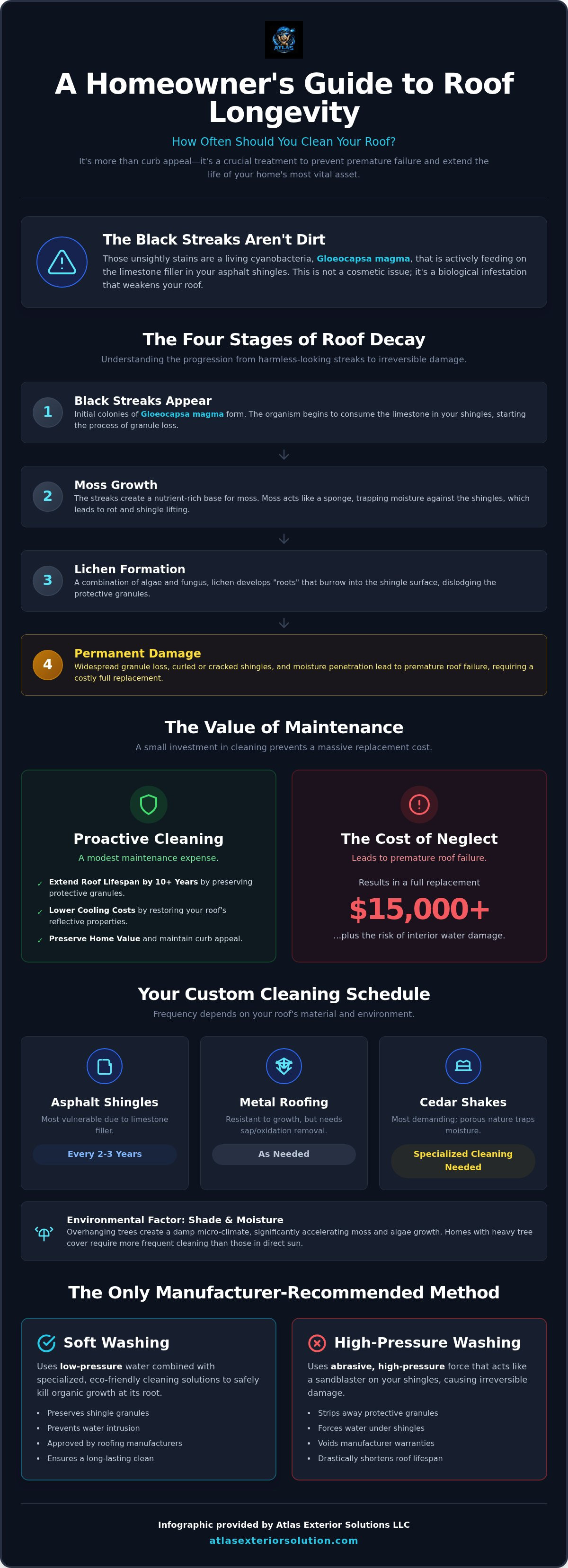
Most homeowners view those dark, shadowy patches on their shingles as simple soot or dirt from the environment. In reality, roof cleaning is a biological treatment designed to eradicate living organisms that use your home as a food source. The primary culprit behind those unsightly black streaks is a cyanobacteria called Gloeocapsa Magma. This hardy organism thrives in the humid conditions of the Northeast, feeding specifically on the limestone filler used to add weight and durability to modern asphalt shingles.
When you ask how often should you clean your roof, the answer depends on how quickly these colonies establish themselves. If left untreated, the bacteria slowly digest the shingles, leading to granule loss and a significantly weakened structure. For residents in the Northeast, establishing a professional cleaning baseline every 2 to 5 years is the most effective way to halt this decay before it compromises the roof's integrity. This frequency ensures that the limestone filler remains intact and the shingles stay securely bonded to your home.
The ROI of Regular Roof Maintenance
Maintaining a clean roof provides immediate financial benefits beyond just preventing leaks. Dark, algae-covered surfaces absorb a tremendous amount of heat, which radiates into your attic and forces your HVAC system to work harder during humid Pennsylvania summers. By restoring the reflective properties of your shingles, you can noticeably lower your monthly cooling costs. While a professional soft wash is a modest maintenance expense, it's a minor investment compared to the $15,000 or more often required for a full roof replacement. Regular roof cleaning preserves the protective shingle granules to extend the functional lifespan of your roofing system by a decade or more.
Aesthetics vs. Structural Integrity
Curb appeal is often what motivates a call for service, but the structural risks are far more pressing. Waiting until you see thick green moss or crusty lichen means the damage is already underway. Moss acts like a heavy sponge, holding moisture against the shingles and causing them to rot or curl prematurely. Even more dangerous is lichen, which "roots" into the shingle material and can pull the surface granules off during heavy winds or seasonal freeze-thaw cycles. Investing in professional roof cleaning Bucks County PA ensures these organisms are neutralized at a microscopic level, protecting your home's most valuable asset from the top down.
4 Critical Factors That Determine Your Cleaning Schedule
Determining how often should you clean your roof requires looking beyond a standard calendar. Every property in the Delaware Valley faces a unique set of environmental stressors that dictate maintenance needs. While a neighbor's home might stay clean for five years, your property could require attention much sooner based on four specific variables that influence biological growth.
Material Matters: Shingles vs. Metal
The composition of your roofing material is the most significant factor. Asphalt shingles are particularly vulnerable because they contain limestone filler, a primary food source for bacteria. According to the ARMA guidelines on algae, this growth leads to significant discoloration and shingle damage. Consequently, asphalt roofs usually need professional attention every 2 to 3 years. Metal roofing resists growth better but requires cleaning to prevent sap accumulation and surface oxidation. Cedar shakes are the most demanding; their porous nature traps moisture, making specialized soft washing essential to prevent rot.
The Shade and Moisture Factor
Your home's proximity to mature trees like oaks, maples, and pines creates a "micro-greenhouse" effect. Overhanging branches provide 24/7 shade, preventing the sun from drying out morning dew or rainwater. This persistent dampness is the perfect breeding ground for moss and lichen. When these conditions are paired with clogged gutters that trap moisture at the roof edge, the rate of decay accelerates. Many homeowners find that scheduling a professional house washing Bucks County service alongside their roof treatment helps maintain a holistic barrier against organic growth.
Climate, Humidity, and Orientation
Bucks County sits in a humid continental climate zone. Local humidity levels often spike during the summer months, providing the warmth and moisture that algae colonies need to "bloom" across your shingles. Interestingly, your roof's orientation also plays a role. The North-facing side of a home receives the least amount of direct sunlight, which is why it's almost always the first area to show those tell-tale black streaks. If you notice growth concentrated on one side, it's a clear signal that the biological clock is ticking. Understanding these local nuances is why we take a consultative approach at Atlas Exterior Solutions to help you decide exactly how often should you clean your roof to ensure its longevity.
Signs Your Roof Needs Immediate Cleaning
Recognizing the physical indicators of decay is just as important as knowing how often should you clean your roof. Organic growth follows a predictable and destructive path. It usually begins with subtle black streaks, often mistaken for soot, which then evolve into clumps of green moss. If left unchecked, these colonies eventually become crusty lichen. This biological progression isn't just an aesthetic concern; it's a timeline of your roof's deteriorating health that requires professional intervention to halt.
Don't ignore the state of nearby properties when assessing your own maintenance needs. Algae and moss reproduce through airborne spores that travel easily between homes. If your neighbor's roof is covered in green patches, those spores have likely already landed on your shingles. Early intervention prevents these invisible settlers from establishing the deep root systems that lead to structural failure and shortened roof life.
Visual Cues for Bucks County Homeowners
Distinguishing between simple environmental dirt and damaging organic growth is a vital skill for property preservation. Dirt usually appears as a uniform gray haze that washes away during heavy rain. In contrast, biological growth creates distinct, vertical black streaks that seem to "bleed" down the slope. These marks indicate that colonies are actively feeding on your shingles. For more detail on identifying these marks, you can read our guide on how to remove black streaks from your roof safely.
The Danger of Waiting Too Long
Delaying maintenance allows organic growth to move beneath the surface of the shingles. Moss acts like a heavy, living sponge that keeps shingles constantly damp, preventing the protective layers from drying out after a storm. This persistent moisture eventually seeps into the wood decking below, leading to rot and expensive structural repairs that a simple cleaning could have prevented.
Lichen is particularly aggressive because it firmly attaches itself to the shingle granules. When lichen is finally removed after years of neglect, it often takes the protective stone coating with it, leaving permanent "scars" or bald spots on your roof. Check your gutters for an accumulation of sand-like sediment. This is a clear sign that algae is loosening the granules, which directly impacts how often should you clean your roof to avoid a premature replacement. If you see shingles beginning to curl or lift at the edges, the moisture trapped by moss has already started to warp the material, signaling that immediate professional attention is required.
The Seasonal Maintenance Calendar for Pennsylvania Roofs
In the Delaware Valley, the changing seasons dictate more than just your wardrobe; they define the biological clock of your home's exterior. Understanding the local weather patterns helps you determine how often should you clean your roof to stay ahead of organic growth. While the humid summers accelerate algae blooms, the harsh winters can hide structural damage that only becomes apparent during a spring thaw. A structured seasonal approach ensures that your roofing system remains a reliable barrier against the elements year-round.
Spring serves as the primary season for inspection. As the snow clears, it's vital to check for shingle lift or granule loss caused by winter ice dams. This is also when the first microscopic algae colonies begin to establish themselves as temperatures rise. Catching these initial blooms early prevents the deep root systems of moss and lichen from taking hold during the peak growing months. Professional monitoring during this window is a key component of an effective preservation strategy.
Why Summer is the Best Time for Soft Washing
Summer is the most effective season for professional treatment. The consistent warmth in Bucks County allows our biodegradable cleaning solutions to work with maximum efficiency, ensuring that algae and bacteria are neutralized at the root level. Treating your roof during the high-humidity "bloom" season stops growth in its tracks before the damp autumn arrives. Utilizing a Safe Roof Cleaning Method: Why Soft Washing is Better ensures your shingles are prepared for the upcoming freeze-thaw cycles without the risk of high-pressure damage.
The Fall Debris Checklist
Autumn is arguably the most critical time for debris management. Falling leaves and pine needles often accumulate in roof valleys, creating heavy, wet mats that trap moisture directly against the shingles. This persistent dampness is a primary driver for wood rot and mold growth in the decking. Ensuring your gutters are clear is equally important; water that backs up under the roofline can cause catastrophic leaks during winter storms. Many homeowners pair this maintenance with driveway cleaning Bucks County to ensure their entire property is protected and ready for the winter months.
Once winter arrives, professional liquid-based cleaning typically pauses due to freezing risks. However, your role as a "Meticulous Guardian" continues. This is the time to monitor your roofline for ice dams, which occur when heat escaping from the attic melts snow that then refreezes at the cold eaves. Keeping a close eye on these formations helps you decide how often should you clean your roof and gutters in the following seasons to improve drainage and thermal performance.
Schedule Your Bucks County Roof Condition Assessment
Why Soft Washing is the Safe Solution for Your Maintenance Schedule
While the timing of your service is important, the method used is what truly determines the health of your home. When considering how often should you clean your roof, the goal is to achieve a result that lasts for years, not just months. Soft washing isn't a mechanical scrub; it's a scientific application of biodegradable cleaners that treats the root of the problem. Unlike traditional pressure washing, which relies on brute force, soft washing neutralizes biological organisms at a microscopic level. This thorough treatment ensures a longer-lasting clean, which directly impacts how often should you clean your roof by extending the time between necessary maintenance visits.
Major shingle manufacturers, including GAF and Owens Corning, are very specific about maintenance requirements. Using high pressure on asphalt shingles can immediately void your manufacturer's warranty because it dislodges the protective granules that shield the asphalt from UV rays. These industry leaders exclusively recommend low-pressure chemical cleaning as the only safe way to preserve the material's integrity. By following these professional standards, you aren't just cleaning; you're actively protecting your long-term investment and ensuring your warranty remains valid.
The Risks of DIY Pressure Washing
Attempting to clean your own roof with a standard pressure washer often leads to irreversible damage. A typical unit can blast water at 3000 PSI, which is powerful enough to strip the protective coating off a 30-year shingle in a matter of seconds. Beyond surface damage, the high-pressure stream can force water upward under the shingles or through attic vents, leading to hidden mold growth and structural rot. Choosing professional soft washing Bucks County PA eliminates these risks by using specialized equipment designed specifically for delicate surfaces.
Choosing a Local Professional in Bucks County
Selecting a service provider requires more than just looking at a price tag. A "Meticulous Guardian" approach involves a focus on detail that extends to your entire property. We take specific precautions to protect your landscaping, ensuring that delicate shrubs and flowers are shielded and rinsed while your roof is being treated. Working with a local expert from Newtown or Yardley provides the added benefit of someone who understands our specific regional challenges, from the high humidity of the Delaware River to the specific pollen counts of local tree species.
Verification of insurance is non-negotiable for any roof work. A fully insured professional provides you with peace of mind, knowing that both your property and the technicians are protected. This level of accountability is what separates a neighbor with a ladder from a dedicated exterior solutions partner who takes pride in the longevity of your home.
Schedule your professional roof inspection with Atlas Exterior Solutions today!
Protecting Your Home’s Most Vital Asset
Maintaining a healthy roof in the Delaware Valley requires more than a reactive approach to black streaks. By understanding that cleaning is a biological treatment rather than a cosmetic scrub, you can preserve the structural integrity of your shingles for years to come. Whether you're managing the heavy shade of Newtown or the humidity of Yardley, determining how often should you clean your roof is a critical step in a responsible home maintenance plan.
Our locally owned and fully insured team at Atlas Exterior Solutions is dedicated to the longevity of your property. We utilize the expert soft wash techniques recommended by major shingle manufacturers to ensure a safe, thorough clean that never compromises your warranty. Taking pride in your home starts with a foundation of professional care and local expertise across all of Bucks County.
Get a Free Roof Cleaning Estimate in Bucks County
We look forward to helping you protect your most valuable investment with the meticulous attention it deserves.
Frequently Asked Questions
How often should you clean your roof if you have many trees?
If your property in Yardley or Newtown is surrounded by mature oaks and maples, you should schedule a cleaning every 1 to 2 years. Overhanging branches create constant shade and drop organic matter that traps moisture against the shingles. This environment acts as a catalyst for rapid algae and moss growth. Frequent inspections ensure that debris doesn't accumulate in roof valleys, preventing the premature decay of your shingle's limestone filler.
Does cleaning my roof void the shingle warranty?
High-pressure washing will likely void your warranty, but professional soft washing is the industry-standard method required by manufacturers like GAF and Owens Corning. These companies specify low-pressure chemical treatments because they protect the structural integrity of the shingles. By choosing a manufacturer-approved method, you ensure your warranty remains intact while effectively removing destructive organisms. Always verify that your service provider uses these gentle, specialized techniques to maintain your long-term coverage.
Can I just wait for the rain to wash the black streaks away?
Rainwater won't remove black streaks because they are caused by living bacteria, not surface dust. Gloeocapsa Magma attaches itself firmly to shingles to feed on the limestone filler. In fact, the humid weather common in Bucks County often provides the moisture these colonies need to thrive and spread. Professional intervention is the only way to neutralize the bacteria at the root level and stop the ongoing damage to your roofing material.
How long does a professional soft wash treatment last?
A professional soft wash treatment typically keeps a roof clean for 3 to 5 years. Unlike pressure washing, which only removes the surface growth, soft washing uses biodegradable solutions to kill the spores and roots of algae and moss. This thorough biological treatment prevents immediate regrowth. Your specific environment in areas like Richboro or Langhorne, including tree density and sun exposure, will ultimately determine the exact longevity of the results.
What is the best time of year to get my roof cleaned in Pennsylvania?
Summer is generally the most effective time for roof cleaning in Pennsylvania. The warmer temperatures allow the biodegradable cleaning solutions to react more efficiently with organic growth, ensuring a deeper kill of algae colonies. However, many homeowners in Levittown and Horsham choose spring for initial inspections to address any damage caused by winter ice dams. Both seasons provide the dry conditions necessary for the treatment to set properly and deliver lasting protection.
Is roof cleaning necessary if I don’t see any moss?
Yes, cleaning is often necessary even before moss becomes visible. Black streaks are the first sign of a bacterial infestation that is already consuming your shingles. By the time you see green moss or crusty lichen, the organic growth has already established a root system that can cause shingle curling and granule loss. Proactive maintenance is the best way to determine how often should you clean your roof to prevent structural rot before it starts.
How much does professional roof cleaning typically cost in Bucks County?
The cost of professional roof cleaning in Bucks County depends on several specific variables rather than a flat rate. Factors such as the total square footage of the roof, the steepness of the pitch, and the current level of organic growth all influence the final estimate. Additionally, the type of material, whether asphalt shingles or cedar shakes, requires different specialized care. We provide custom assessments to ensure you receive an accurate quote tailored to your home's unique requirements.
Will the cleaning chemicals harm my plants or landscaping?
Our meticulous approach ensures that your landscaping remains safe during the entire process. We prioritize the protection of your plants by thoroughly pre-wetting all vegetation and using specialized rinsing techniques to neutralize any runoff. In some cases, we use physical shields to protect delicate flowers in Newtown Square or Fairless Hills. This comprehensive safety protocol allows us to treat the roof effectively while maintaining the health and beauty of your surrounding greenery.
Disclaimer
The information on this blog is for general informational purposes only. Results may vary based on surface type, condition, and cleaning methods. Always follow manufacturer guidelines and use proper safety precautions. Atlas Exterior Solutions is not liable for any damages or losses resulting from the use of this information.


