

What if the cleaning method that seems fastest leaves your deck less ready for stain? It’s reasonable to want a clean surface before staining, but too much pressure or harsh scrubbing can damage wood instead of preparing it. Safe deck cleaning before staining starts with checking the deck’s condition, choosing a method suited to its surface, and allowing enough time for it to dry.
This guide explains a practical preparation sequence, when gentle soft washing may be preferable to pressure washing, and what to inspect before opening the stain. Wood typically needs 24 to 48 hours to dry after cleaning, depending on temperature and humidity, but a clean appearance alone doesn’t mean it’s ready. Check for remaining residue, damp areas, and surface damage before moving on. Atlas Exterior Solutions LLC provides deck and patio cleaning for homeowners in Newtown and across Bucks County, using methods matched to the surface and the cleaning goal.
Key Takeaways
- Before cleaning, check for loose boards, raised fasteners, splinters, rot, and peeling finish so you can address surface concerns first.
- Deck cleaning before staining works best when the method fits the wood’s condition and existing finish, rather than relying on one approach for every deck.
- Follow a steady prep sequence: clear the deck, inspect it, clean according to product directions, rinse, and let the surface dry.
- Use the stain manufacturer’s instructions and the weather to help judge when the deck is ready for its next finish.
- If buildup or pressure concerns make preparation difficult, Atlas Exterior Solutions LLC provides deck and patio cleaning for Bucks County-area properties.
Why Deck Cleaning Before Staining Helps Prepare the Wood
Deck cleaning before staining removes loose dirt and surface buildup as part of preparing wood for a new finish. That differs from general deck washing, which may simply freshen the boards for everyday use. For stain preparation, cleaning is one step in assessing the surface and following the finish manufacturer’s directions. It can’t repair loose boards, rot, or other structural problems, and it doesn’t replace repairs the deck needs.
Dust, grime, organic residue, and weathered material can remain on boards even when the deck looks tidy. Left in place, they can make the surface appear uneven and complicate your assessment of the wood before finishing. Cleaning helps reveal what’s on the boards, but it doesn’t guarantee a particular stain result. Wood stain is intended to color or protect wood, and preparing the surface helps you judge whether it’s ready for the product you plan to use.
What should deck cleaning accomplish before stain?
The immediate goal is to remove loose soil and surface buildup without harming the wood. Choose an approach that suits the deck’s condition instead of scrubbing harder just because a mark remains. Aggressive cleaning can affect the wood’s surface, so persistent discoloration is a reason to inspect more closely, not automatically apply more force.
A clean surface also makes it easier to assess the boards. You can better distinguish residue from weathering, peeling finish, or a damaged area that may need attention. Follow the cleaner and stain product labels for specific directions. Those instructions explain whether cleaning is enough or whether further preparation is needed.
Why a deck can look clean but still need preparation
Appearance can be misleading. A quick rinse may remove visible dust while leaving patches of residue, and weathered boards may show different tones across the deck. These differences can be subtle in shade or changing daylight. A surface that looks clean from one angle may reveal buildup or uneven wear elsewhere.
After cleaning, examine the full deck in consistent light. Look across the boards and check edges, corners, and spaces near railings, where dirt can be easy to overlook. Note areas that look different instead of assuming they need stronger cleaning. A careful review helps you understand the surface condition and decide what preparation remains, while keeping routine cleaning separate from repairs or other work the deck may require.
Inspect the Wood and Existing Finish Before Cleaning
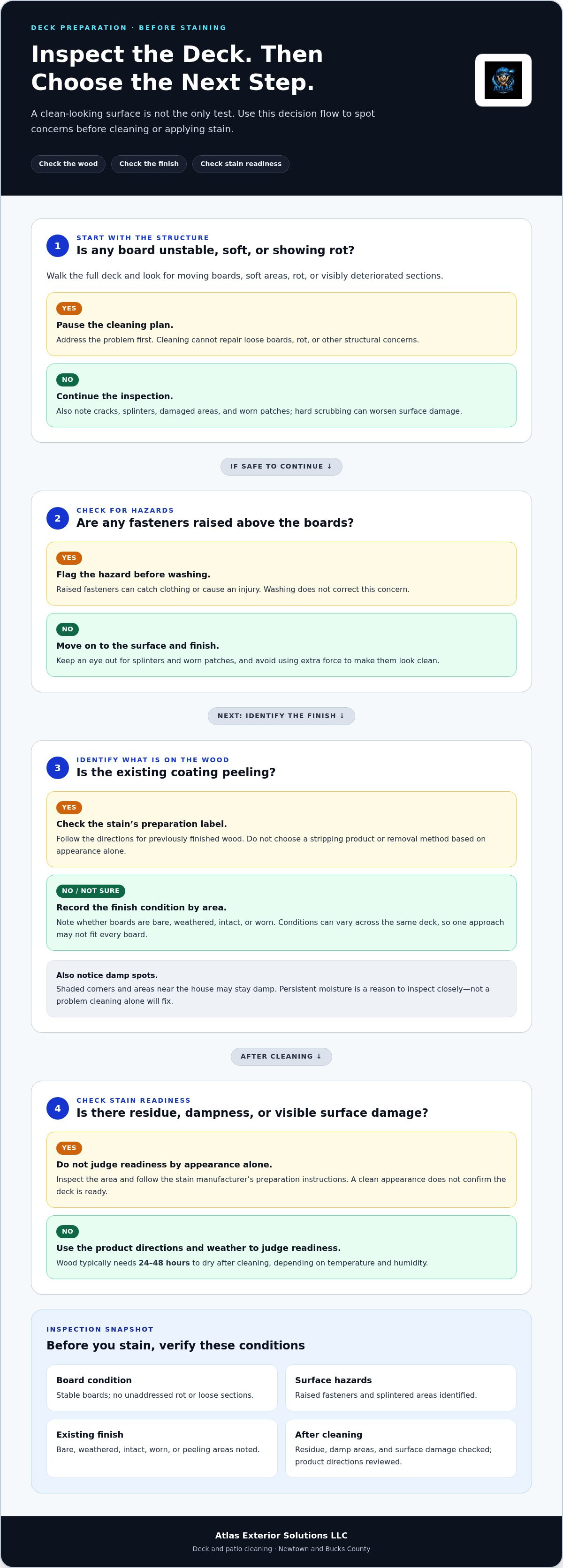
Before choosing a cleaning method, identify the deck material and assess its condition. The same approach may not suit bare, weathered wood and boards with an intact or peeling coating. Inspection also helps you spot hazards that washing cannot correct. If a board feels unstable or shows signs of rot, pause the cleaning plan and address the problem first.
Pre-cleaning checklist: check board stability, raised fasteners, splinters, rot, damaged areas, persistently damp spots, and whether the finish is bare, weathered, intact, worn, or peeling.
How to assess the wood and deck condition
Walk the deck carefully and look over the full surface. Notice boards that move, feel soft, appear cracked, or have visibly deteriorated sections. Check that fasteners aren’t raised above the boards, where they could catch clothing or cause an injury. Pay attention to places that stay damp, such as shaded corners or areas close to the house. Persistent moisture is a reason to inspect closely, not a problem that cleaning alone will fix.
Splinters and worn patches call for a gentle approach. Hard scrubbing can worsen splintering or cause surface abrasion, meaning physical wearing or scuffing during cleaning. Don’t use extra force to make a damaged area look clean. Note the concern and separate repairs from washing and stain preparation. If you find loose boards, rot, or other hazards, don’t treat cleaning as a substitute for correcting them.
How an existing stain changes the prep plan
Look at the coating as well as the wood. Bare boards have no visible finish; weathered boards may look faded or uneven; and a previously stained deck may have coating that remains intact, looks worn, or peels in spots. These conditions can vary across the same deck, so don’t assume every board needs identical preparation.
Peeling coating deserves particular attention. Cleaning may remove loose dirt, but it won’t establish what coating-specific preparation is required. Avoid choosing a stripping product or removal method based only on appearance. Read the chosen stain’s preparation label for instructions that apply to previously finished wood, including whether more preparation is needed before applying the new finish.
During deck cleaning before staining, inspection helps you match the next steps to the actual surface rather than treating every deck as bare wood. Keep a simple record of boards or sections that look different. That gives you a clearer basis for deciding where cleaning is appropriate and where repair or further preparation must come first.
If the wood’s condition or old coating makes the cleaning approach difficult to determine, Atlas Exterior Solutions LLC provides deck and patio cleaning for Bucks County properties. Its exterior cleaning services include surface-aware deck cleaning for homeowners preparing their decks.
Choose a Deck-Cleaning Method That Fits the Wood
The right cleaning method depends on the wood’s condition, the type of buildup, and any existing finish. A garden hose may rinse away loose dust, while a brush can help with limited surface soil. Pressure washing and soft washing work differently, and neither is automatically right for every deck. Match the method to the surface instead of assuming more force means a better result.
Material-specific cleaning should guide the method. Use the comparison below as a starting point, not a substitute for cleaner directions or an assessment of vulnerable, damaged, or previously coated boards.
| Method | May suit | Key consideration |
|---|---|---|
| Hand scrubbing | Limited buildup on sound wood | Choose a brush and effort that won’t scuff or roughen the surface. |
| Garden-hose rinsing | Loose soil or light surface dust | Rinsing may not address adhered residue or heavier buildup. |
| Controlled professional cleaning | Decks with more buildup or uncertain surface needs | The approach should account for the wood and existing finish. |
When gentle hand cleaning may be appropriate
For limited buildup on sound boards, hand cleaning may be suitable. Follow the cleaner’s label for how to apply and rinse it, and test a small, inconspicuous area if the instructions direct you to do so. Select a brush suited to the wood’s condition. A stiff brush or forceful scrubbing can cause surface abrasion, especially on weathered or splintered boards.
Work carefully and reassess the surface rather than automatically increasing your effort. If marks remain, they may reflect weathering, an old coating, or damage rather than removable dirt. A small test area can show how the wood responds before you clean a larger section.
When pressure washing needs extra care
Pressure washing uses a concentrated water stream to remove buildup. Applied too forcefully or held too close, the stream can damage wood fibers or leave uneven marks. Pressure washing isn’t automatically appropriate for every deck, particularly when boards are weathered, soft, splintered, or coated. Stronger pressure is no substitute for assessing the surface.
Soft washing takes a low-pressure approach, generally relying on cleaning solutions and controlled rinsing rather than forceful water impact. It may suit some decks, but it isn’t a guarantee against damage or a universal fit. The solution, application, and rinse still need to suit the wood and its finish. Atlas Exterior Solutions LLC provides deck and patio cleaning using a method suited to the surface. You can request help with deck cleaning for your property.
Follow a Careful Cleaning Sequence and Check Stain Readiness
A methodical process helps you clean without rushing past important checks. Follow the cleaner’s label, keep rinse water from carrying loosened debris toward sensitive areas, and let the deck dry before deciding whether it’s ready for stain. Weather affects drying, so a fixed wait time shouldn’t replace product directions or an inspection of the surface.
What to do from clearing the deck through rinsing
Clear furniture and loose debris first so you can see and reach the full surface. Then inspect the boards for areas that need special care and choose a cleaning method suited to their condition. Keep the cleaner’s directions handy as you work.
- Clear the deck. Move furniture and remove loose leaves, dirt, and other debris from the boards.
- Inspect the surface. Look for missed buildup or damaged spots that may need attention before washing.
- Apply cleaner as directed. Follow the product label for use and handling. Don’t mix cleaning products, since combining them can create hazards or affect the wood.
- Rinse as directed. Remove cleaner and loosened residue as the label instructs. Manage the rinse so debris and washwater aren’t pushed toward sensitive areas.
Take your time around corners, edges, and spaces between boards, where debris can collect. If the label calls for a specific application or rinse method, follow it rather than relying on a general rule for every cleaner and deck.
How to tell when the deck is ready for stain
After rinsing, let the deck dry. The surface may dry unevenly: boards in shaded or less exposed spots can remain damp after sunnier areas look dry. Check the entire deck, including edges and corners, rather than judging readiness from one section.
Once the surface has dried, look for remaining residue, damp patches, and areas that appear uneven. If you find any, pause and determine whether another step is needed under the cleaner and stain instructions. Don’t assume that a surface that feels dry in one spot is dry everywhere. Humidity, temperature, and other weather conditions can affect how quickly moisture leaves the wood.
The deck is ready for the next step only when it’s clean, fully dry, and meets the stain label’s preparation and weather directions. Follow the label’s requirements for the wood’s condition and moisture before staining. If the directions call for a particular surface condition, use that guidance rather than a general drying estimate. With deck cleaning before staining, a careful final check matters as much as the cleaning itself.
Request help preparing your deck with Atlas Exterior Solutions LLC.
When Professional Deck Cleaning Can Help Bucks County Homeowners
Professional help can be useful when buildup is widespread, the wood’s condition is difficult to judge, or you’re unsure how much pressure the surface can handle. A deck with an old coating, weathered areas, or delicate boards may need a more considered approach than a simple rinse. Cleaning can prepare a surface for assessment, but it won’t repair loose boards, rot, or other damage.
Atlas Exterior Solutions LLC provides local deck and patio cleaning for homeowners in Bucks County. The cleaning approach is matched to the deck’s material and condition rather than treating every surface the same. That helps avoid unnecessary force and gives you a clearer view of what preparation the wood needs next.
What professional deck cleaning should prioritize
A careful service starts by assessing the surface, including visible buildup, condition, and existing finish. Those details help guide method selection. Pressure washing directs a water stream at the surface, while soft washing uses a low-pressure approach. Neither should be treated as the automatic choice for every deck.
Controlled cleaning matters because excessive force can harm vulnerable wood or leave an uneven surface. A method suited to the boards can help limit avoidable surface damage while removing buildup. Atlas is locally owned and fully insured, giving homeowners a local exterior-cleaning provider. Insurance is a trust point, not a promise that every surface will respond in a particular way.
How to take the next step with Atlas
If your goal is to prepare a deck for staining, explain that goal when you request service. It keeps the focus on the surface condition and the cleaning it needs, rather than a one-method-fits-all wash. Atlas provides deck and patio cleaning as part of its exterior services.
Atlas serves homeowners across Bucks County and Montgomery County, including Newtown, Yardley, Richboro, Bensalem, Langhorne, Levittown, Fairless Hills, and Horsham. If heavy buildup, uncertain wood condition, or concern about pressure is making preparation difficult, professional cleaning can offer a practical way forward. The appropriate method depends on the deck itself, and cleaning does not replace repairs or the stain manufacturer’s preparation instructions.
Plan the Next Step for Your Deck
Use your inspection notes to plan the deck’s next care step. Mark boards or sections that need attention, and keep the cleaner and stain instructions handy as you organize the work. A clear plan can help you avoid staining before the surface and any needed repairs are addressed. Deck cleaning before staining is about thoughtful preparation, not simply making the boards look freshly washed.
Atlas Exterior Solutions LLC provides deck and patio cleaning for homeowners in Bucks County and nearby communities. Request an estimate to discuss cleaning that takes the wood and your preparation goal into account.
With a careful plan and the right support, you can move toward your next deck project with greater confidence.
Frequently Asked Questions
Do I need to clean a new deck before staining it?
A new deck should be checked and prepared according to the stain manufacturer’s directions before staining. New boards can still have construction dust, dirt, or handling residue, but they may not need the same preparation as weathered wood. For deck cleaning before staining, check the product label for guidance on new lumber and surface condition. If the boards look clean, avoid adding unnecessary cleaning steps without a reason.
Can deck cleaner remove old stain?
Not necessarily. Many deck cleaners are meant to address surface dirt or other buildup, not remove an existing coating. An intact or partly worn stain may remain after cleaning, while peeling areas can need different preparation. Check the chosen stain’s label for instructions about previously finished wood. Don’t assume a cleaner will strip the old finish, or apply a stripping product without confirming that it suits the coating and wood.
Should I sand a deck after cleaning and before staining?
Sometimes, but sanding isn’t required for every deck. It may be considered if dry boards feel rough or have raised fibers after cleaning, but first check the stain label for surface-preparation instructions. Sanding damp wood can affect the surface and make it harder to judge the result. If boards are splintered, damaged, or deteriorated, sanding alone won’t correct the underlying problem.
Can you stain a deck while the wood is still damp?
No. Let the wood dry fully before staining, since moisture can interfere with how the finish settles into the surface. Don’t rely only on a dry-looking top face: shaded areas, board ends, and spaces near railings may hold moisture longer. Follow the stain manufacturer’s directions for acceptable surface moisture and weather conditions. If you’re unsure, waiting and checking again is safer than rushing the application.
Is pressure washing safe for every wood deck?
No. A forceful or poorly controlled stream can damage softer or weathered boards, leave marks, or roughen the surface. For example, if wood fibers begin to lift during cleaning, stop rather than increasing pressure to remove a stubborn patch. A garden hose, gentle hand cleaning, soft washing, or controlled pressure may suit different situations. Choose based on the wood’s condition, not on the assumption that one method fits all.
Can I clean and stain my deck on the same day?
Only if the deck becomes completely dry and the stain label’s surface and weather requirements are met, which may not happen on the same day. Drying depends on conditions such as shade, airflow, and humidity. Check the boards in several locations, including shaded sections and corners, and follow any moisture guidance on the product label. If any area is damp, postpone staining rather than applying the finish over it.
Should I use the same cleaner on every type of deck?
No. Cleaner choice should account for the wood, its condition, and any existing finish. A product appropriate for one deck may not suit another, and a cleaner meant for bare wood may not be right for a previously coated surface. Read the label for compatible materials and directions, and test an inconspicuous spot if instructed. Atlas Exterior Solutions LLC provides deck and patio cleaning for homeowners in Newtown, Yardley, and across Bucks County, helping match the cleaning approach to the deck.
Disclaimer
The information on this blog is for general informational purposes only. Results may vary based on surface type, condition, and cleaning methods. Always follow manufacturer guidelines and use proper safety precautions. Atlas Exterior Solutions is not liable for any damages or losses resulting from the use of this information.


