

Deep-set rust stains aren’t always permanent. Professional concrete rust removal in Richboro can treat old discoloration with a cleaner suited to the surface, while simply increasing water pressure can etch concrete or drive staining deeper. The right approach targets the rust without wearing away the concrete.
If an orange-brown mark has resisted rinsing, it’s understandable to wonder whether the concrete can still be restored. Rust may come from iron in irrigation water, fertilizer pellets, or metal left against the pavement, and those sources can leave stains in concrete’s pores. This article explains what affects removal, how professional treatment works on residential concrete and pavement, and why store-bought acid cleaners can cause damage. You’ll also learn how to reduce the chance of new stains and make a more informed decision about caring for your driveway, walkway, or patio.
Key Takeaways
- Deep-set rust may respond to targeted treatment, but the stain’s source, depth, and the concrete’s condition affect the approach.
- Choose a rust-specific treatment over relying on pressure alone, which can wear or etch concrete.
- Check for common sources such as fertilizer, iron-bearing irrigation water, and rusting metal to help prevent new marks.
- Avoid improvised acid-cleaner use; the wrong product or method can leave lasting surface damage.
- A small test area and careful rinsing help guide treatment on concrete, especially in strong summer sun.
Professional rust stain removal on concrete and other hard surfaces
Professional treatment matches the cleaner and method to the stained material. For concrete rust removal in Richboro, the stain’s source, depth, and surface condition guide the process.
Rust Stains from Irrigation and AC Systems
Iron-rich irrigation water can leave orange-brown streaks where spray repeatedly reaches a walkway or driveway. Iron reacts with oxygen and moisture, then can settle into concrete pores. Check sprinkler direction and nearby water paths when tracing a stain. Around an air-conditioning system, inspect metal components and the concrete below for signs of rust transfer or recurring moisture before treatment.
Common Rust Sources on Hard Surfaces
Rusting metal fixtures, tools, and objects can stain the concrete or stone they touch. Fertilizer pellets may also leave rust-colored marks after getting wet. Look for a nearby source that matches each stain, such as a metal planter beside a patio or scattered fertilizer on a driveway. Identifying the cause helps prevent the same marks from returning after cleaning.
Professional-grade removers formulated for exterior masonry and hard surfaces target rust differently from ordinary rinsing. A technician assesses whether the mark is on concrete, brick, natural stone, siding, or a painted surface. That distinction matters because a cleaner or method suited to one material may not suit another. Decorative or sealed concrete also needs careful treatment to protect its finish.
A practical treatment starts with inspecting the affected area and identifying the likely source. The cleaning solution is then selected for the surface and stain. Applying it to a small, discreet spot helps establish suitable dwell time and rinsing needs. In full summer sun, cleaner dwell times are shorter, so timing and monitoring matter.
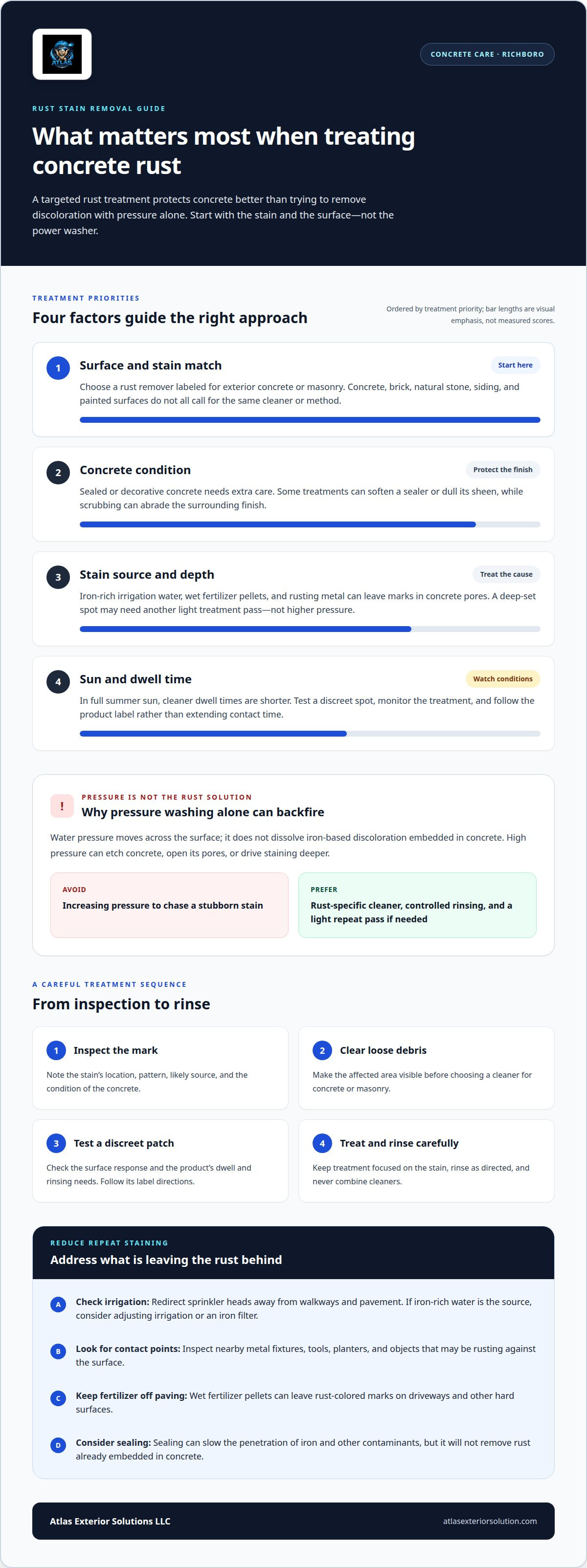
Pressure washing alone doesn’t reliably remove rust stains. High pressure can etch concrete, open its pores, or drive staining deeper. A targeted cleaner addresses the rust, while controlled rinsing clears loosened residue. For a deep-set spot, another light treatment pass is preferable to increasing pressure. This protects the surrounding concrete from unnecessary abrasion.
After cleaning, reduce repeat staining by redirecting irrigation heads away from walkways and pavement. If iron-rich water is the source, adjusting irrigation or considering an iron filter can address the cause. Sealing a hard surface can also slow the penetration of iron and other contaminants. While sealing may limit future staining, it will not remove rust already embedded in concrete.
Atlas Exterior Solutions LLC notes that well-water irrigation with high iron levels can cause severe rust stains, which easily penetrate porous surfaces and bond with free alkali in the concrete matrix.
Can you remove old, deeply set rust stains?
Old rust stains can respond to targeted chemical treatment, even after ordinary washing has failed. The key is reaching the stain without damaging the surrounding concrete.
Chemical Treatment Versus Pressure Washing
Pressure washing moves water across the surface; it doesn’t dissolve iron-based discoloration embedded in concrete. Standard pressure washing alone won’t remove residential rust stains. High-pressure blasting can etch concrete, open its pores, and push rust deeper. A rust remover formulated for exterior masonry targets the stain chemically. For a stubborn spot, a second light treatment pass is preferable to increasing pressure.
Concrete-Safe Chemistry and Rinsing
Choose a rust remover labeled for exterior concrete or masonry, then read its directions before applying it. Test a discreet patch to assess the concrete’s response and the product’s dwell and rinsing needs. Follow the label rather than extending contact time. In full summer sun, cleaner dwell times are shorter. Rinse as directed, and never combine cleaners, since mixtures can react harmfully.
Surface condition also matters. A stain on sealed or decorative concrete calls for particular care because some treatments can soften the sealer or dull its sheen. Brick, siding, and concrete each have different surface characteristics, so a product suitable for one material isn’t automatically suitable for another. Keep treatment focused on the marked area and avoid scrubbing that could abrade the surrounding finish.
DIY driveway steps: First, clear loose debris so the affected area is visible. Select a rust remover labeled for concrete and follow its safety and application directions. Apply it to a small, discreet patch, then assess the result and rinse as directed. Treat the remaining stain only after checking the surface response. Don’t substitute stronger pressure for another treatment pass.
For Richboro, no specific local disposal rule for concrete-cleaning chemicals is established here. Keep leftover product in its original container and follow its label’s disposal directions; don’t pour it into a storm drain or mix it with another cleaner.
Record where the stain appears and whether it returns after cleaning. Recurrence can point to continued exposure, such as water carrying iron or a nearby rusting object. Addressing that source helps protect the cleaned area. If the concrete is sealed, decorative, or already etched, use extra care before treating the full driveway. A small test can reveal surface changes before they spread across a larger area.
Residential concrete and pavement rust removal
Driveways, walkways, and patios can develop rust-colored marks from several residential sources. Before treating a stain in Richboro, note its shape, location, and nearby materials. A narrow streak beside a sprinkler suggests a different source from a spot beneath a parked vehicle. The pattern can help distinguish recurring exposure from an older, isolated mark.
Fertilizer pellets are one common cause of stains on residential concrete. When pellets remain on a driveway or walkway and get wet, they can bleed and leave rust marks. Sweep away loose pellets and debris before cleaning, then look for more around lawn edges or storage areas. Removing the source matters because leftover pellets can create fresh marks during later rain or watering.
Vehicle-related stains need a closer look. Battery acid from a parked vehicle can contribute to driveway staining, and battery acid rust stains may become embedded in concrete pores. Check where the vehicle usually sits and whether the discoloration follows a drip or contact pattern. Treating only the visible spot without addressing an ongoing leak leaves the driveway vulnerable to repeat staining.
Decorative or sealed concrete requires careful assessment before treatment. A cleaner that works on ordinary concrete may soften a sealer or dull its sheen. Inspect the finish in daylight, especially where the surface looks glossy or has a consistent color layer. Test a discreet area first and compare its appearance after rinsing. Avoid abrasive scrubbing that could leave a dull patch beside the stain.
Timing also matters for pavement protection. Treat rust stains before the first freeze to reduce the chance that moisture and iron become more deeply embedded. In Richboro, inspect driveways and patios before cold weather arrives, especially near metal fixtures, irrigation spray, and vehicle parking areas. A fresh stain is easier to assess before seasonal moisture and traffic obscure its source.
After treatment, examine the surrounding concrete rather than judging only the stain’s center. A pale outline can show where fertilizer or water spread beyond the most visible mark. Keep irrigation spray directed away from pavement, and remove spilled fertilizer promptly. If a metal object rests directly on a patio, move it and check the contact area for new discoloration after wet weather.
Use the right approach for the surface, not simply the strongest wash setting. High-pressure blasting can etch concrete and open its pores, increasing its vulnerability to later staining. For a deep spot, a second light treatment pass is preferable to raising pressure. This is especially relevant on decorative pavement, where surface damage can stand out even after the rust-colored mark fades.
Sealing can help slow iron and other contaminants from entering hard surfaces, but it doesn’t remove existing stains. Before sealing a residential driveway or patio, clean the concrete and address nearby sources such as irrigation or metal contact. This sequence helps protect the finish and reduces the chance of trapping visible discoloration beneath a new coating.
Risks of over-the-counter acid-based cleaners
A bottle marketed for rust may still harm a concrete driveway if its chemistry or use doesn’t suit the surface. Acid can affect concrete itself, not just the orange-brown mark. In Bucks County, consider the surface finish, stain location, and product directions before applying any cleaner.
Muriatic acid is a particularly poor choice for removing rust from concrete. It can burn the concrete paste, expose aggregate, and leave permanent blotches. Aggregate is the stone and sand visible beneath the surface paste. Once exposed, these areas may look rough or uneven beside the surrounding driveway, even if some rust fades.
Over-the-counter acid-based cleaners can also damage concrete when used incorrectly. Applying a product across a broad driveway area, leaving it beyond the label’s recommended contact time, or using it on decorative concrete can affect the finish. On sealed pavement, the cleaner may soften the sealer or dull its sheen. A change in finish can make a small stain more noticeable.
Before treating the full mark, read the product label and test a small, discreet spot. After rinsing, check the concrete for color or texture changes. Follow the stated application and rinsing directions; don’t assume longer contact will improve removal. Full summer sun shortens cleaner dwell times, so consider conditions to prevent the product from drying before the intended rinse.
Never mix concrete cleaners. Their reactions can be harmful, and combining products doesn’t make a rust treatment safer or more effective. Use one product according to its label, and keep other cleaners separate during the task. If a previous cleaner remains on the driveway, don’t apply another chemical over it.
Acid damage can be difficult to distinguish from a stain at first. A pale, rough patch may indicate altered concrete rather than rust that needs a stronger cleaner. Increasing chemical strength or pressure can worsen the surface instead of improving its appearance. Compare the treated spot with nearby concrete after rinsing and drying before deciding on another step.
Improper cleaning can worsen rust staining and may lead to repair or replacement of the affected surface. That risk is especially relevant on decorative concrete, where blotches and exposed aggregate disrupt the finish across a visible area. Keep outdoor furniture and nearby items away from the treatment zone to prevent splashes. For a stubborn driveway mark, a concrete-appropriate rust treatment and controlled rinsing are safer choices than experimenting with stronger acids.
How to remove rust stains from concrete in Richboro PA
For concrete rust removal in Richboro, use a measured process that protects the driveway while targeting the stain. Identify the source, choose a concrete-appropriate cleaner, and assess a discreet test area before treating the full mark.
- Inspect the stain and pavement. Note whether the discoloration is a single spot, a streak, or a broader patch. Check nearby irrigation spray, metal objects, and vehicle parking areas for clues. Also look for a sealer, decorative finish, existing etching, or exposed aggregate. Those details affect which treatment is appropriate.
- Remove loose material. Clear leaves, dirt, and other debris from the driveway so the concrete and stain are visible. If fertilizer pellets remain nearby, remove them before they become wet again. Keep outdoor items out of the immediate treatment area to avoid accidental contact with the cleaner.
- Select a surface-appropriate rust remover. Use a product labeled for concrete or exterior masonry, and read its application directions first. Don’t assume a cleaner intended for siding or another surface will suit driveway concrete. Never mix concrete cleaners. A combined product reaction can be harmful.
- Test a discreet spot. Apply the cleaner to a small, less visible area. Follow the label’s directions, then rinse as directed. Examine the concrete for changes in color, texture, or sheen. On sealed or decorative pavement, compare the test area with the surrounding finish before proceeding.
- Treat the stain carefully. Apply the product as directed, paying attention to sunlight and drying. In full summer sun, cleaner dwell times are shorter. Don’t let a product sit longer than its directions recommend. Rinse according to the label, and avoid directing forceful water at a spot that hasn’t responded.
- Assess the result before repeating. Let the area dry enough to compare it with nearby concrete. If rust remains, a second light treatment pass is preferable to increasing pressure. Stop if the surface changes or the stain appears to be surface damage rather than rust.
Finish by checking what could cause the mark to return. Redirect irrigation heads that spray the driveway, remove fertilizer residue, or move rusting objects away from the pavement. Sealing can slow contaminant penetration, but it won’t remove existing rust. Addressing the source and the stain separately helps protect a clean surface.
Request a driveway cleaning quote
Treat the test area as a way to refine the process, not just as a pass-or-fail check. Testing a small, discreet spot can help confirm suitable dwell time and rinsing needs before treating the concrete. Follow the product directions during the test, then use what you observe to guide treatment of the full stain while staying within the label’s instructions. If the test suggests a different dwell time or rinse approach, adjust your plan before applying the product more broadly.
Keep the full-area application consistent with the tested approach, and reassess the stain after rinsing and drying. If you can’t determine a suitable process from the discreet test, pause rather than expanding treatment across the driveway. Testing first makes the next step more deliberate and helps avoid guesswork when treating the visible mark.
Atlas Exterior Solutions LLC: Soft Washing
Atlas Exterior Solutions LLC cleans driveways and other exterior surfaces, including concrete in Richboro and throughout Bucks County. Pressure washing is reserved for durable surfaces such as concrete, brick, stone, and driveways. Embedded rust needs a suitable treatment selected for the concrete; pressure alone isn’t a substitute, and excessive pressure can damage the surface.
For stained pavement, Driveway & Concrete Cleaning is the relevant next step. The approach considers the concrete’s finish and condition to help avoid unnecessary surface wear. If you’re also maintaining siding or other exterior areas, soft washing may suit those surfaces.
Contact Atlas Exterior Solutions LLC to discuss your concrete cleaning needs, or visit atlasexteriorsolution.com.
Take the Next Step Toward Cleaner Concrete
Before arranging treatment, note where the stain appears and whether it returns after cleaning. A clear photo can show its shape and the surrounding finish, helping you describe the concrete rust removal needed for your Richboro property.
Use those details to decide whether the driveway or patio needs focused attention, especially if its finish is decorative or sealed. A surface-conscious plan helps you move forward without unnecessary pressure or guesswork.
A thoughtful next step can help you care for your concrete with confidence.
Frequently Asked Questions
What causes rust stains on concrete and siding?
Iron carried in water can oxidize on contact with air, leaving orange-brown streaks on concrete or siding. Irrigation spray is one possible source, especially where it repeatedly hits the same area. Rusting metal touching a surface and wet fertilizer pellets can also leave marks. To narrow down the cause, compare the stain’s shape with nearby sprinklers, metal objects, and places where fertilizer may collect.
Will the stains come back after cleaning?
Stains can return if the source remains. For example, irrigation that repeatedly sprays an iron-stained walkway may leave fresh discoloration after cleaning. Redirecting the spray or addressing iron in the water can reduce repeat exposure. Sealing a hard surface may slow contaminant penetration, but it won’t stop every source or remove stains already present. Check the cleaned area and nearby fixtures for recurring contact or runoff.
Does oxalic acid remove rust stains from concrete safely?
Oxalic-acid products may be intended for rust treatment, but that doesn’t mean they’re safe for every concrete surface. Acid-based cleaners can damage concrete if used incorrectly, and sealed or decorative finishes need particular care. Check whether the product label specifically allows use on your surface, follow its directions, and test a discreet spot. Don’t mix it with another cleaner or improvise a stronger solution.
Can pressure washing remove rust stains from concrete?
Pressure washing alone generally won’t remove rust embedded in concrete; the stain needs a suitable rust treatment. Pressure may help rinse a treated area, but increasing it to chase discoloration can etch the surface or open its pores. On a driveway, concentrated force can also leave a visibly different texture. Treat the stain and general surface grime as separate tasks, using a method suited to each.
Best rust removers for concrete rust stains
Choose a rust remover labeled for exterior concrete or masonry, or a professional-grade remover formulated for exterior hard surfaces. Test a discreet spot first and follow the product directions for dwell time and rinsing.
Disclaimer
The information on this blog is for general informational purposes only. Results may vary based on surface type, condition, and cleaning methods. Always follow manufacturer guidelines and use proper safety precautions. Atlas Exterior Solutions is not liable for any damages or losses resulting from the use of this information.


